Showing posts with label Capcom. Show all posts

Sunday, 10 January 2016

Game Review: Auto Modellista


Game: Auto Modellista
Console: Sony Playstation 2
Developer: Capcom
Release Date: 6th December 2002

In many ways Auto Modellista is a pretty unremarkable racing game; it features 7 levels of competition with races and competitions to complete in each, a certain number of which must be won to progress. Players have a choice of Japanese cars which are upgradable and can be tuned to suit the circuit which racing is taking place on. Cars can also be customised visually with spoilers, body kits and decals. The main difference between this and other racing games is its cel-shaded art style.

Instead of attempting a realistic look of any kind, Capcom decided to make a racing game which appears to have come off the pages of a comic, or out of Jet Set Radio's world. This means that the entire game world, the tracks and the cars racing on them look amazing, and with some nice sense of speed effects to top things off, it's a very pretty game to look at, especially for 2002.


The game's main mode focuses on winning a few races from a selection which feature the game's 6 tracks in their forwards and reversed configurations. Despite a large-ish selection of cars, there's only a few that I'd consider choosing as my main vehicle and there's nothing that isn't in Gran Turismo or other racing games. The user interface for the main mode is laid out pretty badly and navigating through it can be a struggle; simply upgrading your car comprises three or four screens worth of options.

It doesn't take long for simply winning races and upgrading your car to get boring; the AI is too easy, and the races become longer and longer as the main mode goes on. Despite there only being 7 levels, there's no incentive to continue and complete the game, although it could easily be done in a single sitting. Arcade mode offers little more than the main mode, allowing players simply to play around with the entire selection of cars on offer.


The graphics of the game impact fairly heavily on the overall car handling; there's a huge sense of speed, but braking is swift and the car very rarely is out of player control. Only the hairpins of the uphill and downhill courses offer any real challenge in terms of steering. In terms of competition and challenge, a second human player is probably the best option for a truly exciting race experience. The music behind the racing action is pretty average and less memorable than I'd have liked it to be. An odd addition to the game is the constant 'encouragement' of an announcer, almost Dancing Stage style.

Overall, while Auto Modellista is an incredibly beautiful and visually original racing game, it's lacklustre main mode, awful UI, and easy AI make it a chore to play through once the inital buzz of the artwork has worn away. Depite the acceptable range of cars, there's not nearly enough tracks to race around and most of the tracks included in the game are outshone by the inclusion of Suzuka circuit anyway.

Rating: 62/100
Grade: C

Sunday, 8 November 2015

Collection Review: Capcom Puzzle World


Game: Capcom Puzzle World
Console: Sony Playstation Portable
Developer: Capcom
Release Date: 6th February 2007

Capcom Puzzle World is a collection of 5 puzzle games made by Capcom, released previously for consoles and arcades and collected together for the PSP. 5 games may not seem like many to collect together, especially considering Capcom's PS2 arcade collections but they pair together well to offer some enjoyable gaming experiences which weren't previously available together. I'll take a look at each game separately and then gather my thoughts on the collection as a whole. 

Super Puzzle Fighter II Turbo


Probably the best known of the puzzle games on this collection, Super Puzzle Fighter II Turbo appeared on the Playstation and Sega Saturn originally as well as in arcades. Players battle one on one as one of eight characters through a gem matching puzzle game with Street Fighter twists. There are three types of gameplay featured in the game; X, Y and Z, similar to the -isms in some street fighter games. In type X players place double gem blocks in an attempt to make squares of the same colour which will turn into a super gem, and can be removed with a crash gem. Although any number of blocks can be removed with a crash gem, removal of a super gem sends gems onto your opponent's side and contributes towards their game ending.

In type Y players place double gem block in an attempt to make three of the same colour in a row, column or horizontally. Combos send gems onto your opponent's screen and really this mode is more like a 2 block version of Columns. In type Z players rotate a square of blocks in order to match gems in a similar way to type X. In the mode however, gems are raised up from the floor, a little like Pokemon Puzzle League.


Overall there's some fun to be had with both the puzzling featured in the game and the Street Fighter theme. While it's not strictly necessary, it's at least a point of interest and makes battling different opponents much more fulfilling than simple level progressions in similar games. The controls of the game are simple and work well, and all 3 modes are pretty easy to pick up. Graphically SPFII Turbo is very similar to Columns, save for the Street Fighter characters in the middle of the screen. The game music is a little more forgettable than most of the series tunes, but it's not a big issue.

Rating: 7.5/10

The next game would be Block Block, but I've covered it before in a Capcom Arcade collection, so I'll summarise by saying that it's a breakout clone which isn't particularly impressive or inventive.

Rating: 4.5/10

Buster Bros


Buster Bros is an interesting game, though I wouldn't personally have filed it in the puzzle genre, but rather as an arcade action game. Players roam the bottom of the screen (unless there are ladders) and attempt to pop large bubbles down into smaller bubbles and eventually into non existence. With each new level there are obstacles for the bubbles to bounce off, locations featured in the background and different weapons and upgrades to help players get through.

While the core gameplay is fairly simple and doesn't take much getting used to, there's a pretty wide array of upgrades available to players including the ability to shoot more than one tether at a time, making a solid tether which pops the next bubble to touch it, a gun to shoot bubbles with, dynamite to blow everything to smaller bubbles, a freeze clock, invincibility, more time on the overall clock and presumably more.


Graphically the game looks nice and colourful, especially the locations featured behind the actual gameplay. While there's not much in terms of technical prowess, it's evocative of its release era and good for nostalgic play. Musically the game excels with some great themes behind gameplay, on the continue? screens and elsewhere. The soundtrack enhances the overall experience and gives the game a light hearted feel.

Overall it's probably not the type of game that players will want to complete all the way, since stages will end up getting repetitive after a while, but there's a good amount of power-ups and level layouts to keep things as interesting as possible, and once the controls and general concept has been mastered, it's worth spending some time with Buster Bros.

Rating: 8/10

Super Buster Bros

Having just reviewed Buster Bros, it seems a little redundant to go through the entire game concept again, or even to change my review any for the Super version. It's like a level expansion pack with some clever bits, another world tour mode and perhaps the best feature; Panic Mode which allows players to play on a single screen with more and more bubbles until they are hit by one and lose a life. Other than this it's pretty much the same game as Buster Bros, so if you liked that you'll like this.

Rating: 8.1/10

Buster Buddies


The third game in the series however is well worth talking about as it adds all the features you might expect from a true sequel to Buster Bros. There's more characters to choose from, each with their own advantages and disadvantages, more power-ups than in the first game, and a more coherent plot involving gathering art, which is displayed behind each level. 

While the gameplay is much the same, it's interesting to explore how each level plays with the four characters provided. Especially fun is the 2-way 45 degree shot of the thief character, as it makes dodging multiple bubbles far easier. As for the levels themselves, they're about the same level of inventiveness of both the other games.

Rating: 8.5/10

Overall Capcom Puzzle World features some interesting games; Super Puzzle Fighter II Turbo is a competent and well rounded Columns-esque game, with multiple modes and features. Block Block is a fairly poor Breakout clone and the Buster Bros. series is fun if a little repetitive after 3 full instalments. It's a shame that there are only 5 games included, especially as there's very little else of note, save for some artwork that can be accessed in the extras menu. Because of this, the collection's only really worth getting if you truly want to play one or more of the games included.

Rating: 63/100
Grade: C

Sunday, 27 April 2014

Fighting Game Double Header: Street Fighter: The Movie vs Mortal Kombat Trilogy


Game: Street Fighter: The Movie
Console: Sony Playstation
Developer: Incredible Technologies
Release Date: 10th August 1995

In case you haven't seen the "hit movie" of Street Fighter from 1994 which currently holds a 12% approval rating on Rotten Tomatoes, it's not very good. To be fair to the film it was never very likely to be, as most films based on video games struggle to be as gripping as their inspiration. What's interesting is that they made a game based on the movie, which is based on a game (specifically Street Fighter II). With "digitized" graphics of the actors from the film and a departure from the cartoon style of previous Street Fighter games, this Playstation 1 title seems almost doomed to be a disappointment from the start.

There are 4 modes of play to choose from; Movie Battle, Street Battle, Versus Battle and Trial Battle. The first two are the main modes which I'll discuss in more detail, Versus Battle is simply a multiplayer mode, and Trial Battle ranks players on how well they can beat up an AI opponent, and gives them feedback on their aggression and skill.


There are 14 playable characters to choose from in total, provided that you're not playing in Movie Battle mode where Guile is the only available character. In this mode, after a cutscene, you begin by fighting M. Bison, the game's final boss in an impossible-to-win first battle. I'm not sure why this wasn't a cutscene; perhaps the developers wanted players to get an impression of just how tough the final boss is at an early stage.

After the M. Bison fight, players are shown another cutscene and given a choice of locations to go to. These don't really matter as wherever the player goes, they'll have to fight each character in turn before the final boss. There's a 50 minute time limit in Movie Battle mode, and the difficulty doesn't seem to be governed by the selectable difficulty on the options screen. No matter what's chosen, it's incredibly difficult to progress with the AI using cheap tricks and exploits to beat players.

The developers also forgot to program a way of quitting if you're tired of getting whooped. Instead of a continue screen, there's a cutscene which only allows players to go back to the last battle. All things considered, Movie Battle mode isn't that appealing at all.


Street Battle mode is the only redeeming single player feature of the game. It's what would be titled "Arcade Mode" in any other Street Fighter release, and while the difficulty can be a little on the easy side (although it's adjustable) it does play quite nicely. Despite the digitized graphics of the actors from the film, fighting feels as if you're playing Street Fighter II with a few frames of animation missing. Many of the same moves and stances have been carried over and all of the classic characters are available to fight with.

Players have a "Super" meter which fills as they damage the opponent. When it's full they can unleash their character's super move for large amounts of damage. Once a player defeats all of the opponents, a small ending cutscene plays and the game loops back to the start screen. There's no real unlockables or secrets in the game, save for a music video from the film once Movie Battle mode is defeated.


Graphically the game isn't particularly good at all; the character sprites are low detail and resolution, the backgrounds are barely animated and the entire game looks like it could have been pulled off on the SNES. While it was a very early Playstation title (a launch title in the US and UK), there doesn't seem to have been much effort to explore the capabilities of the console. The music which accompanies the game is fitting, if a little forgettable.

Overall Street Fighter: The Movie is mostly as you'd expect. A disappointing movie tie-in which seems to have been rushed through development and based largely on Street Fighter II, save for the graphics. The arcade mode is fairly enjoyable, but the Movie Battle mode borders on unplayable due to the cheap tricks of the AI and pointlessness of the choices, not to mention the movie based plot and cutscenes which don't really make sense.

Rating: 62/100
Grade: C


Game: Mortal Kombat Trilogy
Console: Sony Playstation
Developer: Avalanche Software
Release Date: 6th December 1996

Featuring 36 characters, and levels from all 3 previous Mortal Kombat games fighting in 3 different game modes, Mortal Kombat Trilogy is more like a compilation than a new game. While the inclusion of 3 game modes might seem impressive, there's only one single player mode which is essentially an arcade mode, in addition to a 2 on 2 multiplayer mode, and an 8-fighter 2 player tournament mode. For a game on the Playstation, this is pretty disappointing.

Controlwise the game feels much like the original Mortal Kombat (and its sequels, I assume). The player has the choice of high and low kicks and punches, blocks, and special moves to win the battle. The AI in the game is fairly punishing, even on low difficulties (the final boss is almost unbeatable even on Very Easy) and at times cheap tricks such as constant use of one move are much more effective than proper tactics.


Despite having 36 characters to choose from, I've always felt that the Mortal Kombat series has an unnecessary amount of recolours (see: Scorpion, Sub Zero, Reptile, Smoke, Noob Saibot, Ermac, and Rain) and this installment is no exception with 8 versions of the the ninja characters. Added to the fact that no story is presented in the game for any of the characters, it's quite difficult to acquaint yourself with everyone. Another issue is that aside from their special moves and fatalities, many character's movesets are pretty much the same.

The arcade mode is pretty standard for tournament fighter games; you're faced with a series of opponents before fighting the final boss, however there are some differences. For instance there are endurance stages requiring players to fight more than one opponent in a single battle, and the continue screen takes you back to the main menu, requiring far more load time to get back into the battle than most games.


Graphically the game isn't much better than any of the instalments on Mega Drive or SNES, with the same motion capture look, and simple animated backgrounds. While there might be some slight improvements, the sprites are still low quality and sometimes this can cause difficulty in identifying how far away players need to be to hit an opponent. The music isn't anything particularly special and fades into the background behind the fighting action.

Overall Mortal Kombat Trilogy seems like it should be a better game than it is. It's character line-up is large, but uninteresting, it's moves are apparently updated from the arcade version, but I can't see much difference from even the original game. The graphics should be better considering the upgrade onto a 5th generation console, and the AI should really be better; if the player leaves their character standing still in the middle of battle, the computer player won't even attack them for a good 10 seconds. I've always found the Mortal Kombat games pretty disappointing but I thought this one might be better.

Rating: 54/100
Grade: D

Friday, 14 February 2014

Game Review: Phoenix Wright: Ace Attorney


Game: Phoenix Wright: Ace Attorney
Console: Nintendo DS
Developer: Capcom
Release Date: 31st March 2006

Phoenix Wright: Ace Attorney is a visual novel which follows rookie defence attorney Phoenix Wright through his first five cases. Originally released as a Game Boy Advance title in Japan, Phoenix Wright: Attorney on the DS features an extra case in addition to the four from the Japanese version, as well as adding touch screen and microphone functionality. Although it's fairly easy to tell that the original game wasn't designed to use all of the DS's functions to their full potential, the final case makes far more use of the device's capabilities.

As the game is a visual novel I won't be looking too deeply into the details of the cases featured, as this would potentially spoil parts of the game for those who haven't played it. Each case begins with a defendant who seems to be almost certainly guilty of a crime and you're then tasked with collecting evidence relating to the crime and cross-examining witnesses to prove your client's innocence. The cases featured get more complex and last longer as the player continues through the game.


Of course the trial system has been somewhat simplified for use in the game; set a little way in the future, trials in Japan now have a limit of 3 days before a verdict must be reached, to prevent lengthy court proceedings from clogging the justice system. At times this can mean that events are a little harder to believe and that you'll need incontrovertible evidence to get your client off the hook but since the game basically provides you with it, it's not really a problem.

Most trials run for their full three day length and gameplay alternates between sections where you're collecting evidence and information on the case, and courtroom sections where you use the evidence you've collected to disprove testimonies made by witnesses. Controls for both parts are simple and mostly touchscreen based; when collecting evidence players can examine their current location, move between locations, talk to characters who happen to be at their current location and present evidence to them. When in court players scroll through the current testimony and can either press the witness on their statements or present evidence to show contradictions.


The timeline of events for each case slowly unravels as the trials progress and at times you'll feel more like a detective than a defence attorney. A lot of the time it's unclear what exactly has happened with regards to the crime until the case is almost over, but all plot twists are plausible and generally well written. There are some intertwining plotlines in the first four cases which form the original game's overarching story, as well as a hugely complex final bonus case which stands alone in terms of story.

One of the game's best features is its eccentric cast of characters; lawyers, witnesses, defendants and even minor characters all have interesting ways of expressing themselves and really bring the game alive. Watching a witness's demeanour change from calm to disbelief in court brings a sense of achievement in your own deductive skills despite the game's fairly linear progression.


The controls translate well from the Game Boy Advance original game to the DS; there's a choice between using the buttons and the touch screen most of the time, and while its easy to see how the controls were mapped on the original version, some things do feel easier with the touch screen function. As the final case was a DS extra, there's a lot more use of the touchscreen to rotate pieces of evidence, uncover fingerprints and undertake other forensic tests, as well as more use of the microphone which was previously only used as an alternate way to declare an objection or press witnesses.

Although there was no graphical update from the Game Boy Advance game, Ace Attorney still manages to look impressive with stylised visuals and detailed character models. Musically the game uses certain themes for specific parts of each case, but it's generally enjoyable and suitable for the situation. The only real criticisms I can find with the game are small aspects like attempting to navigate between locations in complex cases.

Overall as with most visual novels, Phoenix Wright emphasises story over most other gaming elements but manages to pull its complex and twisting cases off well. Only the most seasoned of visual novel haters could find a reason not to play this.

Rating: 84/100
Grade: B

Wednesday, 9 October 2013

Collection Review: Capcom Classics Collection Vol. 2 Part 3


Game: Street Fighter
Console: Arcade
Developer: Capcom
Release Date: 1987

With limited home versions on the Turbografx, Commodore and Atari ST, the best known version of the first game in the Street Fighter series was the arcade one. The series didn't get much attention until the second installment, however and in a way you can see why when playing this. For a start, only Ryu is playable in One Player mode with Ken joining him in multiplayer, the fighting seems very basic and jerky and although the graphics are good for the time, the backgrounds don't move particularly smoothly either.

In the game, you fight two opponents per country in a total of five countries. Only a few of these opponents ever appear again in the Street Fighter series, and they all have the same voice clips after the fight upon winning or losing. The reason Street Fighter II was so successful was because it stood out from other fighting games as a class above. Unfortunately this game doesn't do that as well as its sequel.


In terms of difficulty, enemies seem to do more damage with their attacks than you are able to do with yours. This is somewhat irritating in "normal" mode, and perhaps something you'd expect to find on harder difficulties. It just doesn't feel like a fair fight when an opponent can beat you in 4 moves, yet you need to hit them 10 times to win. Overall it's a messy fighting experience at best and its only real value is for those wanting to see the origins of the series.

Rating: 32/100                                                                                Status: Gave Up
Grade: E                                                                                         Continues: N/A


Game: Strider
Console: Arcade
Developer: Capcom
Release Date: 1990

If you've read my Strider II review for Master System, you'll know that Strider was a game series that featured a protagonist with a sword and climbing hooks who could scale walls and flip to higher heights than conventional adventurers. The original arcade game features the main character making his way through 5 different levels to save the Earth. With just a sword attack to defend himself, the player must play their routes carefully through the levels.

The gameplay is generally enjoyable, with elements of platforming and exploration coming together with the storyline to see the player fighting off robotic and human enemies. It's also possible to aquire robots which fight on your side, against the enemy. Sometimes it's not overly clear where you're supposed to go, and there are some hard moments here and there, but generally the difficulty is better than most in this collection.


The graphics are very impressive, much better than those of the scaled down Master System version of Strider II. All of the enemies and levels have interesting designs and this compliments the level design of the game also. Musically there's an action style soundtrack which fits well with the game. There are a lot of good ideas in the game, mixed in with some more questionable features. Overall it's worth checking out for sure.

Rating: 62/100                                                                                Status: On Final Level
Grade: C                                                                                         Continues: 25


Game: Super Street Fighter II
Console: Arcade
Developer: Capcom
Release Date: 1993

One of the most disappointing inclusions on the collection, Super Street Fighter II features great graphics, smooth gameplay and all 16 of the characters from the arcade version. The problem is that even on the easiest difficulty, it's hard to win a round, let alone an entire fight. I'm aware that arcade versions of fighting games are usually harder so as to make more money off paying customers but there's literally no fun in constantly getting beaten up.

With the home console versions of this game I was able to make it to the end, so I don't think it's a problem with my skill level. At least in those versions there was gameplay beyond hoping to win both rounds of the opening fight. Unfortunately this rather taints the experience and while others may argue that it's an arcade perfect port of the game, I'd have given up on trying to win a fight if this was in an arcade, personally.


As I mentioned graphically the game is stunning and much better than the home console versions, the music too is spot on and if it weren't for the difficulty, the fighting would also be smoother and more enjoyable than any home version. Unfortunately there's no escaping this negative side to the game, and so its score must reflect that.

Rating: 30/100                                                                                Status: 2nd Fight
Grade: E                                                                                         Continues: 10


Game: The Speed Rumbler
Console: Arcade
Developer: Capcom
Release Date: 1986

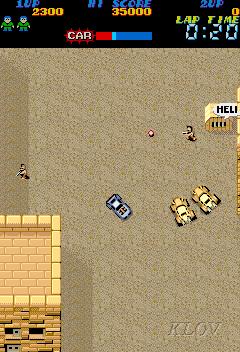
The Speed Rumbler is a shooting/driving game set in a futuristic society where vigilantes with cars and guns rule the streets, and you're tasked with making your way through these violent towns and rescuing innocents from captivity. There are 7 locations that you're expected to clear of enemies, and you're given just over 20 minutes to do so. Every time you die, 5 seconds is added onto your time and yo're not allowed to take over 4 minutes in any one area. Personally I think having both of these time limits is somewhat silly because if you adhere to the 4 minute rule, you'll adhere to the overall limit. The only situation it prevents is getting near to the end and then running out of time, which is suppose could be annoying. 

The main issue with the game is that the control is confusing, if not downright terrible. Sometimes pressing left will steer the car left, other times its forward and I can't seem to work out any pattern to this. Enemy cars are increasingly persistant in crashing into you and damaging your car so that it blows up and you're forced to start from a checkpoint. Added to this, most things take a couple of shots from you to destroy meaning that you either attempt to speed through levels taking damage, or go slowly and run out of time. Overall the concept is good, but the execution leaves so much to be desired that the game is hardly fun to play at all. 

Rating: 11/100                                                                                Status: Level 5
Grade: F                                                                                         Continues: 21


Game: Three Wonders
Console: Arcade
Developer: Capcom
Release Date: 1991

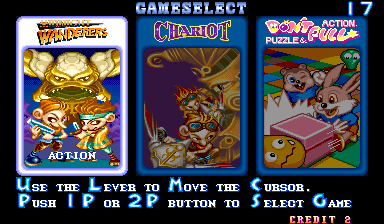
With three games in one, Three Wonders is like a collection, within a collection. There's Midnight Wanderers: Quest for the Chariot which is a platforming shooter, Chariot: Adventure to the Sky which is a space shoot 'em up sequel to the first game and Don't Pull which seems to be an entirely unrelated puzzle game. While it's odd to have two directly related games next to a completely different one, they're all of good quality and make for one of the gems of this collection. 


Midnight Wanderers features a quest through 5 areas where the protagonist, Lou fights various enemies based on various astrological features, to get the chariot for defeating Gaia. Stylistically the game looks a lot like Rayman for PS1 in its earlier stages, which shows how good the graphics are for 1991. While still more difficult than conventional platformers, the game is easier than a lot of others featured on the collection and features a much more conventional difficulty curve throughout the game.

Chariot: Adventure Through The Sky is the best shoot 'em up on the compilation, featuring a range of powerups, bosses based on signs of the Zodiac and a much more sane level of difficulty than the other games. It features the same characters as and some themes from Midnight Wanderers, as it's a direct sequel. The only real downside of the game is that you're forced to fight each boss one after another before the final boss, but this is a feature in other games I've reviewed also (House of the Dead, Streets of Rage). Overall though it's a very enjoyable shoot 'em up with an interesting astronomical theme. 


Don't Pull is a fairly fun puzzle game where you play as a rabbit, crushing enemies with blocks that you push into them. There are 20 levels in total, and it gets a little repetitive but on the whole the gameplay works well and it features some good ideas. What's strange about this game is it's inclusion on Three Wonders, since the other two games feature the same characters, and ideas in different styles of gameplay where this is strikingly different.

Overall Three Wonders has some great gameplay and graphics featured in its three titles, and a good variety of ideas, enemies and things to do. The first two games have more lasting appeal than Don't Pull, but that's not to say it isn't a good inclusion so much as a weird one. Musically, all three of the games feature an impressive amount of good tunes and sound effects. I'd reccomend playing all three games, since they're some of the best on the collection.

Rating: 72/100                                                                                Status: Completed
Grade: C                                                                                        Continues: 57 (all 3)


Game: Tiger Road
Console: Arcade
Developer: Capcom
Release Date: 1987

Tiger Road is a run-of-the-mill challenging sidescrolling Fighter/Platformer. There's lots of enemies and obstacles on screen at any one time and gameplay usually goes something like this: If you move you get hit by something, and if you don't move you get hit by something. The main way of progressing through levels is usually to wave your sword about whilst pressing right and hope that your character has enough energy to get to the end of that room, so that when the game restarts you at a checkpoint, you're at the next one. Otherwise there's not much hope of getting anywhere. 

There are some levels which have slightly better ideas than just moving left to right, but unfortunately the number of enemies and awkward controls make it difficult to enjoy these. Being swarmed with enemies whilst trying to make a difficult jump doesn't seem like the most fun you could be having. There's 4 stages in the game, but I got stuck in each one of them, and restarted in the next. 


Graphically, the game's not all that with graphics slightly better than that of 3rd generation consoles. The in-game music is alright, but the sound effects and voices leave a lot to be desired. Overall it's pretty average for the collection, it's playable until you get stuck somewhere and the difficulty means that's pretty often. There's not really much reason for anyone to play this thesedays, as something like Revenge of Shinobi far outclasses it in the same genre. 

Rating: 15/100                                                                                Status: Played
Grade: F                                                                                        Continues: 15


Game: Varth: Operation Thunderstorm
Console: Arcade
Developer: Capcom
Release Date: 1992

Another game in the vein of the 1942 series, Varth stands out by featuring a defense system which includes pods circling the player that deflect enemy fire, thus making the game somewhat easier. The levels are also shorter, but there are more in the game overall (a total of 30). The game seems to focus more on skill and dodging attacks whilst shooting enemies rather than the blind all-out action of some of the other games in this style on the collection. This means that there's a better difficulty curve throughout the game also. 

Graphically the game is impressive to a degree, although having been released in 1992 it's not far off the systems of that time. Gameplay is generally fun and I only had to continue around once per level in playing. There's a small array of powerups and special moves that the player is able to use to their advantage, but after a little while repeating enemies, and gameplay style leads to the game being somewhat repetitive. Overall though, it's a slower paced shoot 'em up which lends itself better to western audiences and those looking for an enjoyable game on the collection.

Rating: 60/100                                                                                Status: Level 10
Grade: D                                                                                        Continues: 10

So with that, I've played all 20 of the games on the Capcom Classics Collection Vol. 2. With an average rating of 50.6 out of 100, it's fair to say that they're a mixed bunch ranging from failed ideas for new types of arcade games to quality beat 'em ups. In total I used 432 continues, which is approximately 1296 lives or the equivalent of 144 cats. There's no doubt that Capcom's arcade games were pretty difficult on the whole, and this collection won't really appeal to anyone who dislikes losing.

Overall as a compilation, the games you'd think would be impressive (SSFII, Street Fighter etc.) are somewhat of a disappointment, and games never released in Europe or outside of arcades seem to be hidden gems (Captain Commando, The King Of Dragons). It's got some decent titles, worth owning since they're not available anywhere else, but anyone expecting a large amount of variety in the 20 games will find a large amount of Beat 'Em Ups, Shoot 'Em Ups and fantasy themed platformers.


The collection also features bonus tips, music and art for all of the games featured which is unlockable through completing certain in-game objectives. As well as being an incentive to try every game it gives the opportunity for the player to learn more about it. Other bonus features include a tutorial on Super Street Fighter II, a Capcom quiz in the style of Quiz and Dragons and the credits for the game.

Although I don't include collections such as this in my overall game rankings due to the fact that they're hard to rate against other single games, I will give this a score which will appear on the video game collection ranking table.

Rating: 75/100

Sunday, 29 September 2013

Collection Review: Capcom Classics Collection Vol. 2 Part 2

With 6 games reviewed and 14 to go, it's time for some more impossibly difficult Capcom arcade action!


Game: The King Of Dragons
Console: Arcade
Developer: Capcom
Release Date: 1991

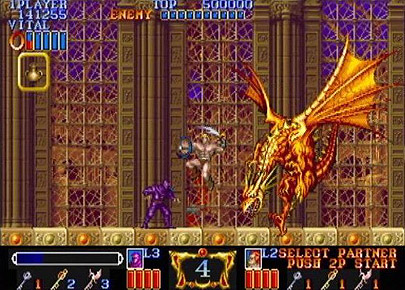
The first of quite a few fantasy style Beat Em Ups on this collection, The King of Dragons also features RPG style leveling elements as well as the opportunity to upgrade weapons and shields. Able to accommodate up to three players simultaneously, the game has 5 different classes of character to choose from, all of which handle and attack differently; there's Elf, Wizard, Fighter, Cleric and Dwarf. It seems best to choose a class and stick with it, although you're allowed the option to swap at various stages throughout the game, you can attain a higher level by continuing to play as the same class.


Gameplay is as you'd usually expect from a beat 'em up; full of enemies and opportunities to collect score, as well as to level up. You work your way through a land which has been tormented by monsters, controlled by a dragon Gildiss, who is the final boss of the game. There are 16 stages, some very short and others seemingly endless, through different locations and terrain. The 5 classes of fighter are fairly evenly balanced, although at points, some do have an advantage over others.


Graphically the game is once again reminiscent of the 16 bit era, as it was produced during that time and was actually released on SNES in Japan and North America. The soundtrack is another strong point of the game, with an organ theme throughout, it suits the fantasy style well. The difficulty on this particular game doesn't seem to be as high as some of the others on the collection, although you'll still find yourself taking a lot of damage. Overall it's a highly playable bit of fantasy fun which never made its way to Europe for home console.

Rating: 74/100                                                                                Status: Completed
Grade: B                                                                                         Continues: 11


Game: Knights Of The Round
Console: Arcade
Developer: Capcom
Release Date: 1992

Strangely never released in Europe, Knights of the Round follows the story of King Arthur, Percival and Lancelot in their quest to restore peace to England. Another fantasy beat 'em up game, it plays fairly similiarly to The King Of Dragons and I'd wager that it uses the same game engine. As either of the 3 protagonists, players can fight their way through 7 stages, levelling up as they collect score.


A rather major flaw in the game is the amount of damage enemies can do. In regular beat 'em ups you'll find that your health bar is only seriously depleted by bosses or very powerful enemies, but that's not the case here. Anything up to a third of your health bar can be taken away in one hit by regular enemies, which makes dying a far more regular occurrence. Bosses are even worse, as they hit hardest of all and take 30-40 hits to get rid of.


The option to have 3 players is a welcome one, and the gameplay on the whole is good, if a little repetitive. The game wasn't that hard to complete with infinite continues, but I wouldn't have got very far without them. The graphics in game are very similar to that of The King Of Dragons and are even a little reminiscent of Golden Axe, so pretty much standard fantasy beat 'em up fare. Musically the game has some interesting pieces but nothing especially impressive.

Rating: 66/100                                                                                Status: Completed
Grade: C                                                                                         Continues: 31


Game: Last Duel
Console: Arcade
Developer: Capcom
Release Date: 1988

Last Duel is a space-shooter type game which seems to be too hard for it's own good. With an array of bullets, enemies and other obstacles on the screen, losing lives is inevitable and although the game doesn't play particularly fast, it's still very challenging to survive for even a minute under these conditions. There are shooting powerups and shields to be collected which can aid the player's survival but even so they're not of much use overall. The story of the game flashes up quickly before the title card, it's a generic space wars type plot as you'd expect.

The graphics are probably the most impressive part of the game, as they're rather advanced for 1988. There's not really any slowdown with multiple enemies and projectiles on the screen and levels have a nice range of backdrops and music in them. Overall if it had been a little easier, this game would have made a great arcade space shooter. Unfortunately losing a life every 5 seconds does take some of its appeal away.

Rating: 49/100                                                                                Status: Gave Up
Grade: D                                                                                        Continues: 52


Game: Magic Sword
Console: Arcade
Developer: Capcom
Release Date: 1990

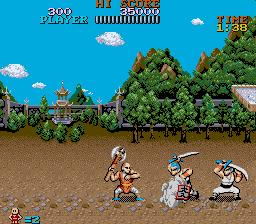
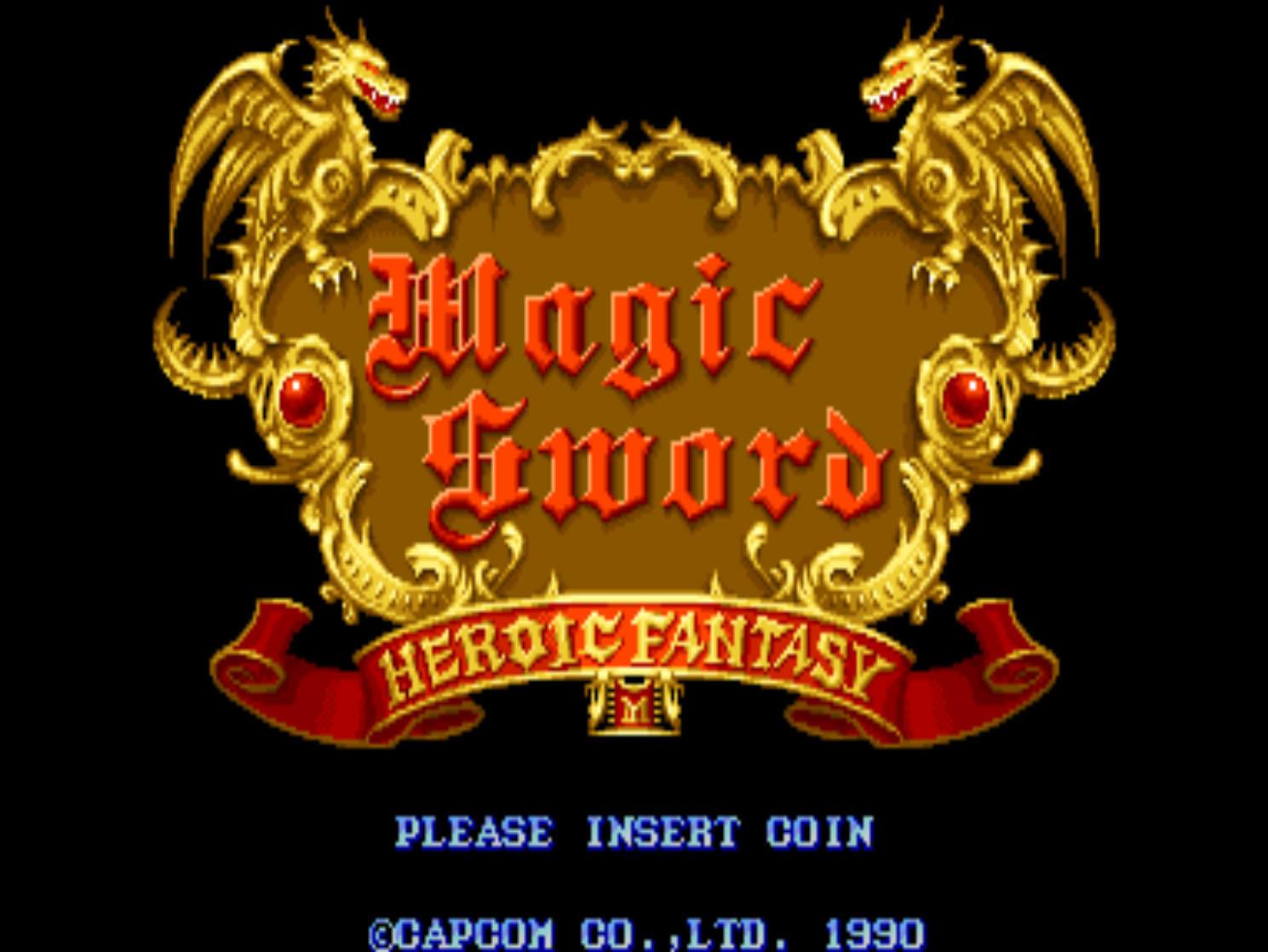
Magic Sword is a 2D platforming type beat 'em up where you attempt to traverse 51 floors of a tower to reach the final boss. The player must collect keys to climb the floors of the tower, as well as to free prisoners, who will fight alongside him (although you're only allowed one at a time to do this). Not only is the game fairly difficult, the fact you're expected to complete 51 levels, however short they are makes it feel like a big undertaking.

The game itself is fairly simple, moving along either to the left or right of the screen, freeing prisoners and looking for the next flight of stairs up. Every now and then, there are boss battles which allow you to get a better sword. If you take damage, the hero will drop his sword and you'll have a very short amount of time to collect it before you're forced to use the next sword down (which can't be dropped).


The levels themselves can take anywhere from 20 seconds to 2 minutes to complete depending on what's in them. The bosses are of a good difficulty and are fairly fun to fight, but regular enemies are weak and tend to swarm you so that it's hard not to take damage. The player is given a good amount of health to begin with, which is a bonus with a difficult game such as this.

The graphics and sound for the game are good and really help to shape the experience. It does however look a lot like the other fantasy beat 'em ups included on the collection, even if there are gameplay differences. Overall this has decent appeal, but I dislike the way it's laid out with 51 short levels to explore. I'd much rather have 10 or 15 longer ones, and even then that may be too much for this type of game.

Rating: 55/100                                                                                Status: Halfway
Grade: D                                                                                        Continues: 12


Game: Mega Twins
Console: Arcade
Developer: Capcom
Release Date: 1990

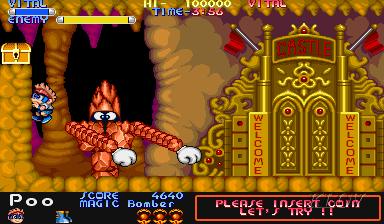
If Cute 'Em Up is a genre with bright graphics and cartoon-like enemies that need shooting, consider this a Sweet 'Em Up. With most of the content of some of the earlier fantasy games, but in a bright cartoony world, Mega Twins is half Beat 'Em Up, half platformer. In a few ways it plays more smoothly than the other similar games featured on the collection. The objective is to make it though the air, land and sea worlds, through a castle and back out to defeat the final boss.

There's still a fair amount of difficulty to the game, despite the child-like graphics; bosses and stages require some strategy and quick thinking. It's less taxing than most of the games on the collection though, and somewhat more fun at times since you're not as harshly bombarded with things to avoid. The limited use special attacks work pretty well and are useful in tight situations.


The sound in the game lets it down somewhat; there's a really annoying noise that plays whenever you're below half health, and a lot of the other effects could be better. The graphics are nice despite their cartoon nature and the game is a whole lot brighter than the other fantasy games. The bosses and enemies are nicely designed and remain in line with the theme for the game as well as being cute and cartoon like.

Overall it's a game with fun parts which is fairly short and let down a little by it's music and sounds. There's good themeing and character design and it's one of the easiest games on the collection. It's a nice break from the more serious side of fantasy Beat Em Up and platforming games also.

Rating: 60/100                                                                                Status: Completed
Grade: D                                                                                        Continues: 18


Game: Quiz and Dragons
Console: Arcade
Developer: Capcom
Release Date: 1992

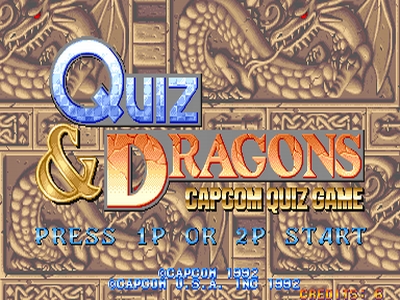
The last fantasy type game for this review and the penultimate one of the collection, Quiz and Dragons is a quiz game styled around the dungeons and dragons board game. The player rolls a die and moves to a square which represents an enemy which must be defeated. There's a certain number of points required to defeat the enemy, which can be achieved by correctly answering trivia questions. It's a strange concept for a quiz game, but also an intriguing one.

The graphics are fairly impressive yet somewhat wasted on this type of game; afterall there only really needs to be the text for questions and answers. Each character type has their own advantage whilst playing the game, my favourite one is the Amazonian's ability to have less options to answer from, thus making it easier to get a correct answer.


Where the game begins to feel flawed to me is first is its largely American bank of questions. As can be seen above, there's questions that people outside of the US will struggle to answer. Secondly some of the answers are even wrong or out of date (the second of which can be expected from old quiz games), so it's a little unfair on the player also. Added to the fact that quiz games aren't exactly the most exciting of things, it makes for a rather dull play experience, despite the D&D theming.

Rating: 38/100
Grade: E


Game: Side Arms
Console: Arcade
Developer: Capcom
Release Date: 1986

There's been some pretty hard games on this compilation so far, especially the shooters which seem to have ridiculous amount of enemies and projectiles on screen at any given time. Let me introduce the hardest of the shooters so far; Side Arms. I'm pretty sure that the longest I went without taking damage in this game was around 10 seconds, it's incredibly enemy heavy; so much so that it'd be impossible without a great deal of continues.

As it is, even with infinite continues, you're damaged so often that it's hardly even fun to play. I'm aware that people have practiced hard enough to beat the game with just one continue, however an arcade game that kills new players after 5 seconds isn't going to make much money. As featured on the Capcom compilation with infinite continues, I'd much rather have turns longer than 10 seconds than a game I can feel proud of being good at, any day.


The game's graphics are great for the time, just another reason why it's disappointing that it's so hard. The boss design is another good feature, and the music is good also. There's really nothing that'll take your mind off the fact that you're dying every 7 seconds or so, however. Too difficult to get into, and not rewarding enough to spend time getting good at, this is a game I'd recommend avoiding.

Rating: 45/100                                                                                Status: Gave Up
Grade: D                                                                                        Continues: 50

Stay tuned for the last 7 games in the Capcom Classics Collection, so far I've used 294 continues across the 13 games (or around 882 lives). How much harder can it get?