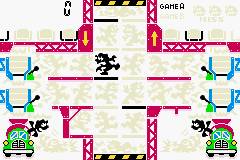
Recently I've acquired 3 original Game Boy multicarts, each featuring their own assortment of games. Some of them aren't the sort of games I'm able to review, but others are exclusive to Japan or the sorts of games that I would like to review, so I'm going to take a look at each cart in turn.
King Series 14 in 1 Multicart
Sporting simply the word "GAME" at the top of its cartridge, the King Series 14 in 1 multicart features pictures relating to the games on it, as well as a gratuitous picture of Pikachu next to the title. Unfortunately there are only 6 games in total on the cart, as they repeat with altered titles which are variants of the original name.
Game: Detective Conan: The Suspicious Gorgeous Train
Console: Nintendo Game Boy
Developer: Bandai
Release Date: 1998
The first game on the King Series 14 in 1 multicart is a Japanese graphic adventure style game based on the Detective Conan anime and manga series. With only one game in the series released in Europe on the Wii in 2007, this isn't a particularly well known series of games. As this one is entirely in Japanese, and requires various detective skills to complete, I can't give my opinion on it for lack of understanding. It's a shame, as it looks like it could be a good game, if I understood it.
Game: Crayon Shin-Chan 4: Ora no Itazura Dai Henshin
Console: Nintendo Game Boy
Developer: Bandai
Release Date: 26th August 1994
Translating roughly to Shin-Chan 4: My Big Transformation Prank, this game features the cartoon character Shin-Chan (anyone remember Jetix?) platforming his way through 4 different levels. Players can collect powerups which transform Shin-Chan into an insect (with feelers that attack), a chicken (which can shoot eggs) or a super form (which can shoot lasers). When in any of these forms, taking damage by touching an enemy or their attack will transform Shin-Chan back to his regular form.
At the end of each level is a boss, who requires minimal platforming logic to beat. The most players will ever have to do is avoid an attack and wait for an opportunity to strike. The overall difficulty level of the game is low, but it's fairly obvious that the game was designed for children.
Despite this, the controls for the game are surprisingly tight; any deaths are purely the result of player error. The level design is also good, with varied stages including one with moving shopping trollies and bonus items to collect if a more difficult path is taken. Throughout the levels of the game there are items to pick up besides the transformation powerups; Shin-Chan icons provide players with extra lives, the long, tall rolls with a japanese marking on them give players an extra life once 30 are collected, and smiley face icons can be used to play minigames, once a stage has been beaten.
There are three minigames to choose from; a shooting game of sorts where players must hold back enemies by multitasking control of 4 shooting locations, a bug catching game, and a jumping challenge. If completed successfully, these games become more difficult the next time they're played, as well as providing the player with extra lives.
Graphically the game is pretty basic, but the style resembles that of the cartoon series in a few ways and when Shin-Chan is suited up as a chicken or insect it can be rather cute. Musically there's a few listenable tunes which accompany gameplay. While they're not particularly memorable, they fit well with the action featured in the game.
Overall when compared to other Game Boy titles targeted at children, Shin Chan 4 excels in providing tight and responsive controls, a small amount of difficulty, and a choice of minigames to break up the monotony of playing each platforming level in turn. While the game isn't exactly a classic, it's something to kill 20 minutes with that is interesting and well made.
Rating: 63/100
Grade: C
Game: Motocross Maniacs
Console: Nintendo Game Boy
Developer: Konami
Release Date: 1990
Motocross Maniacs is a pretty simple Motorbike platforming game which challenges players to complete various courses, with jumps, loops and other obstacles within a certain time limit. There are 3 game modes; Solo, vs Computer and vs 2-Player. Essentially the gameplay is the same in all modes, except for the addition of the opponent's shadow being onscreen in vs modes. It's also a requirement to beat the opponent as well as the time limit in competitive modes, making them more difficult.
There are 8 courses in total which can be played on any of 3 difficulty levels, although these only affect the amount of time players are given at the start. On each course are different collectibles such as Nitro for a boost, Speed (which gives a boost in top speed until players crash), Time (which increases the countdown timer) and Tyres (which boost grip until players crash).
In terms of control, players are only able to tilt the bike's orientation to land safely on parts of the course. This reminds me of modern day motocross flash games which have the same concept. Many of the courses have a two-tier system where the more difficult top route rewards players with many of the powerups, and the bottom route contains loose rocks and sand to slow players down, as well as lacking powerups.
At points in the game it's possible to get stuck, especially when approaching a loop without any nitros left. While it's possible to save them on the off-chance you'll encounter a loop, there are many other situations requiring nitros, and it's frustrating that there are parts which can be literally impossible without a nitro. Another small annoyance is that the lower route hardly ever allows players to pass levels, as there are no time powerups to increase the countdown clock.
Graphically the game is very basic, with very small sprites and letters in boxes representing the individual powerups. Movement and animation is generally smooth, and the game moves at a fairly fast pace on the whole. The music that accompanies gameplay is unimpressive and even a bit annoying after a while.
Overall Motocross Maniacs is a strange cross between platforming and racing. It's not particularly complex, or enjoyable even, but it works decently. Tracks aren't particularly well designed and can be difficult to traverse between the controls and the overall difficulty. With almost no replayability once you've tried out each track, it's not something I can particularly reccomend.
Rating: 25/100
Grade: E
Game: Trump Boy
Console: Nintendo Game Boy
Developer: Pack-In Video
Release Date: 29th March 1990
I've never been particularly keen on video games that could be easily replicated in real life. Video games based on card games, board games, and anything that could easily be played without numerous hours of programming and development seem rather a waste of time and resources. Trump Boy is a collection of 3 card games which are at the very least, operational.
Game: Shanghai
Console: Nintendo Game Boy
Developer: HAL Laboratory
Release Date: 1990
Before games like Smash Bros Melee and Kirby, HAL Labs were making Mahjong games for the Game Boy. As I said of Trump Boy, I don't think there's much point in reviewing a game that could be easily played elsewhere, especially in this case as Mahjong games are so prevalent on almost every console. It's not particularly good or bad in any way, and if I'm honest I don't really understand the appeal of Mahjong on such a small screen.
Game: Dr. Mario
Console: Nintendo Game Boy
Developer: Nintendo
Release Date: 1990
I've already reviewed
Dr. Mario for NES, and this version is pretty similar, save for the lack of colour. The gameplay and music are pretty much identical to the original, and thus this is just a portable version of it. It's a decent little game for inclusion on these types of multicarts, and the final unique game on the cartridge before they start repeating under different titles. Overall I'd give this the same score as the NES version.
So that's the King Series 14 in 1 cart, featuring 6 games in total, and a real mix of titles. Personally I think the main appeal was intended to be the new Detective Conan game, as well as a fairly recent Shin-Chan game, supplemented by some far older table and puzzle games. It's nice to get the opportunity to play some Japanese exclusives, even if they're not terribly good.
Color GB 32 in 1 Multicart
With a much more official looking cartridge, the Game USA Colour Advance 32 in 1 cartridge sports pictures of Mortal Kombat, Mario 64, Asteroids, Dr. Mario, and strangely "Happy Kombat" which doubtless is just another one of their titles for Mortal Kombat. Of the 32 games promised, the cart actually features 6.
Game: Mortal Kombat
Console: Nintendo Game Boy
Developer: Probe Entertainment
Release Date: 13th September 1993
While it's no secret that I'm not the biggest fan of the
SNES or Mega Drive versions of Mortal Kombat, it's obvious that they were developed in line with the power and capabilities of the 4th generation consoles. As you may be able to imagine, the Game Boy version of the game isn't quite as graphically or technically impressive as other versions. There's a choice of 6 fighters, 1 less than the home console versions of the game. and no options of any sort to choose from.
The game goes straight to the arcade mode upon choosing a character, and gameplay is slow even compared to home console versions. With only two attack buttons available for kicks and punches, there's a very limited set of moves available to players, and while there's still the sort of special moves which supposedly set the game apart from other tournament fighters, they're not executed in a way which is satisfying to players.
Graphically the game looks awful, with the motion captured animations appearing in even lower quality than before. The life bars are also difficult to see properly due to the size of the screen, so it's best to play on the Super Game Boy if you can. Musically the game features watered down versions of the home console themes, and they're not too bad when all things are considered.
Overall Mortal Kombat for the Game Boy is an almost perfect example of a game that's been watered down for handhelds. Less fighters, less features, worse graphics, worse gameplay and a worse overall experience. There's no real reason anyone'd want to play this version of the game, especially not if they had access to literally any other version.
Rating: 30/100
Grade: E
Game: Super Mario 4
Console: Nintendo Game Boy
Developer: ???
Release Date: N/A
Super Mario 4 uses assets from various games in its attempt to convince players that it's a legitimate game (it's a ROMhack in case that wasn't obvious). With a title screen based on Super Mario 64, sprites from Super Mario Land 2, Yoshi's Cookie and Mario & Yoshi. The game itself is a hack of Crayon Shin-Chan 4 (reviewed a little further up), and while the level design and several elements have been changed a little, it's still pretty obvious what it's based on.
The game itself is pretty hard, with no continues, many blind jumps, and areas that require taking damage to continue. Donkey Kong makes an appearance as the boss of the 4th world, but other than this it's not a particularly noteworthy game. The next game on the cart is Dr. Mario, which I've reviewed already, so I'll be skipping that as well.
Game: Flipull
Console: Nintendo Game Boy
Developer: Taito
Release Date: April 1990
Subtitled as "An Exciting Cube Game" in Japan, Flipull is a puzzle game which requires players to match blocks with certain shapes on, in order to obtain a set number of points to clear the level. Each level begins with a special block, capable of clearing any other block, but after this players must match the block behind the one they've matched with previously, while the block that's been hit disappears. If this sounds slightly confusing, you'll be able to appreciate my confusion as the game doesn't explain any of the rules.
If players can't find a match for their block, and they run out of Special blocks, then the game is over and the level can be retried as long as there's a continue available to do so. Unfortunately not much strategy can be applied to the game, and wins and losses are mostly random and based on how the level is presented at the start.
Graphically the game is simple, with the majority of the screen taken up by blocks. While it's not difficult to see what you're doing, the game hardly pushes the Game Boy to its limit, and a little more animation might have added some interest. The music is simple and as equally inoffensive as it is unimpressive. It suits the puzzle theme decently, however.
Overall Flipull is about as basic as puzzle games get. While it's not quite as bad as card games or board games on consoles, there's very little gameplay or interest, and there's not really any skill to winning the game. It seems to be the sort of game that's included on the collection for its small filesize rather than any attractive graphics or gameplay.
Rating: 14/100
Grade: F
Game: Asteroids
Console: Nintendo Game Boy
Developer: The Code Monkeys
Release Date: February 1992
Asteroids is a game which should need little explanation to gamers; players control a space ship which can be rotated and moved forwards in order to aim and shoot at asteroids which are hurtling through space. As players shoot the asteroids they split off into smaller segments, any of which can destroy the player's ship until the tiniest segments have been destroyed. In this version of the game levels increase in difficulty after all asteroids have been cleared, up until the player loses.
Graphically the game looks pretty good for being on the Game Boy; the animations are smooth and the asteroids are relatively detailed. The lack of music behind gameplay is a little disappointing as the sound effects don't give enough of an atmosphere on their own. Overall it's a working version of Asteroids on the Game Boy, but very little else. There's a choice of difficulty settings and multi player modes, but all are essentially the same experience.
Rating: 30/100
Grade: E
Game: Boxxle
Console: Nintendo Game Boy
Developer: Atelier Double
Release Date: 1989
Boxxle is a puzzle game that's appeared on multicarts and other consoles in many formats. The object of the game is to push boxes from their starting positions onto the marked areas. Unfortunately boxes can only be pushed into areas where there's space for them, meaning boxes can get stuck, preventing levels from being finished. There's an undo button in case of this happening, but sometimes the puzzle will need to be restarted to find the proper solution.
Graphically the game is basic, but adequate. What needs to be done is clearly displayed, and any strategy can easily be worked out with the information provided. There's only one theme that plays behind gameplay but it's tolerable, especially considering the short nature of the game. Overall while there's not a lot to the game, it does its job well and just like Asteroids was included due to its small overall size on the cart.
Rating: 22/100
Grade: F
Without any real blockbuster titles included in its 6 games, the Color GB 32 in 1 cart falls a little short of even low expectations. On of the most despicable features of multicarts are ROMhacks purporting to be legitimate games (such as Super Mario 4), because they're attempting to entice ill informed gamers to buy a product which they'll no doubt be disappointed in. With only one multicart to go, let's hope there's better things to come;
Color 32 in 1
Similarly titled to the Color GB 32 in 1, and sporting the same type of sidebar and serial number, I think it's safe to assume that this cart was brought to us by the same people. Featured in the pictures on the front are Adventure Island 2, Super Mario Land, some sort of Pool game with fuzzy writing, Spiderman, Snoopy, Battleship and Bugs Bunny. This makes for a seemingly high quality assortment of games when compared to the other carts.
Game: Adventure Island
Console: Nintendo Game Boy
Developer: Hudson Soft
Release Date: February 1992
Adventure Island has a rather interesting backstory as a gaming series; it was originally a direct port of Sega's arcade game 'Wonder Boy', until Hudson Soft obtained the rights to the game and decided to change the main character to their spokesman, Takahashi Meijin. In Western versions of the game, the main character is called Master Higgins. While the Wonder Boy series eventually went down the route of action RPGs, later Adventure Island games stuck to and expanded upon the original Wonder Boy platforming formula.
The overall objective of the game is to rescue Tina who appears to have been kidnapped and trapped inside of an egg. To do this players must traverse 8 separate islands, each of which have 5 stages before a boss, making for 40 different stages and 8 bosses to beat. Each of the islands have different themes such as Ice, Cave, Cloud and Desert which influence the scenery and enemies found there to a degree.
At the beginning of each level is a powerup egg containing an axewhich players can use as a weapon to defeat enemies. In addition to this various powerup eggs are hidden along the way which contain a skateboard, or creatures to ride on. As well as making platforming easier, these also provide an extra life for players if hit.
Graphically the game is pretty simple, although there are some interesting features to some of the backgrounds and locations. The music sounds good even if it isn't particularly memorable or technically impressive. Overall Adventure Island for the Game Boy has some tight platforming, and a good overall design, but suffers from being repetitive over its many stages.
Rating: 61/100
Grade: D
Game: The Amazing Spider-man
Console: Nintendo Game Boy
Developer: Rare
Release Date: July 1990
There have been many Spider-man games across many consoles over the years. The Amazing Spider-man for Game Boy was developed by Rare and published by LJN, a strange combination as Rare are best known for their amazing line-up of Nintendo 64 games, and LJN are best known for releasing poor NES games. The objective of the game is to fight through the 8 stages and beat 8 of Spider-man's nemeses.
Most stages feature a beat 'em style of gameplay, allowing Spiderman to punch, crouch kick or jump kick his opponents with different combinations of the directional and attack buttons. Having only 3 attack options is a little restrictive at times, and Spider-man often takes damage from enemies thanks to the poor hit detection. A few stages change up the gameplay, such as the wall climbing level, but these are few and far between.
Boss fights are generally pretty easy, as long as players are aware of their pattern. The fact that you're given 5 continues also helps, although Spider-man's health is depleted very easily in the course of gameplay and it's almost impossible not to take any damage at all. Graphically the game has some issues; Spider-man looks as if he's suffering from back pain most of the time, and there's a general lack of detail, but it's not too bad. The music is pretty standard for a Game Boy title, and there's no Spider-man theme or recognisable tunes from the cartoons.
Overall while this definitely isn't the best Spider-man game I've played, it functions as a beat 'em up and allows players to get decently far thanks to the number of continues given at the beginning of the game. Perhaps if the developers had gone for more of a Shinobi style game with a ranged web attack, and more use for web slinging than just avoiding all enemies it could have been a better game.
Rating: 46/100
Grade: D
Game: Super Mario Land
Console: Nintendo Game Boy
Developer: Nintendo
Release Date: August 1989
Super Mario Land was the first handheld platforming instalment in the series, featuring 4 worlds with 3 stages each for a total of 12 stages. At the end of every 3rd stage there's a boss, with a final boss appearing at the very end of the game. Each world has a loose theme; these include Egyptian, Moai, and Water based worlds. Some enemies from the console games make an appearance such as goombas and koopas, but there are also some new enemies like spiders and flying Moai heads.
The overall difficulty is pretty low, and with a minigame which can replenish lives inbetween each stage, there's no reason players shouldn't be able to complete the game on their first run through. Even going slowly through the worlds, there's about half an hour of gameplay in the entire game. On the bright side it controls pretty well and does feel like a primitive version of a Mario game.
Graphically the game is strange; everything seems very small in comparison to console releases; item boxes and goombas seem especially tiny and this can be offputting at first. Musically the game is good, despite using only a few original tunes throughout the stages. Interestingly the invincibility theme is a version of the Can-Can. Overall while Super Mario Land feels like a bite sized version of a Mario game in many ways, it's a decent platforming experience and it offers most of the excitement of a console Mario game.
Rating: 67/100
Grade: C
Game: Side Pocket
Console: Nintendo Game Boy
Developer: Data East
Release Date: November 1990
As mentioned earlier, I'm not the biggest fan of video games that are entirely possible to play in real life without too much trouble. Pool is on the edge of this bracket as it's entirely possible to go to the nearest pub and play a game for a pound. Side Pocket isn't a bad Pool game, especially by Game Boy standards; the animations are fairly smooth, and there's a career mode of sorts, and two player capability.
One of the best features of the game is that when aiming, the view shows which ball is which by number, allowing players to easily apply some strategy to their shots. Unfortunately though at the end of the day it's still a very simple Pool game and as such I feel that it doesn't belong in my video game ratings.
Game: Snoopy Magic Show
Console: Nintendo Game Boy
Developer: Kemco
Release Date: October 1990
Snoopy Magic Show is another multicart title that was only released in Japan. As a puzzle game of sorts, there wasn't much need for the game to make its way over to the West. Players control Snoopy in a 72 tile rectangle and can move horizontally or vertically between tiles. The goal of each level is to reach every Woodstock, without getting hit by the balls which bounce around each level. Once players have done this they'll advance to the next level, of which there are 120.
Most levels are fairly simple, and there's not a great deal of different features to increase the difficulty in later levels. This means that after 20 levels or so players have seen pretty much all of the game. It should also be noted that there are only 60 level layouts, which are repeated once to pad out the game. Graphically the game is simple and save for featuring characters from the Peanuts comic, it's not particularly interesting. The music is generally upbeat and fits well with the game.
Overall this isn't a particularly original puzzle game and although it's pretty easy, it's easy for players to get bored with the amount of repetition and lack of features. There's no real reason for the Snoopy theme, save for selling copies of the game and it seems like the game will only really appeal to hardcore Snoopy fans.
Rating: 27/100
Grade: F
Game: Battleship
Console: Nintendo Game Boy
Developer: Pack-In Video
Release Date: December 1992
Battleship is another game that can easily be played without the help of video game technology. In fact I'd almost argue that it's better off without. As the original game is a battle of random chance with a little skill mixed in if players know how to exploit certain rules, it's good for 2 players to have an even contest with. Playing against a computer opponent feels too meaningless when players win, and too frustrating when they lose.
There's some nice animations for when ships get hit, and a few rule variations that keep things interesting such as radar and missile clusters, but these could easily be worked into a real life game of Battleship too. The music is easily the best feature of the game with a fast paced action soundtrack to accompany combat. Overall though, there's really no reason for this game to exist, let alone have a version on 14 different consoles.
Game: Bugs Bunny's Crazy Castle
Console: Nintendo Game Boy
Developer: Kemco
Release Date: March 1990
Originally a Mickey Mouse game in Japan, Bugs Bunny Crazy Castle is a platform game in which Bugs Bunny must collect all 8 carrots on each level to progress to the next. There are 80 levels in total, which vary wildly in difficulty between really easy and some which take a little planning to beat. There are enemies roaming each level, as well as a variety of weapons and means to eliminate them with, such as boxing gloves, 10t weights and safes to push off the edge of ledges.
Generally gameplay is good although it can get a little repetitive after a while; most of the 80 stages are well designed and there are tubes, stairs and other features which keep them fresh and different. The AI can be a little dodgy at times, if players stop moving the sometimes the enemies follow suit, and there can be some cheap deaths, especially at the end of pipes which players have entered blind due to their length.
Graphically the game has decent likenesses of the cartoon characters, although the backgrounds and location of the entire game are pretty bland. The plot is simply that Bugs is trying to save Honey Bunny who has been kidnapped, although upon completing the game she's not shown or even mentioned (probably due to this being a port of a Mickey Mouse game). Musically the game has a listenable soundtrack which accompanies gameplay well.
Overall this isn't a bad start to the Crazy Castle series, some players may find it a little boring or even easy, but the concept and ideas are pretty fresh. Perhaps 80 stages is a few too many also, but with a password system and infinite continues, it should only take an hour or two to beat the entire game with a little effort.
Rating: 57/100
Grade: D
Easily the best of the three multicarts, this offered the best selection of early Game Boy games, with everything on the cart released before 1993. Multicarts can often be a bit of a gamble with ROMhacks and filler games being prevalent on many, but sometimes what's offered is a look at somewhat forgotten or unreleased (at least outside of Japan) gaming experiences.