Showing posts with label Tournament Fighter. Show all posts

Saturday, 24 January 2015

Fighters Month: Series Review: Dead Or Alive


Game: Dead Or Alive
Console: Sony Playstation
Developer: Team Ninja
Release Date: 31st March 1998

Released fairly late in the original Playstation's lifespan, Dead or Alive is somewhat to Tekken in terms of gameplay and visual style, though there are distinct differences between the two also. Players can choose from 11 fighters, none of whom have any of their motives for fighting explained as instead of ending sequences for each character, new costumes and/or options are unlocked once Tournament Mode is completed. While this is nice, many games feature both storylines in addition to unlockables, putting DoA at a disadvantage.

Controlwise the game is simple with only three attack types; punches, kicks and grabs. There's no real block move, instead a sort of counter system is featured but it's fiddly and difficult to make work. Consequently, most battles are spent attempting to hit opponents before they can hit you, with whatever combination of moves seems to work best, rather than waiting for an opportune moment to counter/developing an actual strategy for beating opponents.


The speed of fights is satisfactory and compares favourably to many other titles of the era. Where other Playstation games would feature slower movements an animations, Dead or Alive certainly attempts to keep the game flowing quickly. One of the game's main focal points was the large number of revealing outfits available for female fighters, with later spin-off games based almost solely on this concept. While it's nice to unlock many different outfits for fighters, 14 outfits for a single character seems a little excessive.

Other modes included in the game are pretty standard fighter fare, and though there's a good range of things to do (much like in Tekken), Tournament mode has the most appeal in terms of depth and unlockables, with 10 fights of two rounds each while most other modes are simply variants of an exhibition style gameplay and have little more to offer.


Graphically Dead or Alive looks pretty good for its time, with much less blockiness than Tekken and other early fighting games on the Playstation. Backgrounds are nicely detailed, and animations are smooth and realistic also. The music that plays behind the game is fairly standard for fighter-style titles, but suits the action well nonetheless. Some of the fighters vocal noises can become annoying if the same attacks are used over and over, but other than this the in game sound effects are generally good.

Overall Dead Or Alive doesn't play as well as some fighting games of its time, but show promise in fast gameplay and animation as well as a range of unlockable outfits and options. The lack of real depth in modes and storyline lets the game down somewhat, but it's still fairly enjoyable overall, especially in multiplayer modes.

Rating: 71/100
Grade: C


Game: Dead Or Alive 2
Console: Sony Playstation 2
Developer: Team Ninja
Release Date: 30th March 2000

Unlike many video game sequels, Dead or Alive 2 had the benefit of being on a new console with more power than the last to enhance the experience and feeling of the series moving forward. In addition to this, some changes were made to the overall gameplay experience. Tournament mode now features 7 fights of a single round each, meaning that less time is required to complete the mode. The controls have also been changed slightly, with the throw button remapped to X instead of Square, and Square taking on a new role as the "free" button, with different uses depending on the situation.

An attempt has been made to add an element of story to tournament mode, with various cutscenes playing before fights, and once the mode has been cleared, but there's hardly any dialogue and no consistent plot outlined in the scenes. Thanks to this, players can only guess at what's going on, rendering the story fairly useless as a narrative device. It doesn't provide an incentive to continue with tournament mode any more than wanting to get to the end.


Fighting seems to have generally improved since the last instalment of the series; it's smoother, more responsive and easier to pull off combos and counters. Additionally when counters are made, the animations are much clearer as to exactly how the attack was countered. Strangely the fights have been reduced to a single round, which makes Tournament Mode a lot shorter, but that could be seen as improvement as players will need to play through many times to unlock all outfits and characters.

As for the game's other modes, there's more than in the original Dead Or Alive, since Tag Battle mode acts like another Tournament mode, and Survival and Time Attack modes are also fairly enjoyable. As for the option to simply spectate on a CPU fight, I'm not completely sure when this'd be helpful, but there's no harm in having it there, I suppose. The game's overall difficulty is strange; sometimes it's pretty easy, as in Tournament Mode on the Normal difficulty setting (I beat the final boss first time, without any practice), and at other times it's out to destroy players without any mercy (as in Time Attack mode on Normal difficulty).


Graphically the game is pretty impressive, especially for a game which came along so early in the Playstation 2's lifespan. There's a wide range of outfits available for each character, and an interesting set of arenas in which to fight. The game runs just as fast as the original Dead Or Alive, if not faster and there's no noticeable slowdown anywhere. Musically some of the game's impact and general mood comes from its soundtrack, which is pretty enjoyable.

Overall Dead Or Alive 2 has many features that make it a good sequel; improved graphics, gameplay and controls mean that it is a distinct step up from the original, but without more story in its Tournament Mode, a wider selection of meaningful game modes and other options it still feels somewhat limited. Dead or Alive 2: Hardcore was released shortly after the original version, possibly fixing all or some of these issues though.

Rating: 73/100
Grade: C


Game: Dead Or Alive 3
Console: Microsoft Xbox
Developer: Team Ninja
Release Date: 14th November 2001

As a launch game in all regions for the original Xbox, Dead or Alive 3 came out pretty soon after Dead or Alive 2 and its Hardcore edition. Thanks to this, the game is very similar to the last instalment as the controls and most movesets have hardly changed. The AI difficulty has been lessened slightly between the two games, and 4 new fighters have been added.

Story mode still features very few details of any coherant plot, opting instead for short cutscenes without much dialogue. Even the final boss goes unexplained for players who haven't read the Prologue to the game in the manual. Once again Story mode fights last only one round, with 7 fights needed to reach the final boss.


On the whole, Dead or Alive 3 plays like a slightly improved Dead or Alive 2. The gameplay is a little faster and smoother, with less issues surrounding counters. The arenas too seem to have become more detailed, with greater variety of terrain and location. Sometimes the use of ice and water on levels feels like the developers were attempting to show off the power of the Xbox graphically, but they're interesting effects nonetheless.

Another fun feature of the series is the ability to knock opponents down one or more levels of the arena. Many of the arenas feature breakable barriers which lead to sheer drops, which will damage fighters who fall, but not those who jump. There add an interesting tactical side to some battles, as 3D-axis rotation is unlimited in DOA3.


Graphically the game is the best yet in the series, which is unsurprising considering the game's exclusivity to the Xbox. Characters and locations are well defined and detailed, with impressive lighting effects and movements. The visual impact of the games has always been a big part of the Dead or Alive series and this game is no exception. Musically too the game works well, with exciting and engaging accompaniment to gameplay.

Overall even though Dead or Alive 3 is essentially an improved version of Dead or Alive 2 without any extra modes or real improvements to gameplay, it makes for a fun and engaging fighting game that features a host of familiar characters (if you've played the previous instalments, at least). With the difficulty issues fixed too, it continues the series' upwards trend in quality.

Rating: 75/100
Grade: B

Monday, 19 January 2015

Fighters Month: Shrek Super Slam


Game: Shrek Super Slam
Console: Sony Playstation 2
Developer: Shaba Games
Release Date: 25th October 2005

Movie tie-in games generally tend to be pretty awful. Movie tie-in games that seemingly have very little to do with the films on the other hand, tend either to be pretty good or absolutely awful. Shrek Super Slam is a 3D fighting game based on the Shrek series of films, with Story and Challenge modes as well as two player options. Story mode is a series of fights with different characters which are being told as bedtime stories by Shrek and friends to the 'Dronkeys', in order to put them to sleep and is the main arcade mode of the game.

Challenge mode gives players objectives to complete in different battles, allowing them to choose which character to play as, as well as tournaments which are interspersed between the objective based battles. This mode takes place in a board game like setting, and challenges players to make their way across the board, with the challenges and tournaments increasing in difficulty as the mode continues.


Fighting takes place in 3D environments from the Shrek universe and players are allowed to roam as they like. Many items placed around the level can be picked up and thrown to damage opponents in addition to the fast and heavy attacks featured. To do a combo move, any combination of fast and heavy attacks can be pressed. Any move which hits an opponent fills up the SLAM meter which once full can unleash a devastating slam attack on each opponent currently being faced.

Bouts are scored by counting the number of slam moves successfully performed on opponents and subtracting it from the number of slam moves that players have been subjected to. In this way there are no health bars in the game, and every bout lasts a standard amount of time (2 minutes). On the whole fights are pretty easy, at least until players reach the 1-on-3 bouts, which seem a little unfair to me.


Graphically the game is constrained by the limits of the Playstation 2, but that doesn't mean to say that it's particularly bad. Apart from a few character close-ups, the game is generally acceptable visually, especially so for fans of the Shrek franchise as they'll recognise the battle locations. Characters appear to be voiced by their movie counterparts, which is a bonus, but the game's soundtrack is particularly bland.

Overall Shrek Super Slam is predictably a game mostly for fans of the Shrek series, targeted towards younger gamers. This doesn't mean that it's particularly bad; in fact the SLAM scoring system is pretty inventive and there's quite a bit to do in Challenge mode, but the main story mode only takes around half an hour, past which point players have seen most of what the game has to offer. For a Shrek game though, it's not as bad as it could have been.

Rating: 60/100
Grade: D

Friday, 16 January 2015

Fighters Month: Fighters Destiny


Game: Fighters Destiny
Console: Nintendo 64
Developer: Opus
Release Date: 31st January 1998

Fighters Destiny was released almost 17 years ago to the day and although we've advanced in terms of technology, there's still some fun and innovative elements to the game. In the main mode, players fight through 10 stages, earning enough stars in each battle to progress to the next. Stars are earned by knocking the opponent out of the ring (1), throwing the opponent (2), knocking them down completely (3), performing a special move (4) and winning a judges decision after a fixed amount of time (1).

The default values of stars given for each of these are given in brackets, but can also be changed in the options menu, as well as the number of stars needed to win a bout (which is set at 7 initially). This system of awarding stars means that battles aren't limited to 2 rounds as in normal fighting games, but can swing back and forth between opponents as points are gained. Both fighters health bars are reset after each point scored.


One disadvantage of the points system however, is that most of the time winning matches becomes a formula which can be used for all 10 rounds, stopping players from experimenting and trying new strategies. Personally I attempted to get 2 knockdowns and a throw or ringout in each battle, to earn 7 stars. The computer seems to mostly attempt knockdowns to earn its stars, with very few instances of throws or special moves in Easy or Normal difficulty modes. The overall difficulty of the game seems to be pretty low, until the final round of the main mode which is set at a challenging, but not impossible level.

Other modes offered by the game include Survival mode, featuring 1 star battles against 100 opponents, Fastest mode, where opponents must be defeated in under a minute, Rodeo mode where players fight an opponent in a cow suit in an attempt to knock him out of the room, and Master mode where players acquire new skills and attempt to keep hold of them in battles against 'Joker', a particularly difficult opponent.


Graphically the game is blocky with fairly undetailed backgrounds and textures, but somehow it manages to average out to a bearable visual experience. The character animations and fighting aren't bad for the era, and there's a choice of outfits for each fighter to choose from. The voice of the narrator can become somewhat annoying as he announces each point scored and various other things, but the audio in general isn't too bad.

Overall Fighters Destiny attempted a different spin on fighting games, with 2D style fighting on 3D platforms in the middle of nowhere, a points scoring system with plenty of options on how to score, and plenty of supplementary modes. The N64 controller lets it down a little, with just 2 attack buttons, and none of the game modes are particularly deep in terms of progression or story. For me its a nice little oddity that plays fairly well, but has no real lasting value in terms of interest.

Rating: 65/100
Grade: C

Monday, 12 January 2015

Fighters Month: Neo Geo Battle Coliseum


Game: Neo Geo Battle Coliseum
Console: Sony Playstation 2
Developer: SNK Playmore
Release Date: 17th December 2007

For those of you unfamiliar with the Neo Geo as a home console, it was made by SNK and released in 1990. Sporting a number of excellent arcade conversions and more power than most, if not all systems at the time, the system was let down by its high price tag and weaker advertising presence when compared to Sega and Nintendo. Nonetheless there are plenty of fans of SNK's game series as they have received ports to many systems, and Neo Geo games are now highly collectible items.

Neo Geo Battle Coliseum brings together fighters from many of SNK's best known franchises including Fatal Fury, The King of Fighters, Samurai Showdown, Metal Slug and World Heroes. With 40 characters to choose from (once all are unlocked), it can be a daunting choice for those unfamiliar with SNK franchises. Most characters have interesting play styles however, and even new players will find a favourite quickly.


Except for boss battles, each battle takes place with two fighters on each side. In Arcade mode, a fight is won when one fighter from either team is defeated. In Tag Battle mode, a fight is won when both characters from either team are defeated. Other than this, the two modes play almost identically. Time counts down as players continue to face opponents; after every 3 opponents players are given a choice of bonus; more health, a power upgrade or more time. When time runs out players are whisked away to face a boss. Which boss is faced depends on how players have performed in the preceding battles, and if certain conditions aren't met, a default boss will be faced.

While this system seems to work generally, it can be difficult to face any other boss than the default. Some of the conditions are fairly difficult to meet, and can stop players from fighting battles the way they'd like to. Another issue is that the default boss is incredibly spammy and difficult to defeat, even on the lowest difficulty level. When players lose a battle, they're given a choice of services once they continue, to make the next battle easier. These include 1/4 opponent health in the next fight, maxing out of the special move gauge and more time.


Even having chosen 1/4 health for the default boss battle, it was still difficult to get a hit in at all, thanks to relentless spamming of ranged attacks, and his regenerating health. It has been said that it's a staple of SNK fighting games, to have incredibly powerful bosses, but the real problem with this inclusion is the effect it has on the game's difficulty; watering down the boss battle by choosing a low overall difficulty setting makes the rest of the battles far too easy. I could deal with the regular battles on difficulty level 4, but the final boss battle only at level 2, thus forcing me to play through the game at level 2.

The controls are tight and responsive and definitely contribute towards the enjoyability of the game. The general movesets of all characters as well as special moves and combos are easy to understand, and switching between characters poses little to no problem in terms of getting used to fighting techniques. The range of characters is good, and fairly well balanced; there are very few characters who are seemingly useless and only a small number who are overpowered (bosses, I'm looking at you!)


Graphically the game is presented excellently with great animation, detailed backgrounds and sprites, vibrant attack effects and an easy to understand layout. Even for a late PS2 game, the visuals are impressive and aren't truly done justice by the images in this review. Musically the game is also excellent, with high-octane tunes to match the action, with voice acting and sound effects of very high quality giving the game a highly polished feel.

Overall Neo Geo Battle Coliseum is a fighting game with varying levels of appeal depending on whether or not players have played other SNK titles, their opinion on the rather different rules of arcade/tag battle mode to most fighting games, and the overall difficulty issues with boss battles and fighting the boss you'd like to. For me the novelty of arcade/tag battle mode wasn't much of an issue, but the difficulty gap between regular and boss battles took some enjoyment out of the game.

Rating: 76/100
Grade: B

Friday, 9 January 2015

Fighters Month: Battle Arena Toshinden 2


Game: Battle Arena Toshinden 2
Console: Sony Playstation
Developer: Tamsoft
Release Date: May 1996

As a launch game for the Playstation in America and Europe, Battle Arena Toshinden managed to reach a fairly wide audience at a time when there weren't too many games out for the console. Its sequel, Battle Arena Toshinden 2 was released less than a year later with various improvements and new features. The game features 4 modes technically, but essentially there are only two; Arcade Mode (in a regular, extended a single battle form) and versus Mode.

The regular version of arcade mode features 8 battles against any of the game's 11 fighters, while the extended version features 10. The final battle is against an unlockable boss, and a wall of plot based text with an accompanying cutscene appears once they have been beaten. Most of the endings are fairly simple, so it's not really worth completing arcade mode with every character just to see one paragraph of text.


The fighting action featured in the game feels incredibly slow as lethargic movement and attacks combine with a poorly executed dodging and targeting system. Players can use L1 and L2 to change 'lanes' around their opponent, as well as controlling their characters movement in the 2D plane with the D-pad. Much of the time players will find their character facing the wrong way to hit the opponent, or being attacked from behind whilst attempting to turn and face the opponent.

Attacks are also poorly programmed, with an almost random chance of hitting opponents, and the best attacks mapped to R1 and R2. There's hardly any point in using the attacks mapped to the face buttons, as they do far less damage and don't reach as far across the arena. As fights take place on a floating square of land, players are also able to fall out of the battle arena, which will result in a 'ring out'. On a few occasions, the AI managed to fall out of the arena of its own accord, and even at the best of times it wasn't particularly impressive.

Another frustrating feature is the fact that there are moves in the game which are able to take away almost half of a life bar. AI opponents often use these, especially towards the end of fights and it leaves players with little chance of winning. The best way to describe the fighting action in the game would be 'the gaming equivalent of swinging your arms around in a dark room, hoping to hit something'.


Graphically the game's characters look good, if a little polygonal. Backgrounds and arena floors seem to have much lower quality textures however, and individual pixels are visible. Animations are sluggish and basic, and contribute to the overall vibe of low quality in the fighting experience. The music featured behind gameplay is enjoyable and perhaps one of the best parts of the game, it seems to fit well with battles and set the mood nicely.

Overall Battle Arena Toshinden 2 has many flaws which stop it from being a classic fighter. The general frustration of trying to hit opponents with the targeting system combined with the narrow selection of moves and slow gameplay means that players will have a hard time getting their character to do the things they'd like them to, when they need to be done. Progressing through arcade mode seems to be a matter of random chance, and there's little reward for it anyway. Soul Blade is a far better alternative on the PS1.

Rating: 44/100
Grade: E

Tuesday, 6 January 2015

Fighters Month: Pit Fighter


Game: Pit Fighter
Console: Sega Mega Drive
Developer: Atari
Release Date: 1991

With early use of digitized graphics and the inventive inclusion of various weapons and fighting techniques, you'd think that Pit Fighter might stand the test of time as a pioneer of the fighting games genre. Unfortunately the graphics aren't even comparable to that of Mortal Kombat, which doesn't look all that good itself, and the three fighting techniques included in the game are almost indistinguishable from one another.

Players are given the role of a Pit Fighter, facing off one-on-one against opponents whilst surrounded by spectators. Every three rounds there's a grudge match where fighters attempt to be the first to knock the other down three times, which makes a change from the regular matches but doesn't seem to contribute much to the overall experience.


Fighting is tedious at best; hit detection is poor and often hitting your opponent seems to be a matter of random chance. Button mashing seems to be the best strategy as some fighters have special moves, though there's no indication of what should be done to access them. As for the different styles of each fighter, I couldn't tell much of a difference between each of their punches and kicks. I'm aware that this is a pretty early game in the fighting genre, but it's completely unenjoyable on many levels.

As players advance through the game, they'll face 8 different opponents in total (provided that they haven't lost their 3 lives to the high level of difficulty) and earn money for beating each round of the game. Once the game over screen is reached, the amount of money earned acts as the player's score, and the game begins again from the intro screen.


Graphically the game is presented in very low quality, thanks to its pioneering digitized approach and often it's hard to tell quite what's happening on screen, especially when the fighters make their way into the crowd. Musically the game's soundtrack seems to vary between fitting the action and seeming completely unrelated; sometimes it's quite funky and others it's almost relaxed.

Overall I didn't enjoy Pit Fighter as a game at all. I can appreciate that it used some new techniques for the time it was released, and the inclusion of weapons and various fighting moves must have seemed quite exciting for players new to the game, but with so many advances in fighting games since then, nowadays the game seems like somewhat of a broken relic.

Rating: 40/100
Grade: E

Monday, 5 January 2015

Fighters Month: Arcana Heart 3


Game: Arcana Heart 3
Console: Sony Playstation 3
Developer: Examu
Release Date: 19th April 2011

Arcana Heart 3 can reasonably be described as a fighting game which is very typically Japanese in concept, design and visuals. For those used to such games it's just another entry in the genre, but to
outsiders it may look like a fresh and exciting experience. Personally I find myself in the middle of these two reactions, as I'm aware of such games existence but not experienced with playing them.

Players have a choice of 23 female characters, and 23 Guardian Arcana spirits which can be combined in any number of waysto support various strategies and movesets, although each character has their own default pairing with a guardian spirit. In Story Mode, players move through the plot from the view of their selected character, attempting to investigate strange happenings, collect celestial stones and ultimately foil a plot to destroy Japan.


The action in Arcana Heart 3 is an odd mix of slow movement and attacks with a homing mechanic that speeds gameplay up considerably. While it's possible to use a fast paced style by constantly making use of the homing mechanic, this does end up feeling as if you're abusing it somewhat.
There's a good variety of basic and advanced tactics that can be used, in terms of movesets, and combinations of characters/guardian spirits.

The game's controls are fairly similar to many other fighting games, with a few key changes; X serves as the homing button, moving players toward their opponent, and R1 serves as the Arcana button, enhancing attacks to do more damage while pressed down. Using this drains the Arcana meter, which is refilled by doing damage to your opponent.


One of the best parts of the game is the boss battle at the end of arcade mode, which requires players to hit five specific areas on the "secret weapon" which is poised to destroy Japan. Although a simple concept, it's presented excellently and gives a real sense of closure to the main mode's story. Graphically, the game is similar to other cartoon style fighters but has its own flair, expressed in the locations and backgrounds featured in the game. 

Overall Arcana Heart 3 is a fun, if slightly flawed fighting game which has some good mechanics and a good selection of characters and guardian spirits to pair with one another. Unfortunately the speed of fighting and variation of plots between characters means that the game seems decidedly average when it could have been so much more. The end result is a very playable fighting game, a couple of playthroughs of which will give enough of an impression to satisfy players that they've experienced all the game has to offer.

Rating: 73/100
Grade: C

Sunday, 4 January 2015

12 Days of Midas (and other Budget games): Day 12/Fighters Month - Spectral vs Generation


Game: Spectral vs Generation
Console: Sony Playstation Portable
Developer: Idea Factory
Release Date: 30th March 2007

There seems to be very little information available regarding what this particular game is based on. Certainly there's influence from anime and other video games produced by Idea Factory, apparently two series in particular; Spectral Force and Generation of Chaos, which are part of a label called Neverland. There are also various other game releases which range from fighting games to RPGs and strategy titles featuring characters from this crossover.

From what's revealed of the story in cutscenes, each fighter has different reasons for wanting to eliminate the others, most of which involve thinking that other fighters are using "demon swords". The boss fight once all other characters have been defeated seems to always be against an incredibly powerful godlike creature called Earth, who is strangely a selectable character from the start of the game.


The gameplay seems to be a mix of  different games, resembling Street Fighter games most closely in the 2D cartoon style and controls, with elements of Soul Calibur (most characters have some sort of weapon), and perhaps other anime based fighting games. Fighting is fairly fast and responsive, with each of the face buttons controlling a different type of move, and quarter turns used for special moves and combos.

The difficulty is generally good, with no real challenge in getting to the boss fight. The fight itself however can be tricky, as Earth is overpowered and has many health-draining special moves. It's certainly less tricky than most Street Fighter games, though. On the whole the action is somewhat tedious, with no real flow or skill to moves and combos, but the combat does at least work as you'd expect it to.


Graphically the game is good; both by the PSP's standards and in general; characters are well drawn and animated, and you'd have a hard time convincing me that this was actually published by Midas in the UK. The music is a pretty generic rock accompaniment to fights, but it fits well enough and doesn't get repetitive enough to grate on players.

Overall Spectral vs Generation is a mediocre fighting game at best, giving players a sense of playing Street Fighter, without the speed customisation options, wide choice of characters or interesting character motivations. It's by far one of the best games Midas has ever had a hand in publishing, and I could recommend it without feeling too sorry for whoever had to play it, but it's nowhere near classic as a fighter.

Rating: 63/100
Grade: C

Saturday, 3 January 2015

12 Days of Midas (and other Budget games): Day 11/Fighters Month: Fighting Fury


Game: Fighting Fury
Console: Sony Playstation 2
Developer: Tomy
Release Date: 23rd May 2003

Fighting Fury is a more traditional tournament fighter, with arcade, versus, practice and sudden death modes, with a choice of 14 fighters, and 5 stages to fight across. The game was originally based on an anime, called Baki The Grappler when released in Japan, but this isn't evident in the PAL release, unless players are aware of the anime's existence. The only feature which suggests this is the fact that most fighters have unique pre-match phrases which change, based on who they're about to fight.

The game's basic controls are simple; the square button is used to punch, X for kick and triangle for a heavier strike. The circle button is used to block attacks, and R1 is assigned to taunting, which lowers the opponent's "Endorphin" gauge, preventing them from using certain special attacks or regaining energy, if the bar is full. Special attacks can be pulled off via combinations of button inputs, but many of these are far too complex to pull off consistently.


Fights against computer opponents are usually very easy to win, as the AI doesn't seem to be able to defend against the same attack many times in a row, jumping, grabs, or any form of decent strategy. Although there's a fair range of attacks used by different fighters the game seems pretty unbalanced, with certain characters possessing far stronger attacks than others, and even ranged ones which can easily be abused.

The "story" from the anime has either been changed in translation or was incredibly boring, as once players have won, there's a very short and halfhearted attempt at a character ending before the game cycles back to the title screen. Even in the tournament modes, there's no discernable final boss or reason for fighting except to win the "Fighting Fury" tournament.


Graphically the game isn't impressive at all; neither the character models (which seem to have far too many bumps and bulges), fighter designs (somehow they all look the same), nor the stages (which are all low detail) feel as if they need to be on the Playstation 2. The music behind the game is passable at best, but I can't say that it really stood out at all.

Overall Fighting Fury is a pretty poor attempt at a fighting game, the controls aren't bad on the whole, but their sluggishness combined with the lack of easy to pull off special moves means that players don't have many attack options. I highly doubt that most people playing Fighting Fury, at least in Europe, will have seen the anime it's based on, meaning that the characters also hold little interest for them. While it's not completely broken, the best way to describe the game is playable, at best.

Rating: 33/100
Grade: E

Friday, 2 January 2015

12 Days of Midas (and other Budget games): Day 10/Fighters Month: Battle Construction Vehicles


BCV: Battle Construction Vehicles
Console: Sony Playstation 2
Developer: Artdink
Release Date: 28th November 2003

While strange game concepts and budget Japanese developers are nothing new to Midas's publishing library, I draw the line at a fighting game for construction vehicles. With a 16 stage story mode, 15 playable characters, and 20 special attacks, Battle Construction vehicles seems to have a lot to offer. The characters featured in the game are drawn in an anime style, with both animations and still pictures used in cutscenes.

The plot itself is pretty contrived and pads itself out with ridiculous attempts at humour, irrelevant events and any other excuses it can make for a 'Construction Vehicle Battle' to occur. The dubbed voice acting in story sequences is of very low quality, and the faux British accents only serve to make things worse. Every now and then there are even grammatical errors in the large sequences of text between battles.


Battles always take place inside of a fairly small (compared to the vehicles themselves) construction site arena, with many obstacles which only serve to get in the way whenever they can. The turning circle of almost every vehicle is absurdly large, making it hard to execute any real strategy. After almost completing the game I'm still unaware of what the controls exactly are; the d-pad is used for movement, but sometimes stops working and seems to boost at random. The X button is used for a defensive move which brings girders out of the ground, and the remaining face buttons are supposedly used for attacks, although I can't say they ever seemed to work for me.

Special attacks can be used sometimes, but they seem to be available randomly as I pulled one off once without even touching the controller. These special attacks darken the screen so that only the vehicles are visible before pulling off all manner of strangely themed moves which seem to do less damage than you'd anticipate. Every now and then, enemies are also able to regain some of their health, which can be annoying. All in all, battles are won almost randomly as very little strategy can be used; especially towards the end of the game.


Graphically the game is fairly poor for PS2 standards, despite the fact that it comes on a DVD-ROM, unlike most Midas games. The cutscenes and animated parts do look decent, however. There's nothing of note musically to accompany battles, and even if there was, the sounds of crunching metal and badly dubbed Japanese men would soon drown it out.

Overall Battle Construction Vehicles has a badly thought out plot, poor core gameplay, horrific controls and an almost laughable concept. The most enjoyable part of the game is being amused at its utter absurdity, but past this I can see no reason why it should have ever been released. This has to be a candidate for worst game idea ever.

Rating: 21/100
Grade: F

Saturday, 7 December 2013

Mega Drive TV Show Double Header: TMNT vs Power Rangers


Game: Teenage Mutant Ninja Turtles: The Hyperstone Heist
Console: Sega Mega Drive
Developer: Konami
Release Date: 21st December 1992

Heavily based on Turtles In Time for the Super Nintendo which was also published by Konami, Hyperstone Heist was released around the same time also. Although in no way a direct port of the SNES game, the two games share a lot of characteristics and gameplay concepts which can be traced back through earlier installments in the series. With 9 stages in the SNES game, and 5 levels, each comprising of 3 mini-stages in the Mega Drive game there's many differences in storyline too (the turtles are spared the fate of being sent back in time, in Hyperstone Heist at least).

The plot of the game sees The Statue of Liberty as well as Manhattan Island being shrunk live on air as Shredder hijacks the airwaves to announce that he's in possession of the Hyperstone, and that this is only a small display of its power. With this broadcast, the turtles set off through the city of New York, its sewers, a mysterious ghost ship, Shredder's Hideout, the gauntlet and finally the Technodrome. Upon beating Shredder, the Statue of Liberty and Manhattan Island are returned to their correct size and location.


The game is in the style of a side scrolling beat 'em up, similar to that of the Streets of Rage series, however it features far more enemies, most of which are far easier to kill. Regular enemies are recolours of eachother (all working for the Foot Clan) with their outfits representing which weapons they are carrying. Aside from bosses and a few other special enemies, these are the only enemies that appear in the entire game. The AI is generally good with fast and reactive gameplay resulting in a good overall experience.

In the game's options it's possible to set the three buttons on the controller to any configuration you wish, which is a very nice feature. Personally I was pleased by this as I was able to set the game up to mirror the controls of Streets of Rage for jumping and attacking. Each turtle's special move is accessed by pressing the jump and attack buttons together, however it takes away 2 bars of health if it hits an enemy so it seems somewhat pointless, especially since the game can easily be completed without it.


Part of the second stage sees the turtles take to the seas in an enjoyable surfing level, and there's a good amount of variety in concepts throughout the game including environmental weapons and dangers such as laser beams and ice hazards. The bosses featured in the game can be fairly easily defeated once their pattern has been learned, but for beginners they may seem impossible with one mistake potentially taking a lot of health away.

The game doesn't really change between one and two player mode, no extra enemies or powerups are added and a second player may enter the game at any time. The bosses are certainly easier to defeat as in one player mode it can be harder to be in two places at once, but other than this there's no real change. That's not to say it isn't a fun two player experience though, with a nice difference in weapons between the turtles and no chance of damaging your team mate with your own moves, the game seems geared towards two players.


Graphically the game looks colourful and fairly impressive, even though Turtles in Time is generally regarded to be better looking. There's a choice as to whether the turtles appear in their comic book or animated series forms which is a nice addition and the backgrounds and overall detail is good. The soundtrack is decent as an accompaniment but nothing particularly special, but the real let-down in the audio department is the voice clips that are included as they are of poor quality. Hearing "Shell-shocked" as a muffled clip each time you die only adds to the frustration.

Overall Hyperstone Heist makes for an enjoyable Beat 'Em Up game to rival the likes of Streets Of Rage and Golden Axe in terms of gameplay at least. The bosses of the game are good and have a nice variety of moves, although the general enemies leave a lot to be desired even if they also have a range of moves. Best as a two player experience, the game boasts around an hour of fun for full completion, with lots and lots of foes to defeat. It's a definite classic even if its flaws mean that it's not quite up to the standard of the very best games of the time.

Rating: 84/100
Grade: B


Game: Mighty Morphin Power Rangers
Console: Sega Mega Drive
Developer: Banpresto
Release Date: 20th May 1994

Based on the television series of the same name, Mighty Morphin Power Rangers is a tournament fighter (of sorts) featuring an arcade mode for single player action and a battle mode for two players. The story (if you can call it that) involves thwarting Rita Repulsa's plans to take back the Earth from the human race by sending a number of beasts down to fight the Power Rangers. It follows the same progression as the arcade mode of a tournament fighter, containing cutscenes between each battle.

Featuring 6 different colours of power ranger in total with slightly different move sets as well as the ability to control the Megazord and Dragonzord which are the transformer like robots which the Power Rangers morph into. With just 4 enemies to defeat there's a definite lack of characters you can battle, to add to the lack of playable fighters.


Controlwise things don't get much better, A is used for a normal attack, B for a fierce attack and C for dashing. The d-pad controls movement as you'd expect and there's a couple of executable combos but not as much as you'd expect for a fighting game. The fighting itself is pretty mediocre, there's no real feeling of satisfaction from beating an opponent and on the whole everything feels rather clumsy. It's possible to change the game difficulty from the options screen between level 1 and 8. The first difficulty level is incredibly easy, with 2 and 3 the most enjoyable before anything above 4 becomes impossible.

The cutscenes in the game are repeated between each battle; before the battle Rita is shown sending an enemy down to battle the Power Rangers, then she says you'll have trouble beating it when it's big, the Power Rangers team up and beat it, and the cycle begins again. This seems incredibly lazy when you consider that there are only 7 battles in arcade mode anyway, and the storyline was pretty simple to start with.


Graphically the game is fairly impressive and this is probably its strongest point; all of the fighters and enemies look good and the cutscenes feature some nice graphics. The music of the game isn't particularly special and doesn't feature anything related to the television show which is a little disappointing. The voice clips used in the game are the worst feature soundwise, as they are muffled and of very low quality.

Overall Mighty Morphin Power Rangers is an extremely disappointing tournament fighter with a limited selection of fighters, opponents and moves. Arcade mode's story is lazy and repetitive and the difficulty settings for it ensure that it's either far too easy or far too hard to complete. Two player mode is probably the most enjoyable feature of the game behind its graphics, but even these two positive points aren't enough to save it from being a completely mediocre experience.

Rating: 48/100
Grade: D

Thursday, 12 September 2013

Game Review: Soul Blade


Game: Soul Blade
Console: Sony Playstation
Developer: Namco
Release Date: May 1997

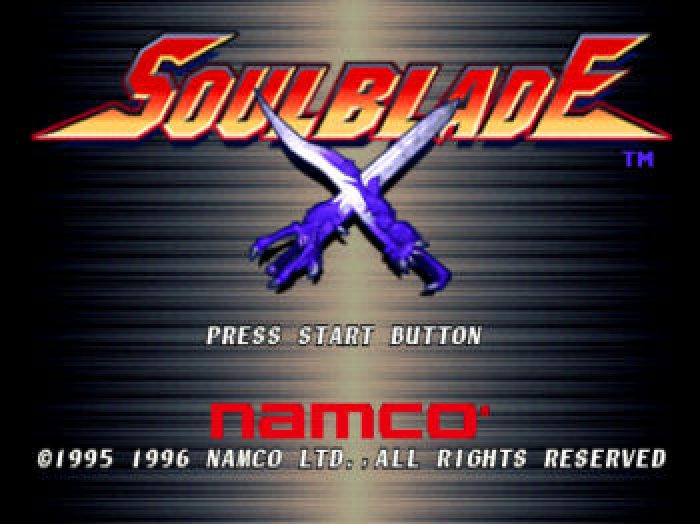
Having reviewed Soul Calibur II only the other day, you might wonder why I saved the first game in the series for a seperate review. Unfortunately I was under the impression that that game was called 'Soul Edge', and it was in Japan, however Namco decided to rename the European and American versions. So upon reading the manual before testing Soul Blade out for review, I noticed it featured a control system similar to Soul Calibur II, and some of the same characters and figured out what I'd missed.

There are a few main differences between this and Soul Calibur II; there's a weapon meter which depletes as you block attacks, eventually resulting in the loss of your weapon if you block too many times. The 8-way run is not featured in this version, instead you can only move into the background or foreground with a double tap of the down/up buttons respectively. Other than these two changes, there's not a lot of difference between the general control and feel of the game.


Many of the characters from Soul Blade made their way into later installments, with 14 playable characters in the game overall. Although this isn't a large choice, there's a good amount of  variation in movesets and a lot of different weapons to collect. Just like its sequels it features an Arcade Mode, Survival Mode, Team Battle mode and Edge Master Mode, where the player travels around a map, fulfilling victory conditions in different battles to unlock extra weapons.

Although a little more simple than Soul Calibur II's Weapon Master mode as there's only one fight per location, I think it makes a nice change from Arcade Mode and is a reasonable alternative unlike Weapon Master Mode which is far too long to be an alternative, rather it's its own experience. One small criticism of Edge Master Mode is that some of the victory conditions can get a little difficult to pull off, in later stages, and sometimes you're expected to win a lot of fights in a row, but experienced players will enjoy this sort of challenge.


Graphically the game is similar to, but perhaps a little better than the original Tekken. The movements and attacks are also smoother and there's an arguably better control system. As impressive as Soul Calibur II is for the Xbox, for the time Soul Blade looks great on PS1. There's an extensive soundtrack to the game also, which gives it character and sets it apart from other fighting games of the era.

Controlwise the game is pretty smooth, on a par with Tekken if not a little better. Unlike Tekken all of the attacks in the game can be useful at different times in combat and do fair amounts of damage, so that fighting doesn't become a kick-fest. The block system works well and I like the sword meter, even if it was taken out of later installments of the series. Overall this is a solid fighting game even today, and it must have been very impressive back when it was released.

Rating: 82/100
Grade: B

Wednesday, 11 September 2013

Game Review: X-Men Mutant Academy


Game: X-Men Mutant Academy
Console: Sony Playstation
Developer: Activision
Release Date: 11th July 2000

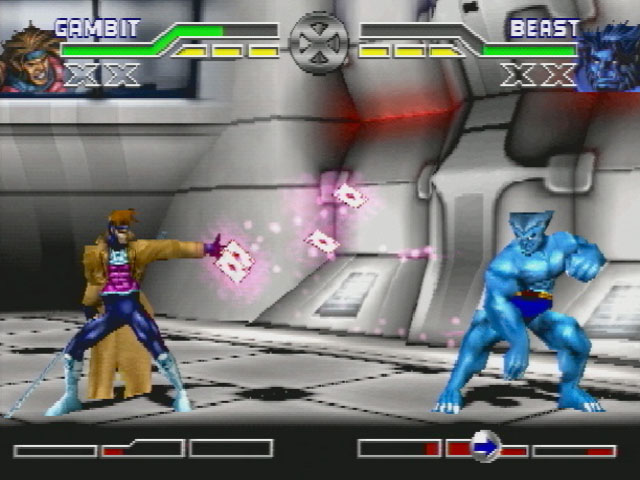
As I've decided it's tournament fighters month here at my game review blog, here's another weird one that I picked up in my travels. A 3D fighting game on a 2D plane, featuring 10 playable characters from the X-Men franchise and released to promote the film released in 2000, initially it seems like it might be "one of those" movie tie ins which play horribly. Luckily this isn't the case, and there's some fun to be had from it. The game has 3 competitive modes, a sort of museum mode and a training mode.

Arcade Mode is your usual tournament fighter mode featuring a fight against each character, including a mirror match, with increasing difficulty. Completing a run through this mode will unlock a new character also, as 4 of them are locked at the beginning of the game. Versus Mode allows you to compete with a friend and is probably the game's strongest mode. Survival Mode sees players fighting until they're finally defeated, only getting a health refill if they manage to defeat the opponent within a time limit. Cerebro Mode is the training mode of the game with instructional training and a free mode.


Arcade Mode is interesting for a number of reasons, the first of which is just how much health the fighters have. Not counting special moves it takes a good 8-10 "strong" kicks/punches to defeat an opponent if not more. The special moves would be a good way to deplete your opponents health if they weren't so limited (there's bars for each special), and if they weren't so difficult to pull off. The game is pretty sensitive with recognising the combos and a lot of the "extreme" ones require 4 buttons to be pressed at once after a combination of directions.

The difficulty increases as you progress through Arcade Mode as you might expect, but once you get to the sixth fight (on Medium difficulty) the game seems to get a lot harder. I found it almost impossible to get past the 7th fight on this difficulty and had to change to easy to complete the game. Not only does the computer get better at fighting on Medium mode, but the characters you fight in later stages have more powerful attacks which make them hard to beat.


The final boss fight in Arcade mode is strangely easy after all you'll have been through, making for somewhat of an anticlimax. There's not really a difficulty level which feels right for Arcade Mode, the latter stages in Easy mode are probably closest to what would make for a decent average difficulty. Versus mode makes for a good experience if you have a friend of the same skill level since you can circumvent the AI issues and probably have more fun attempting to pull off the combo moves.

Survival Mode features the same gameplay as Arcade Mode with a reduced timer, and one round per character rather than a best of 3. If you're able to defeat the opponent fully within time your health bar is refilled, otherwise you carry what you have through to the next round. Play continues until your character is out of health. While this mode is fun for a while, it can get repetitive fairly quickly.


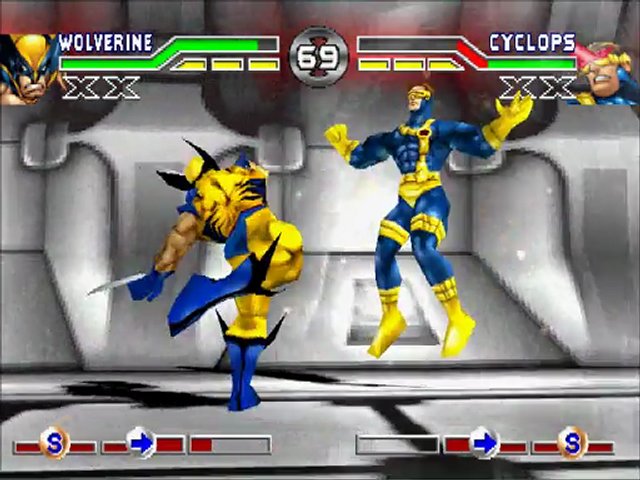
The damage system in the game is not uncommon in tournament fighting games; there's permanent damage and temporary damage which must be cemented by landing further blows on the opponent. If temporary damage is left long enough without a followup attack, it will slowly heal. The temporary damage to a player is shown in red on the health bar. There's also a block system where players have the opportunity to counter 3 of the opponent's moves (these are in yellow below the health bars).

Movewise players have a choice of 3 punches and 3 kicks for a total of 6 basic attacks, not including throwing moves. At the bottom of the screen are gauges for special and extreme attacks which are only useable once the gauge is full. These controls work pretty nicely in general although you'll mostly want to be using the strongest kicks and punches in addition to any combos you can actually pull off.


The character selection is good and although there could have been more it's important to keep in mind that this is a movie tie-in so the main characters are featured, I'd assume. The balance between character's movesets in the game isn't great, some are fairly overpowered whilst others seem to have ineffective attacks. I think that in trying to make the latter stages of arcade mode challenging, the developers made the characters from those stages a little too powerful.

Graphically I think the game may have looked stylistically better on a 16 bit console in 2D, like the avatars depicted on the character select screen. The polygonal Playstation 3D isn't bad though even if it does seem a tad unnecessary for a game on a 2D fighting plane. Soundwise the game's not particularly memorable musically or for it's voice acting, so thankfully its not noticeably bad either.

Overall this really isn't a bad concept or try at an X-Men tournament fighter, and while it does have problems with difficulty and balance, the controls are good and it did receive 2 sequels which I can only assume built upon what they already had. With a decent cast, graphics and selection of modes and things to do, this isn't one of the best fighters I've played but its nowhere near as bad as it could have been.

Rating: 70/100
Grade: C