Showing posts with label Rockstar. Show all posts

Monday, 8 September 2014

Game Review: Grand Theft Auto V


Game: Grand Theft Auto V
Console: Sony Playstation 3
Developer: Rockstar
Release Date: 17th September 2013

As it's been almost a year since the game's release, I thought it was high time I took a look at GTA V. The game is set in Los Santos which is vastly different from the Los Santos featured in GTA: San Andreas, despite retaining small throwbacks such as a version of Grove Street. Instead of following just one character through the events of the game, players can swap between control of three protagonists at will, once unlocked, unless they are in character specific missions, being chased by the police or otherwise unable to be switched to.

The game's three protagonists are some of the most developed characters of the GTA universe, with a fair amount of backstory and interesting views on events. After the opening mission/cutscene we're first introduced to Franklin who is working for a car dealer, repossessing cars and is generally involved in small time gang events. He meets Michael, a retired criminal a few missions into the game and is taken under Michael's wing in a sense as they plan some larger criminal activities. Finally we meet Trevor who is unpredictable, uncompromising and runs a small business empire centred around drugs just outside of the city.


The story mode missions of the game follow the three protagonists through events in their individual lives which show more of their character and their usual way of life, as well as following them through 5 heist missions which must be planned, set-up and executed in order to make a financial profit at the end. There are 69 story mode missions in total, which is 19 less than GTA IV. Overall though I feel that GTA V has a better pace that its predecessor and there are far more varied and exciting missions included this time around.

There are also many side missions in which players can partake; parachuting, flight school missions, one off family events for Michael and tasks done for random strangers are all available to show off the variety of gameplay and action available. Alongside these are events which randomly occur such as robberies and police chases, which the player can choose to help out in. Returning a stranger's purse or wallet can sometimes lead to a financial reward or even a new contact.


While I won't spoil any of the game's plot, I will say that the story mode has an excellent and fast paced narrative that allows players to understand all three protagonists lives and desires. The story missions will take players through many exciting almost movie-like situations, with the switching dynamic between protagonists being used to great effect. Side missions also provide an interesting and often amusing distraction from the main story, and are just as varied and fun.

Heist missions provide players with a choice of approaches and personnel for the job in hand, after which all of the required vehicles and tools must be gathered before the heist mission can be started. Every single heist had an air of excitement and novelty for me, and although some heist missions have featured in the series before, Rockstar have perfected them here.


Los Santos, the game's setting is a fairly large map ,based loosely on Southern Calfornia that has many interesting places to explore and things to find. The south half of the map contains the downtown city area and its beaches, while the north half of the map has more of a rural feel with mountains, plains and desert style locations. A good deal of the map will be seen through playing all of the story and side missions, but exploration is possible by many different means also.

As usual with Grand Theft Auto titles there's a wide range of vehicles with which the map can be explored. Each protagonist has a personal car, which will stick with them throughout the game even if abandoned or destroyed, and there's also a large range of cars on the roads which can be stolen. Motorbikes, bicycles, aeroplanes, helicopters and blimps are all available as player controlled modes of transport also. The train and tram vehicles featured in the game can be ridden, but not controlled in free roam mode.


This instalment of the GTA series is also the first to feature many things including animals (coyote, elk and dogs to name a few) which can be harmed if the player so wishes, it's also the first to feature the map as a single landmass rather than an assortment of islands, soft and hard top convertibles can retract their covers, there's no limits on what time of day missions are taken (the time will fast forward if it's unsuitable), and there's in-game music which isn't on radio stations for the first time.

The police system has also been changed quite drastically; all officers have a cone of vision which players must escape from to begin losing their wanted level. Once out of an officer's cone of vision, players must stay out of the line of sight for a period of time, until their wanted level goes away. This makes it somewhat easy to escape the police (I wasn't busted once during my playthrough, though the police wasted me quite a few times), but also gives slightly more realism to the game also, save for the short term memory of the officers once the wanted level is lost.


Controlwise the game is very responsive and cars, aeroplanes and bikes alike are easy to drive/fly. The shooting parts of the game are also straightforward, with a similar cover based shooting system to GTA IV. The auto targeting can make it a little too easy to shoot your way through large groups of enemies, but I found it necessary a lot of the time. New weapons have also been introduced such as gasoline to light fires, sticky bombs, and grenade launchers.

Once players have enough money they are able to purchase businesses such as strip clubs, bars, cinemas and even the golf club. Every once in a while missions will pop up to help with the running of these establishments, which the player can attempt or ignore. The businesses will provide players with a source of income each week, Also available as activites are tennis, golf, yoga and triathlons which serve no real purpose other than being an amusing distraction from the missions.


Graphically the game looks amazing. The landscapes and natural features of the map look excellent when flying over them, exploring in cars, or on foot. Player models could be a little better in terms of realism, but overall the visuals are excellent. I'm aware that they're being upgraded for the game's release on 8th generation consoles, but it's not in much need of improvement. The radio stations in game were a little disappointing for me, as there's been better selections of music in previous games, but there are more than ever to choose from, and the non radio soundtrack is excellent.

Overall Grand Theft Auto V is a game that is deserving of all of the praise and accolades it has received. It manages to mix its fairly serious storyline with elements of social commentary and outrageously wacky missions that provide a great sense of variety. While the game isn't 'perfect', there's very little wrong with the gameplay, missions or narrative and it's about as close as a free roaming sandbox game will get.

Rating: 97/100
Grade: A

Tuesday, 19 August 2014

Game Review: Bully


Game: Bully
Console: Sony Playstation 2
Developer: Rockstar
Release Date: 17th October 2006

Despite a name change for PAL audiences, to Canis Canem Edit (literally Dog Eat Dog in Latin), and numerous other attempts to get the game banned, Bully was released in 2006 in all regions except Brazil where it was successfully banned. Although its title might suggest copious amounts of unprovoked violence or other negative behaviours by players, just as with GTA games, there's no requirement to play in a particular style outside of missions; players are free to act peacefully or not as they wish.

The story follows 15 year old Jimmy Hopkins, who has recently been enrolled at Bullworth Academy and faces the challenge of interacting with, and ultimately uniting several school cliques. Ranging from bullies and jocks to preppies and nerds, each of the cliques have expectations of Jimmy which manifest themselves as missions for him to complete. Gaining enough respect within a group will cause them to greet Jimmy and act in a generally friendly manner towards him.


Outside of the storyline there's also classes for Jimmy to attend, which if completed will improve many of his abilities such as kissing, weapon accuracy and making stink bombs etc. It's not compulsory to complete any of the classes, although the rewards can be helpful towards completing the game as a whole. Other activities include helping strangers with various menial tasks and collecting various sets of objects which appear around the map such as rubber bands, pumpkins, and radio transistors.

There's no real time limit in which players must complete the game; the season changes depending on the missions that are currently available, and days will pass whether or not missions are being completed. Free roaming is somewhat limited to the school ground and surrounding town areas, but there's some fun to be had in causing mischief and annoying both students and residents.


One of the best features of Bully is its expansive roster of characters who make up the school's student body. There's at least 2 or 3 characters from each clique who stand out as having deeper character traits and mannerisms than simple supporting characters might do in other games. The game's central characters certainly have interesting and well developed lines of dialogue in cutscenes and general gameplay.

Another impressive feature is the game's "trouble meter" which fills as Jimmy breaks school rules, and sometimes actual laws. Depending on the severity of the infraction the trouble meter will rise, and be maintained at the same level until Jimmy is out of sight from the pursuing authority figure, at which point it will slowly decrease. Once empty, players have got away with whatever misbehaviour filled the meter in the first place.


Graphically Bully isn't anything special for PS2, and it definitely shows its age when played today. Despite this, the game's unique style and charm give it an air of timelessness, and set it apart from being judged against 2006's releases. The soundtrack to the game can be somewhat repetitive at times, but the standard of composition is good. In terms of other sound, the game really shines in the voice acting department, as there are stellar performances all round from the game's cast.

Overall although Bully isn't as violent or expansive as other Rockstar sandbox games, it offers a glimpse into a smaller world, with a more personal touch to interaction and the storyline as a whole. Missions are generally fun and light hearted, and compliment the overtones of mischief. Players are free to tackle the game at any pace they wish, and there's many side missions and collectibles for those who find that aspect of gaming fun. Whether you're looking to relive your schooldays or rewrite them, Bully is a complete gaming experience that reinvents the sandbox genre in a compact setting.

Rating: 90/100
Grade: A
Monday, 17 March 2014

Game Review: L.A. Noire


Game: L.A. Noire
Console: Sony Playstation 3
Developer: Team Bondi
Release Date: 17th May 2011

Conceptually different to anything that Rockstar Games had published before it, L.A. Noire saw the company team up with independent Australian developer Team Bondi to make a film noir inspired video game set in 1947, which allowed players to take the role of a detective and solve crimes around the city of Los Angeles. With much more investigation, deduction and attempted atmosphere than previous Rockstar titles, there's less violence required and no opportunity to kill people other than those that the game wants you to.

The game's story takes the main character 'Cole Phelps' from being a lowly Beat Cop, through traffic crimes, homicide and arson cases, and Vice Squad matters. While the crimes may differ, the main gameplay routine remains the same throughout; investigate crime scenes and any evidence left there, question suspects arising from investigation, and then repeat the Investigate/Question cycle until the case is solved. Sometimes there are action sequences where Cole must apprehend a suspect, subdue them, or shoot his way through a building but these are few and far between.


Overall the game is pretty cutscene heavy; arriving at any story locations will trigger a short arrival cutscene, as will interviewing suspects. The investigation portion of gameplay allows you to roam around crime scenes and locations relevant to the case searching for clues which are indicated with a chime on the soundtrack when discovered (although this can be turned off). Some items can be further investigated by rotating them or taking a closer look, and others are completely irrelevant. All main pieces of evidence must be discovered before the next part of the case can be accessed, but missing minor clues only impacts on your final case rating.

Once all evidence has been uncovered the questioning portion of gameplay commences, in which Cole asks questions of suspects and witnesses from clues written in his notepad, and attempts to determine whether their statement is the truth, doubtful, or a lie. The NPCs facial expressions and movements are the main indicator of which option is correct, although it's not blatantly obvious. If the player chooses to accuse the suspect of lying, a piece of evidence to prove the lie must be selected from Cole's notebook. The main problem with this system is that it's a little ambiguous as to whether doubt or lie is the correct option. In one case, I chose to present evidence that a suspect's last statement was a lie (something about a pair of glasses) and ended up accusing them of being a murderer.


In addition to the somewhat passive gameplay modes of investigation and questioning, there are action sequences which see Cole attempting to apprehend or subdue suspects. There are 4 main types of action sequence in the game; non-violent on foot, when a suspect flees instead of staying to be questioned. Weapon based on foot, where a building contains multiple armed suspects to be killed. Brawling, where players engage in a fist fight to subdue a suspect, and vehicular action sequences which require ramming or tailing a suspect's car.

Any story case action sequence can be skipped if failed 3 times (I'm not sure why you'd want to), but none of them are too hard. The cover based shooting mechanic of the weapon based on foot sequences is similar to that of GTA IV, which isn't too surprising considering Rockstar helped with the development of the game, as well as publishing it. The lock-on system can be troublesome at times, but it's something that takes a little getting used to, rather than being a problem.


The city of L.A. itself is large and feels very much in character for the era, with plenty of 1940s cars, buildings and landmarks. It takes a considerable amount of time to drive from one end of the city to another, and this adds to the immersion as well as giving you the feeling of being just one cop in a huge city. There are plenty of buildings that you're allowed to enter (for missions at least, free roaming is more limited) and the people of Los Angeles will take notice of you, even if it is a little too often.

While I won't be discussing the plot explicitly in this review, I do have a few general complaints of the storyline. Firstly a lot of cases tend to end abruptly, just as you start trying to piece together what might have happened; coming across incriminating evidence at the residence of a suspect who then runs off only to be apprehended leaves you wondering why you were even trying to do any deductive reasoning. The ending of the game also follows this pattern, but on a grander scale. There's no real resolution or closure to the plot and many fans were left disappointed by this.


Graphically the game is very impressive with extremely detailed facial models in interrogations and questioning, and a good level of interactivity with many of the items which are scattered around crime scenes. The musical selection is enjoyable and fits well with the time period; there's a wide choice of radio shows and music to listen to in vehicles as well as the soundtrack itself. The voice acting is of particularly good quality and matches well with the motion captured facial expressions to deliver a realistic conversational experience.

Overall L.A. Noire delivers a generally immersive and enjoyable film noir-like experience in look, atmosphere and story. While gameplay can seem fairly linear at times, there is the odd case where you have to choose who you want to charge out of two suspects, and interrogations can be challenging in a positive sense. In truth L.A. Noire succeeds neither as a detective style game (due to linearity and premature case endings), nor as a police style video game (gameplay wise at least), but as film noir style experience which gives you a taste of 1940s Los Angeles without any sugar coating.

Rating: 80/100
Grade: B

Monday, 27 January 2014

Game Review: Grand Theft Auto IV


Game: Grand Theft Auto IV
Console: Sony Playstation 3
Developer: Rockstar
Release Date: 29th April 2008

This should technically be Part 4 of my Grand Theft Auto series review, but as with San Andreas I feel that this game has such a large scale and choice of things to do that it's only fair to give it it's own review. The first main series installment since San Andreas, IV is set in Liberty City which is based on New York, complete with its own "Statue Of Happiness" and other famous landmarks. Just like other games in the series you're set a series of missions which see you transform from a low status thug to a rich (former) gangster.

New additions since San Andreas include a phone and internet system through which you get most (if not all) of your missions. Acquaintances will ring and ask to hang out as well as giving you missions by phone, and the internet is used to set up appointments, dates and to make a couple of missions easier. Police now have a search area, outside of which you're able to escape from them. The more stars you attain, the larger the search area is and the more force the police will use to arrest you. There's also a new subway system and a lot of interiors which can be accessed without a loading screen popping up.


The story follows Niko Bellic, an Eastern European immigrant who has been told of the wonders of America by his cousin, Roman. Upon arriving he finds that not everything he has been told is true and has to work for various small time gangsters and friends in order to find someone from his past, who betrayed him. The storyline itself can seem to drag on during the middle parts with 88 storyline missions in total, however the two endings are worth getting to.

Controlwise, the game is similar to other titles in the GTA series; shooting features a lock-on mode (although this can be disabled) and there are a selection of weapons available including pistols, shotguns, rocket launchers and grenades. Driving is slightly different with acceleration and braking set to the R2 and L2 triggers. The viewpoint whilst driving and handling of the vehicles are both very different to previous games and take a lot of getting used to. Missions which involve driving and shooting at the same time are extremely difficult due to the controls.


Most missions get the player to drive somewhere, shoot something or a combination of the two, but the most impressive missions in this game are those which think a little outside of the box. There's a mission where you're asked to set up a job interview via the internet and then kill the interviewer, as that's the only way to get to such a busy businessman. There's another mission where you're allowed to execute someone Hitman style and change into doctor's clothes to turn the life support machine off. These, along with a few other selected missions (including the complex final missions for each storyline) redeem the mostly typical GTA style ones.

The police don't seem to be as concerned with arresting you as in other games from the series, as I managed to complete the game without ever being busted. Instead, I was killed quite a few times by the police even with a simple two star wanted level. Luckily as a new addition, hospitals don't take away your weapons unlike police stations, so I was able to hold onto my best ones. It did seem a little unrealistic to have such violent police though, especially with other areas of the game focussing on realism.


At a few key points in the plot, the player is given moral choices to make such as choosing whether or not to kill a particular enemy or who to kill out of two choices. While these do give slightly different results, only the final decision matters particularly in terms of gameplay and missions. These decisions seem to enrich the characters and plot, however and you feel as if you are really in control of Niko and his actions.

One new system which was only used once in the game is the ability to throw objects, such as bricks. This could have been incorporated into more than one mission and perhaps used as a way to deal with enemies from above. The cover based shooting system in the game is used quite a bit throughout the missions, and for the most part it works well. A lot of enemies also use the same type of movements and so things can get into a bit of a stalemate at times, but the only real problems are when Niko won't get behind cover, or comes out of it without the player meaning for him to.


A minor addition to the driving experience in the game is the GPS system which shows you the fastest legal route to waypoints and mission locations. This can help immensely when you want to travel between islands as there's no confusion as to where to go. Also added since San Andreas is the ability to hang out with friends and acquaintances. They'll call you from time to time and ask if you want to go bowling/drinking/for a meal etc. and through becoming friends you can use their special skills. Roman for instance owns a taxi service which can take you anywhere for free, once he likes you enough.

The final minor addition to gameplay is the hand to hand combat system which now includes the option to block and kick as well as push your opponents to the ground or down a flight of stairs. Whilst targeting them, the player also may counter an attack if their timing is good enough. This adds more realism and difficulty to street fights as previously they were fairly one sided. Of course this system isn't handy for long as weapons make fair more efficient killing machines.


Graphically the game is much improved from San Andreas and the "Stories" sidegames as you'd expect with the move to seventh generation consoles. There's a lot of detail on almost all of the locations, vehicles and people in the city. My only real complaint is the amount of grey that is used in the city's colours; sometimes it can feel like a very large, dreary place. The sound in the game is fantastic with superb voice acting and effects; explosions and gunfire sound pretty much spot on. The in-game radio also offers a large selection of genres and music with some notable highlights.

Overall GTA IV is a highly enjoyable and engaging experience with many highlights and good new features. Although the driving feels a little off at times, some missions near the end can feel extremely demanding and the city is grey and not as much fun to explore as the areas of San Andreas, there's still plenty to enjoy. With deeper characters than ever before, far more interactivity between the player and them, and a stellar storyline this game only really falls short of San Andreas on location and the ability to fly fixed wing aircraft.

Rating: 87/100
Grade: B

Thursday, 26 December 2013

Series Review: Grand Theft Auto - Part 3

Between the last part of this series review and the games I'm about to review, comes Grand Theft Auto: San Andreas which I gave a seperate review due to its scale and revolutionary new features. The two games which followed it revisited the locations of GTA III and Vice City respectively to give a new perspective on events before those of the two games.


Game: Grand Theft Auto: Liberty City Stories
Console: Sony Playstation 2
Developer: Rockstar
Release Date: 6th June 2006

Bringing the series back to Liberty City and it's three islands which are plagued by transit problems, Liberty City Stories has a familiar protagonist in Toni Cipriani. Having completed missions for him in GTA III (set in 2001), we get a glimpse of how he rose up the mafia ranks to become second only to Salvatore Leone. The game is set in 1998 and has a few clever references to future events such as motorcycles (which were banned in III), Lazlow says that soon LCFR will feature Chatterbox 24/7 and the player must help Donald Love to become the media mogul that he is shown as later on.

The story begins with Toni Cipriani coming out of hiding and needing to prove himself to the mafia who have provided him with somewhere to live. As the player continues to do missions, Toni gains their trust and helps them with various gang issues and personal problems. Some of the cast are familiar from GTA III, and others are newly introduced and manage to die off before getting the chance to live long enough to see the events of the earlier game.


The types of missions featured in the game will be familiar to fans of the series; there's a lot of driving people around, shooting anyone who gets in your way and doing ridiculous things for other people's gain. Although I didn't have a particular favourite mission in the game, there weren't many that I disliked or found too difficult. With 70 main story missions there's no shortage of things to do in the game, but it doesn't last as long as you might think with 10-12 hours being a fair estimate of the time it takes to complete.

Controlwise the game is pretty similar to other 3D GTA releases; driving feels very much like GTA III used to, with no flying of planes included. There's auto targeting available, but it's less effective than San Andreas's targeting as it glitches out every now and then and fails to target or shoot people who are attempting to kill you. It's not something that happens too often in game, but it's enough to fail a mission or two for players.


There are a few other glitchy moments in the game which make it seem a little more rushed than other installments of the franchise. I had some trouble with getting stuck in the ground, and a garage door repeatedly failing to open. Admittedly, the game was ported from PSP to the Playstation 2 so this could account for some of the problems. Overall though it feels much more like a PS2 game than something for a handheld.

In terms of vehicle choice and features the game feels a little like GTA III+. There's new cars and minigames bu they're nothing massively new and only enhance the feeling of the game a little past that of GTA III. For those that haven't played the previous games, it'll feel like a step backwards from San Andreas but there's a lot of clever references and updates to the older game style to enjoy for those that have.


Graphically the game isn't that different from GTA III; it's got the same style of graphics and HUD. Improving the graphics of the game would have seemed strange with the events set before those of GTA III. Musically Liberty City Stories has the most unremarkable soundtrack of the entire GTA series as none of the radio stations really have any great songs and I find myself listening to the talk radio station most of all. The voice acting in the game is fairly good although the animation in the cutscenes isn't quite up to its standards.

Overall GTA: Liberty City Stories makes for an interesting prelude to the events of GTA III and provides a nice way to rediscover Liberty City without having to replay the earlier game. Full of the usual tongue-in-cheek humour and references to earlier games, it fits perfectly with other installments of the series and has one of the strongest plots of all the games. It's score here reflects its similarity to GTA III but also that it has enhancements and improvements upon that formula too.

Rating: 85/100
Grade: B

Game: Grand Theft Auto: Vice City Stories
Console: Sony Playstation 2
Developer: Rockstar
Release Date: 5th March 2007

The second GTA prequel to be ported from PSP, Vice City Stories explores the islands of Vice City in 1984, 2 years before the events of the GTA: Vice City. The game makes several changes both to the ideas from the first "Stories" game and the game on which it is based. While the overall gameplay is much the same in most places, there's a new assets system with which players can buy property and build a crime empire, and the handling of cars in the game is much closer to that of San Andreas.

The story revolves around Victor Vance, brother of Lance who stars in Vice City and makes an appearance in this game too. Victor is attempting to make money to support one of his brothers who is unwell and after getting kicked out of the army, turns to a life of crime to do so. Along the way he meets various other financial burdens and is seemingly constantly in demand for all manner of missions.


Variety in the missions you're given may sound like a good thing, but the easier missions such as racing ATV's for a fun night out and taking a friend to pick up baby clothes soon get tiring. The more serious missions tend to be a lot harder than those of Liberty City Stories, often asking ridiculous things of the player such as many difficult objectives in a row, or losing 5 wanted stars after a long mission.

The storyline of the game isn't much better in this respect; most of the characters you meet are useless to Vic's main quest and only provide more obstacles to his actually being able to support anyone. Despite the fact that this game has less missions than Liberty City Stories it seems to drag on far longer without much need to, and there's so many different minigames and side quests that the story seems to lose focus because of the need to introduce you to all of them.


The business acquisition in the game can best be described as a mix between the original Vice City's purchase system and San Andreas's Turf war system. To take over a business from a rival gang you must destroy a car in front of their premises, and then shoot all of the defending gang members. Once a building is yours you can choose which type of business you wish to run from it. From time to time other gangs will attack, requiring your attention to defend the business. With 30 businesses overall in the game, it seems like something added to pad it out, more than because it was a good idea.

Usually in Grand Theft Auto games a few sensitive issues are addressed with some social commentary or parody of sorts. These parts are to be taken with a pinch of salt and perhaps carefully considered as to what the developers are trying to say. In Vice City Stories, this approach is altered slightly as nearly every social issue imaginable is addressed in an almost uncomfortable manner, unlike other games in the series. This seemed to be a little distasteful and almost an indication that they had run out of ideas.


Graphically the game is pleasing to the eye and there are some crucial updates from the original game whilst retaining the feel and look of the older game. The choice of music on radio stations is very good and possibly one of the best in any Grand Theft Auto title of the 3D universe. General voice acting is good and adds to the lively feel of the game's streets. The presentation of the game is very much its best feature with a high overall standard to it's look and sounds.

Overall however, the poor plot and mission range as well as the lack of focus and overabundance of side missions and objectives makes Vice City Stories difficult to enjoy as much as the original game. With 59 main missions it's not a very long game but feels much longer than it needs to be and side missions only really serve to pad out the game, in case its length is compared to Liberty City Stories near perfect pacing.

Rating: 68/100
Grade: C

With these two prequels signalling the end of the 3D era of Grand Theft Auto games it's important to remember how far the series came. The transition from a top down view to 3rd person also marked the transition to being a best selling series with 75.1 million copies of 3D era games sold. While GTA III, Vice City and San Andreas were the main titles to peak gamer interest, Liberty City Stories made for an interesting take on events preceding III and its a shame that Vice City Stories couldn't finish the run of extremely good games on the same level.

Sunday, 17 November 2013

Game Review: The Italian Job


Game: The Italian Job
Console: Sony Playstation
Developer: Pixelogic
Release Date: 5th October 2001

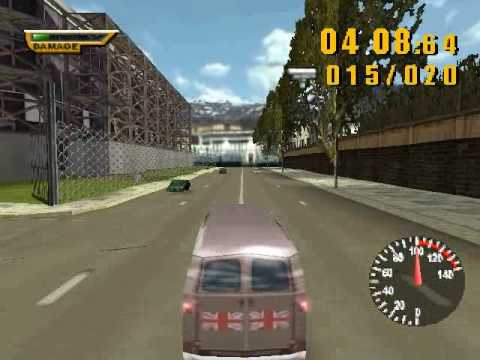
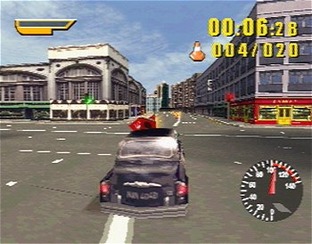
Based on the 1969 movie of the same name, The Italian Job for Playstation came out late into its lifespan; the console's successor had already been out for a year. As such the game was released as a budget title, at the low price of £9.99. Featuring a number of modes reminiscent of other driving games, the main "Italian Job" mode sees the player helping Charlie Croker and his gang to complete the heist detailed in the film through a number of missions which involve gathering the necessary manpower and cars to complete the heist and then pulling it off without being caught.

Each mission involves some sort of driving task, either taking a vehicle somewhere to pick a member of the gang up, proving your driving skills to join the gang or evading police/mafia attention once part of the plan has been put into action. The player is directed through a floating arrow above their car, in the colours of the Italian flag which points toward their mission destination although not necessarily showing the shortest route.


The first 8 driving missions are set in London and focus on getting the cars and personnel necessary to carry out the heist. None of the missions are particularly difficult in this section and most involve a single journey from A to B which lasts around 2 to 3 minutes. The next 6 missions take place in Turin, which is also the location of the heist itself. Missions here are longer and slightly more difficult, requiring multiple parts to be completed (failure restarts the entire mission). The final mission features the famous getaway sequence, allowing the player to take on the role of the third mini of three as it escapes through the streets with the gold from the heist.

There are only 2 missions in the game's final location, The Alps. The first is getting the three minis onto the bus before you're spotted by police, and the second and final mission is escaping by bus through the Alps with all the members of the gang to end the game at the same point as the movie; on a cliff-edge with the bus balanced halfway between safety and a large drop.


The main flaws of the game can be seen most easily in the longer missions. In London, one of the final missions sees the player attempting to prove their worth as a driver for the heist by keeping up with another computer controlled car through the streets. Without slowing down significantly, the player's car isn't able to turn well at all, which is fairly realistic, however the AI car is able to turn corners without losing any speed. This makes it difficult to keep up with as the computer doesn't have to overcome the same challenges as the player does.

Another one of the game's problems is the physics of the car when in the air; upon landing it seems to carry far too much weight. I'm not sure whether this is linked to the fact that it's almost impossible to flip your own car onto it's roof, or another unrelated problem. In the Turin getaway mission there are several jumps for which you have to slow down to avoid careening into walls or trees after overshooting the landing spot. Most obstacles in the game are solid, which can be a problem as changing into reverse and then moving forwards again can take much longer than you'd expect.

The sense of speed in the game is also pretty poor, as the mini can reach up to 100mph and still feel as if it's travelling slowly. In missions with police or mafia as a threat, the system which determines whether you're caught could have been better. If the police are close enough, they'll begin to read your numberplate; if they get it all then "You're Nicked" and fail the mission. The problem with this is that is quite hard to lose the police, especially in timed missions and it's possible to be travelling quite quickly and still have the police read your full numberplate and cause you to lose the mission.


While this may sound like a long list of problems, the missions of the main mode can still be enjoyable. It helps to have seen the film however, as not a lot is explained between missions. The shortcomings of the game serve to make later missions far more difficult than they need to be, and although completable as a game (I managed to finish it) the final 3 missions only emphasis how much better the controls could have been.

Other modes included in the game are Free Ride, Checkpoint, Destructor (which is essentially a trail of cones to hit), and Challenge which features stunt tracks, lap challenges and icy road challenges. There's 5 permutations of one stunt track which increase in difficulty as they're unlocked, and the most enjoyable challenge is a lap through London in which buses attempt to get in your way whilst you pass through 20 checkpoints.


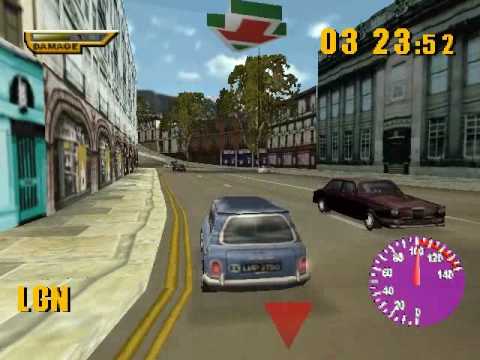
Graphically the game is very blocky and the textures are what I would call "classic ps1 style" in that you can almost see their pixels which tend to shake about when travelling at high speeds. The cutscenes in the game are slightly better looking, although still basic and any characters featured are also blocky and fairly undetailed. There's only piece of music featured in the missions, an instrumental version of "Get a Bloomin Move On" which is the main theme of the film, which while topical, it can get incredibly annoying over time. Voice clips featured in the game are generally good, if a little limited. They give a greater feeling of being true to the film, with an extremely british accent almost reminiscent of GTA: The London Missions.

Overall as a game there's definitely some fun to be had if you're a fan of The Italian Job as a film. If not, it's a strangely arranged, bland set of driving missions which only get harder due to the game's expectations of the player as well as the control problems. There's nothing particularly impressive in the game as a whole; acting out scenes from the film is the main reason anyone'd want to play this and while it sticks fairly close to the plot, watching the film is probably a more worthwhile use of your time.

Rating: 64/100
Grade: C

Monday, 30 September 2013

Series Review: Grand Theft Auto - Part 2


Game: Grand Theft Auto III
Console: Sony Playstation 2
Developer: DMA Design
Release Date: 22nd October 2001

The first of many 3D Grand Theft Auto games, GTA III is the first game of the series to have many of the features that are taken for granted in modern games such as Vigilante, Taxi, and Ambulance missions, flyable aircraft, day/night cycling, weather effects, a mini map, drive by shootings, and smarter AI to name just a few. The game also featured 3 interconnected islands instead of 3 separate locations for gameplay, and more linear missions in which NPC's built trust with the player before giving them crucial missions.

Although there's no set pace for progressing through the game, the story is continued through taking missions from various contacts (more are unlocked as you complete further missions) until the overarching plot is resolved. Missions generally involve combinations of driving and shooting with other elements appearing less often.


One of the most notable additions to the series is the radio humour, with mock adverts and radio stations (mainly thanks to the involvement of Lazlow in the game). This was expanded upon in later installments of the series and has become a recognisable element of the games as a whole. This humour also continues to the characters and missions that the player encounters with various elements of political satire and references. There's a larger choice of weapons than any other series installment, with new melee choices like bats and knives as well as new types of gun.

Considering the game's 2001 release, there was an incredible amount of in game freedom compared to other titles of the time. A higher level of chaos than you could have imagined with GTA 2 was possible and with an even bigger city to roam, more characters to interact with and much more to do, it's not hard to see how GTA III became the basis for the modern installments of the game.


Graphically the game doesn't look so great thesedays, it can lose sharpness when the player is travelling at high speeds, and things take a while to "pop-in", but it still retains the atmosphere of a city. The graphics are good enough to be able to see what you're doing, and to recognise areas of the city and mission targets. One complaint of the game I have heard is that there's a lot of grey cityscape and not much else in its map, and it does at times feel like you're walled in by buildings. The advantage of this, however is that the game achieves the gritty, crime infested city feel that it's going for with the promotional material.

Soundwise, GTA III has a large library of songs on the radio, as well as adverts, speech and sound effects. I can't think of many times during the game when I was unimpressed and usually there's a few laughs to be had at lines of dialogue. Overall it's a fun sandbox game which was incredibly popular at the time of its release and to a degree still is. It introduced several elements to the series which are still in use today and although some aspects could have been better, it's a good template for the things that came after.

Rating: 84/100
Grade: B


Game: Grand Theft Auto: Vice City
Console: Sony Playstation 2
Developer: Rockstar
Release Date: 27th October 2002

Vice City as a location is the opposite of Liberty City; a bright, vibrant and exotic locale where the rich folk of the GTA universe live. There's mansions dotted about the map, a golf course and several fancy clothing stores. For all of it's riches, Vice City has no less crime than any other installment of the GTA series. You find yourself ambushed in a drug deal gone awry, and needing to get back the money you lost. The only solution is to work your way up from the inside and work with those who ambushed you, before finally taking your revenge and exposing the island for what it really is.

Vice City's main gameplay is missions based, just like the other games in the series. You're allowed to free roam at any point outside of missions and there are other side quests and fun activities to find. There's not many additions to the gameplay from GTA III as it was built on the same engine, however you're now allowed to purchase companies which have associated missions and earn you money, and the police are a little more aggressive at times.


The story of this installment is one of the most impressive of the series, with regular twists and turns as it makes it way toward its ending. There's many characters who you interact with and for the first time in the series, it seems like you've got motives to be doing these favours rather than just blindly following instructions for whatever reason, as before. Cutscenes and voice acting in the game is good, with the first talking protagonist in a GTA game.

There's some missions in the game which I feel surpass those of GTA III, due to either new ideas or better execution of established ideas from previous games. There's a mission which involves planting explosives with a remote control helicopter which I found to be a particularly fresh idea for the series. There's still a lot of driving and shooting parts, but if there weren't I'd be disappointed.


Graphically the game is somewhat similar to GTA III, which does make it seem a little outdated when cars and buildings are looked at in detail. The brighter, more sunny style of the game helps towards a fresh feel for it., however. There's a lens flare effect that's used a little too often in the game for my liking which tends to put me off during missions or even when I'm just driving around. Soundwise the game's radio soundtrack doesn't feel quite as strong as that of GTA III; there's 2 talk stations which have less humour than Chatterbox FM, and the other music stations are a bit of a mixture.

Overall Vice City was more of a bright remodel of GTA III than a successor; it has good moments and an arguably better story than its predecessor but the fairly small map, slight adjustments to the driving style and lack of particular graphical improvement let it down somewhat. It's definitely worth a play though and I think Rockstar were right to issue the two games as a double pack on re-issue.

Rating: 85/100
Grade: B


Game: Grand Theft Auto Advance
Console: Game Boy Advance
Developer: Digital Eclipse
Release Date: 26th October 2004

Released 3 days before GTA: San Andreas in Europe, Grand Theft Auto Advance is almost like a 2D top-down version of GTA III with a different storyline. The place names are the same as those in GTA III, and from what I can tell, a lot of the same characters are involved. The story involves a gangster who is trying to get out of the city and away from the crime whose mentor gets killed as he's trying to leave. Vowing revenge before he gets out of the city, he takes on missions to find out who the murderer was.

The gameplay rather lets the game down, as I've said before about the series, most missions involve either driving, shooting or a bit of both. Unfortunately both of these elements of the game are pretty unenjoyable both compared to both the 3D installments of the series and even the earlier 2D ones. The driving features a camera which zooms out as you get faster, but when you hit other cars they roll over and do other strange tricks. Also if you take a corner too fast in a tall vehicle it's likely to lean over onto its side, but other than this the driving is similar to the other 2D games.


On foot, the gameplay is even worse; movement is controlled via the D-pad, weapons are switched with the select button, you can run with B and A is used attacks whether they're guns or melee. The problem here is that aiming is difficult, and with various foes attacking you it's almost impossible not to take damage. This makes the missions pretty difficult once they get to a certain standard. There's over 40 story missions in the game as a whole, which is a good number for a handheld version of GTA, but they do seem to be a lot of the same thing.

Graphically the game is less than impressive, I understand that it's on Game Boy Advance but at the same time vehicles literally turn into pixels when they explode, it's hard to see who's who on foot, and the map is difficult to use. The sound is alright on the game, with in-game radio clips (including a song from GTA 2 on Dreamcast), but disappointingly no voice acting. Overall this is a pretty poor experience, if only for the fact that Rockstar demonstrated they could make much better games for home consoles in the previous 2 installments. Compared to Grand Theft Auto on Gameboy Colour it's a little better I suppose, but that should be a given.

Rating: 62/100
Grade: D

Tune in next time for GTA: Liberty City Stories, and Vice City Stories!

Friday, 13 September 2013

Series Review: Grand Theft Auto - Part 1

Grand Theft Auto is such a large series that it'd be almost impossible to review all at once. I've already reviewed San Andreas on its own as it's probably my favourite game of the series and so there's 6 main installments that I own left. I'll be looking at the 2D versions in this review, the main series 3D games in the next part, and finally the two "stories" installments for the PS2.


Game: Grand Theft Auto
Console: Sony Playstation
Developer: DMA Design
Release Date: 30th June 1998

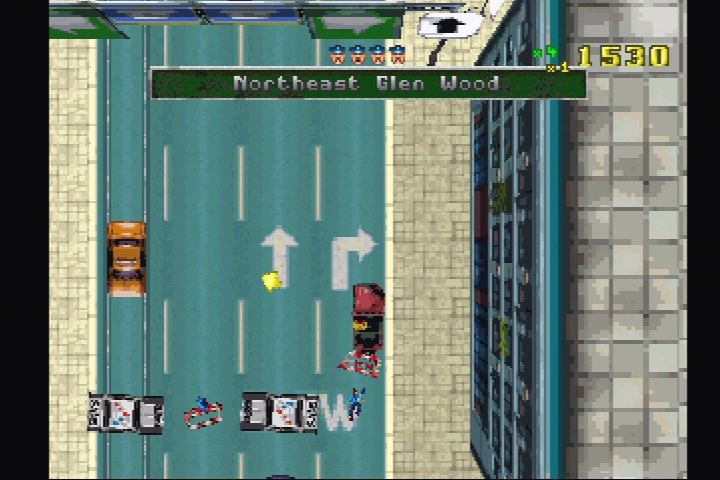
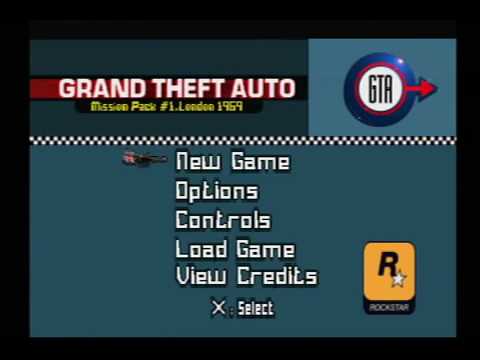
Looking at the title screen for the first game in the series, you'd be forgiven for thinking you'd got hold of some sort of cheap imitation of the game. Originally titled Race'n'Chase it isn't the well oiled, high budget production we're used to, having played the more recent games in the series, but it's always nice to explore the origins of such a big franchise. Upon selecting a new game, you're given a choice of 4 characters (there's very little difference between them) and placed in Liberty City to begin your reign of crime and chaos.

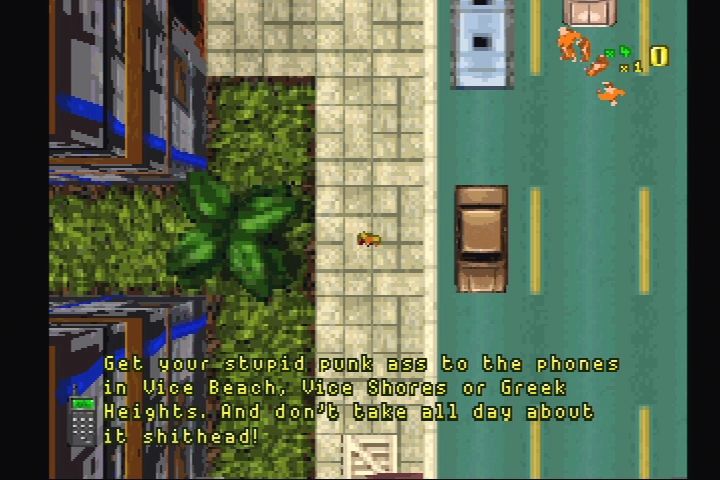
The game kindly provides you with a car and tells you to make your way to some phone boxes in "South Park" to accept jobs from Bubby, the local crime boss. These jobs usually involve driving to somewhere, to kill someone, pick up some sort of goods and deliver them somewhere or cause some kind of chaos for the benefit of a gangster. You're rewarded with points for completing missions and after earning enough points, you're allowed to move onto a new city.


There are 3 cities featured in the game, which will be familiar to fans of the series; Liberty City, Vice City and San Andreas. These aren't anything like their later installment counterparts, but they do feature some rather amusing district names and fairly large street maps for this kind of game. There's a few different types of cars, and even motorcycles on the streets (which is impressive considering the 3D games didn't get motorcycles until Vice City). The handling whilst driving is something you have to get used to, its neither good nor bad really, although being able to see a little more of the road whilst driving might be helpful.

The on-foot controls also take some getting used to, as you have to rotate your character in the direction you wish him to go, before making him run directly forwards or backwards. It's not so much a bad control scheme as one that's not often used by games in this day and age. Using weapons is fairly easy, with the circle button being used to shoot in the direction you are facing, and L1 and L2 swapping between the weapons you're in possession of.


There's a lot of missions featured in the game, perhaps even too many since there's not a whole lot of variation in what you're required to do. You're allowed to take some time out from completing missions and cause chaos around the city, as with the other GTA games, which is good for exploring the map and testing the limits of the game. Graphically there's a lot of pixels visible in places, and most items and vehicles don't have a whole lot of detail to them, but this would have been even worse, had the developers tried a 3 dimensional approach. The sound in the game is generally good when in vehicles, the radio stations give some humour and entertainment, but when you're without the radio (roaming the streets, etc.) it feels a little empty.

Overall there's a good amount of fun to be had with both the missions in the game, and attempting to cause massive amount of chaos. The controls are outdated but not impossible to master, and the missions whilst samey do provide some entertainment. It's easy to see why this became popular, even if it's not the refined version that we know and love today.

Rating: 64/100
Grade: C


Game: Grand Theft Auto
Console: Nintendo Gameboy Colour
Developer: Tarantula Studios
Release Date: November 1999

When I first saw that there was a release of the original Grand Theft Auto game on Nintendo's Game Boy Colour, I had presumed it'd be a terrible watered down version of the Playstation game, as a lot of conversions are. In one respect I was correct; a lot of the gore, profanity and adult themes have been removed from the game to leave it rated Teen instead of Mature, however it features the exact same maps and missions as the PS1 version, 4 female characters in addition to the male choices, and most of the other game features from the original.


This version isn't without it's faults; for a start there's no punch command, no music outside of vehicles whatsoever, a lot less traffic on the roads, incredibly slow running and possibly the most difficult challenge in the game is getting into cars (you have to press select and A, whilst at the correct angle to the car), but for a Gameboy version of a PS1 game to be as close as this gets to the original is quite an achievement.

Obviously the graphics are more basic and the sound is also watered down, but the game plays smoothly, you can complete missions as if you were playing the original and the city is just as big. Overall its almost a worthy alternative because while a chunk of the humour is missing, you can play it on the go and the original isn't so advanced that you miss too many of its features.

Rating: 60/100
Grade: D


Game: Grand Theft Auto Mission Pack #1: London 1969
Console: Sony Playstation
Developer: DMA Design
Release Date: 30th April 1999

Just under a year after the original GTA for Playstation came the 1969 London mission pack, which featured a new map, missions, vehicles and soundtrack. It's definitely more of an expansion than a sequel, as the graphics and gameplay remain almost the same as the original. There's a lot of London based humour featured in the games such as British accents, themed missions, cars and place names.


Funnily enough the first difference you'll notice from the original is that the cars are on the other side of the road, which takes a little getting used to. The missions themselves seem more engaging, perhaps due to the theme overall, I'm not sure they're any more interesting in what you're being asked to do. The locations have some recognisable landmarks, moreso than the original which was based on New York. The selection of cars and characters in the game are good and I enjoyed it more than the original.

(The car selection in GTA London: 1969)
Overall, I think the themeing helped the game, which was already fun achieve new levels of entertainment both for people who had played the original and who were new to the series. A slight graphical upgrade and better soundtrack resulted in a more enjoyable game overall, with much the same features and mission types as the original.

Rating: 70/100
Grade: C


Game: Grand Theft Auto 2
Console: Sega Dreamcast
Developer: DMA Design
Release Date: 30th April 2000

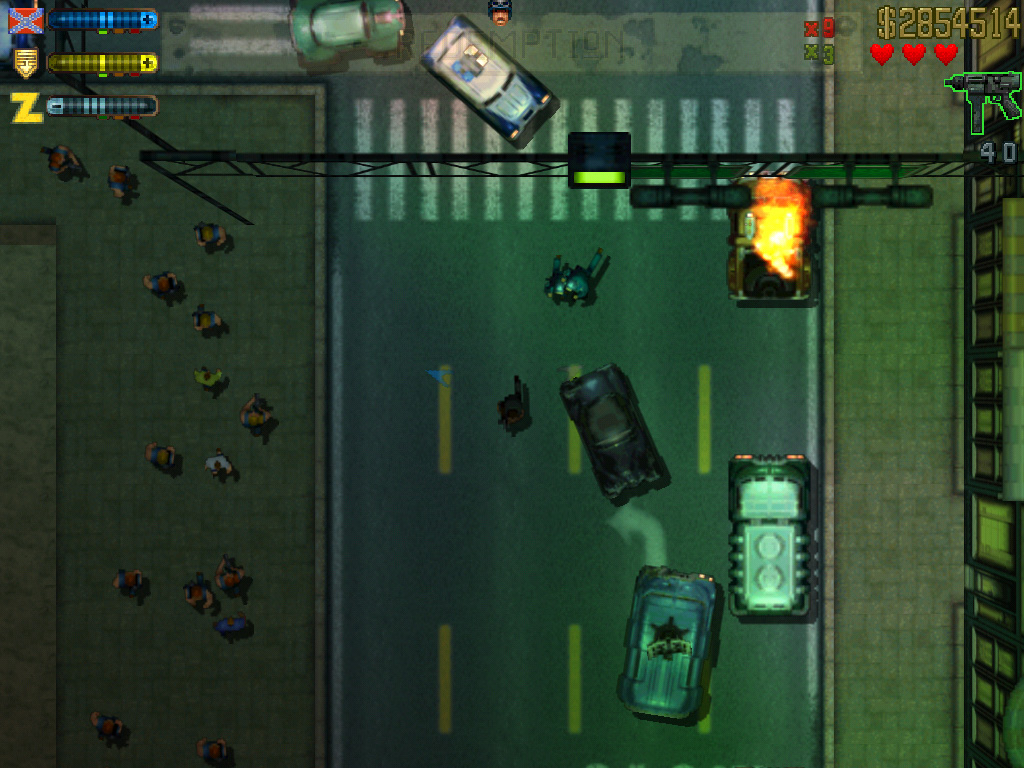
The final 2D game of the main series, GTA 2 made its way to the Dreamcast as well as Playstation, PC and Gameboy Colour. While the formula remained basically the same as that of the previous games, there were some new additions such as the respect meter, and gang areas in different parts of the cities. The missions have more variety than any of the previous installments, with added humour much like that of the London Missions Pack.


The controls for Dreamcast are superior to those on the Playstation, as the analog stick is used for directional movement and so is more precise. The left trigger is used to fire weapons, making it easier to fire and aim at the same time. The graphics are also impressive compared to the original and the Playstation counterpart of GTA 2. I haven't heard the radio stations from the Playstation version, but they're very impressive in the Dreamcast version with good music and radio hosting, even if they do still reset when you get in and out of cars.


With more explosions, mayhem and carnage than the previous installments, GTA 2 was a great send-off to the 2D games. Although the gameplay is similar in all 3, there's a sense of progression and the game becoming more refined from the original to GTA 2. As a player there's still a lot of fun to be had with this game, whether or not you're a fan of the franchise. It's admittedly more basic than the games on the Playstation 2, but at the same time there's an unrivalled sense of chaos. Overall these are all worth checking out, especially GTA 2.

Rating: 74/100
Grade: B