Friday, 17 May 2013

Game Review: Nintendoland


Game: Nintendoland
Console: Nintendo WiiU
Publisher: Nintendo
Release Date: 18th November 2012

Nintendoland was launched, alongside the WiiU as a pack-in game with the premium selection. The game exhibits many new features of the WiiU gamepad as well as providing a new take on some famous Nintendo franchises. For the purposes of this review I'll be writing a little about each individual minigame as well as rating them individually, followed by a summary, as really this is little more than a collection of minigames, held together by the central plaza of the "amusement park" which is populated by Miis, and has portals to take the player to each minigame, as well as trophies earned by the player upon redeeming in-game coins.


I'll start with the Competitive minigames as this is what the game does best; the first of these is Mario Chase, which pits the gamepad user (who plays as Mario) against up to four opponents whose goal is to catch Mario within the allotted time (as various colours of Toad). The game dynamic works well with the gamepad user being able to see an overall map of the play area, and so the movements of his opponents also. The chasing players have only their proximity meter to follow in order to catch Mario. This is best played with 5 players, as any less tends to tip thegame into Mario's favour, and playing with 2 players is just downright unfair.

Every now and then an invincibility powerup appears in the centre of play, which can give Mario a burst of speed to help him evade the other players. In the case of a spare player slot, the computer plays as a Yoshi bot, which barks the colour of the sector Mario is currently in, to even the odds (although not completely).

Mario Chase: 7/10 -  Its fun with all 5 players, but there's only 3 different courses and it gets repetitive, even when switching between chasing and being chased.


Luigi's Ghost Mansion is the second competitive game in Nintendoland, where the gamepad player takes the role of a ghost, whose aim is to sneak up behind the other players whilst avoiding their flashlight beams. Three takedowns will guarantee a win for the ghost. Players with Wiimotes play as differently coloured Luigi's and attempt to catch the ghost in their flashlight beams long enough to win the game.

Without 5 human players, the Luigi's are replaced by clones of Monita (the robotic park guide) which are less than helpful in finding the ghost. Like most of the competitive games, the dynamic is good between the gamepad and the tv screen but the difficulty is somewhat off without a full set of human players.

Luigi's Ghost Mansion - 8/10 - There's more to do here than in Mario Chase, and the possibility for both sides to win through offensive action. Also the selection of maps is better even if there's the same number.
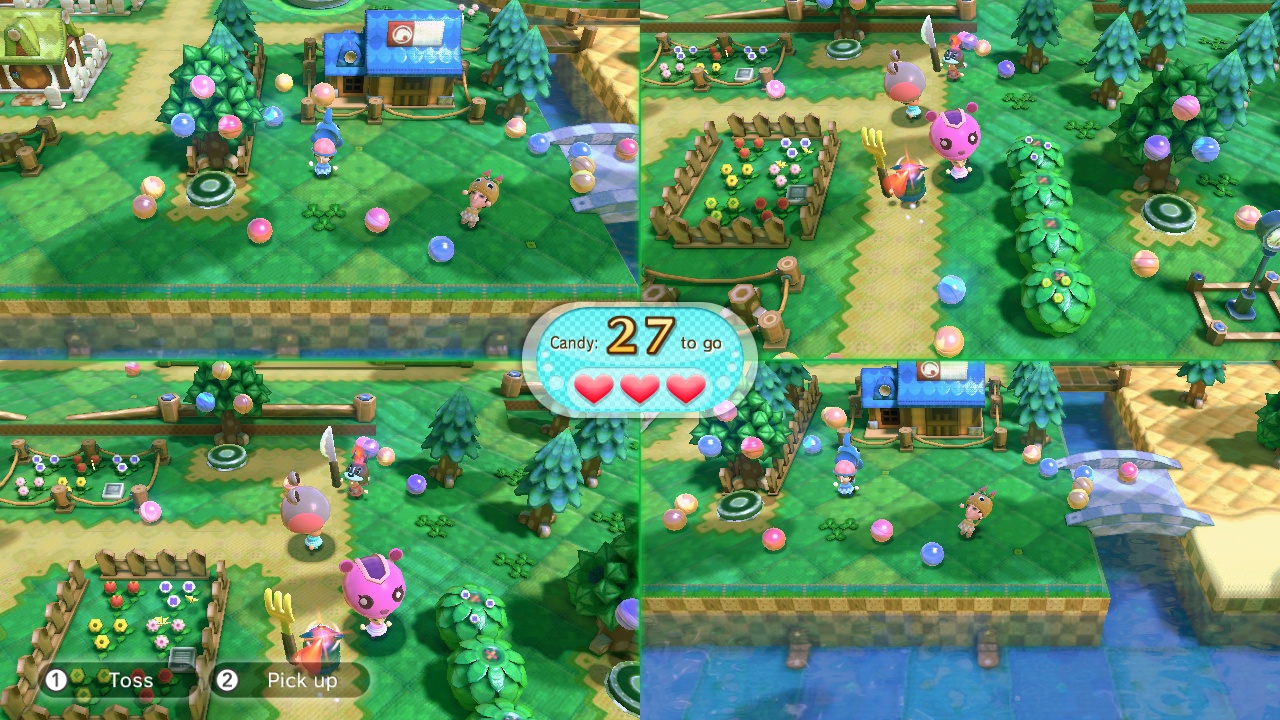

Animal Crossing: Sweet Day is the final competitive game on Nintendoland. The object of the game from the players with Wiimotes is to get a certain number of candies into the goal areas without being tackled by the guards who are controlled by the gamepad player. The more candies a player is carrying, the slower they run from the guards. Both guards are controlled independently, one by the right analog stick, and one by the left analog stick, and so it takes a bit of skill on the part of the gamepad operator to be competitive in this minigame.

As with Luigi's Ghost Mansion, the gamepad player can win after 3 tackles on the other players. In contrast to the other games, the targets are set lower for wiimote users without the full set of players, so this probably has the most balanced difficulty of the 3 competitive games.

Animal Crossing: Sweet Day - 8/10  Pretty fun with any amount of players, this is quite possibly the best of the competitive games.

So that's it for the competitive games, they're the most fun with the maximum number of players on the whole, and the computer isn't ever really a good substitute for a human player. With good gameplay concepts featuring the gamepad and wiimotes, this is where Nintendoland succeeds the most in showing off the screen feature of the gamepad, mixing it with franchise favourites.


The Legend Of Zelda: Battle Quest is a team game (although all of the team games can also be played alone, unlike the competitive ones), where the player(s) can choose to use a bow, or a sword to defeat enemies in a sort of on-rails shooter/slasher game, with visuals resembling a sort of felt/plushie world. There are a lot of levels for this minigame and it's one of the more rounded ones in the game, with different types of enemies and some good difficulty progression. Up to 4 players can play at once in team mode, (although if you wish to wield a sword, you'll need a motionplus controller), but even just using single player, there's a degree of depth to this minigame.

Legend Of Zelda: Battle Quest - 8/10


Pikmin Adventure is the next team game I'll be looking at, the objective is much like the original Pikmin series, although somewhat simplified; the player must escape by getting to a rocket, which is a distance away, past various enemies. Players can level up, and use bombs and their leaf attacks to damage enemies in their path. This minigame feels somewhat unrewarding however, the level ups that you get reset from level to level and the difficulty is too easy for it to make a good strategy/fighting minigame, yet there are too many enemies and not enough open space to make it about exploration.

Having another player on your team for this game doesn't make too much difference either, save for the amount of players attacking. You still have pikmin at your disposal, and there's no real double team moves either. Added to this, there's not much use for the gamepad's screen or features in this minigame, so it feels less of a new concept than the other games, and more like a watered down Pikmin.

Pikmin Adventure - 5/10


Metroid Blast is the last of the team games up for review on Nintendoland before we get into the solo minigames. Again requiring the use of a MotionPlus wiimote for multiplayer, I wasn't able to test this out as fully as I would have liked. From what I played of the single player campaign, its a shooter that makes the most of the tilt-view capability of the WiiU gamepad. The fact the it doesn't have to face the television to display any part of the game landscape is indeed rather clever, and aids gameplay somewhat. From what I have seen of the team play, it looks like another game that is better played with company, and there's a lot of levels to get through, so there's depth to it as well.

Metroid Blast - 8/10

The Team games are a strange mix of casual relaxed gaming such as Pikmin, and the more action based shooting/fighting elements of Zelda and Metroid. While the Pikmin game seems to stay closer to its game's roots, Zelda and Metroid seem to have more depth from having chosen a single part of gameplay and expanding on it. Overall, there's some fun to be had with these, especially with friends.


Yoshi's Fruit Cart is the first of the solo games I'm going to review. Another game highlighting the fact that there's two screens that the player can use whilst using the WiiU, the aim is to draw a path for yourself to collect the fruit (only visible on the tv screen), on the WiiU gamepad's screen. Whilst not a terrible idea, its something that gets boring quickly, even with the introduction of holes and traps on the screen. Save for park coins, there's no real reason to play very deeply into this minigame, which only really exists to tell you that there's 2 usable screens.

Yoshi's Fruit Cart - 4/10


Possibly the worst minigame in the game, Octopus Dance doesn't add much to the experience of Nintendoland. It shows off the dual analog sticks, and the fact that the gamepad can be tilted to control the player also, but so does exploring the plaza. I enjoy rhythm games usually but this feels like a poor excuse for one, it's not very difficult, the only real challenge coming from being turned around in game so that left and right are reversed. It's also one of two games to not be based on a fairly successful Nintendo franchise, (it's supposedly based on a Game and Watch) which should have left it more freedom to be a better game.

Octopus Dance - 3/10


Donkey Kong's Crash Course is a minigame using the motion sensing capability of the gamepad to guide the player's cart from one end of an obstacle course to another. Tilting the gamepad left or right increases its momentum and there are various obstacles requiring the press of the L/R buttons or a quick blow into the microphone. It also uses the dual screen element, with the TV providing a map and gamepad showing the player the smaller details of the part of the course they are on. There's quite a few courses for the player to complete and it controls well, mixing the elements of the classic Nintendo game Donkey Kong, with the new concept of the WiiU.

Donkey Kong's Crash Course - 7/10


Takemaru's Ninja Castle is a minigame based on the relatively unknown (at least here in Britain) famicom game "Nazo no Murasame Jo". In this game the player sends throwing stars out into a seemingly origami like scene, using the gamepad to determine the speed of the throw and its angle. Rather more satisfying than aiming a Wiimote, this game demonstrates potential for later games to use this sort of projectile missile system. There's a decent amount of levels in the minigame, and there are rewards for accuracy and defeating every opponent onscreen in a level.

Takemaru's Ninja Castle - 8/10


 Captain Falcon's Twister Race is the penultimate solo game I'll be taking a look at; based on F-Zero, the WiiU gamepad is used in an almost unnecessary way to steer the vehicle. Instead of using the analog sticks as perhaps might suit a racing game, the gamepad is tilted to steer left and right and avoid obstacles, on the whole it feels slow, and as there's no multiplayer, highscore is the only type of competitive racing you are able to do with this minigame.

Captain Falcon's Twister Race - 6/10


Balloon Trip Breeze is the final minigame in the set, on Nintendoland. To control the balloon in flight the player has to slide the stylus across the gamepad screen in order to create wind. There's a nice gentle feel to this minigame, and it seems to control well, the only real problem being the lack of other features. There's a few things to do, but like other minigames, it can quickly lose your attention.

Balloon Trip Breeze - 6/10


So, having talked about all of the minigames, there are a few aspects of the game as a whole that I haven't mentioned. Graphically everything is modeled on a very arty theme, with the Legend Of Zelda game featuring a lot of felt like scenery, and Ninja Castle's Origami theme. While Nintendo could have chosen more "realistic" looking features for the minigames, to show off the new HD capabilities of the WiiU, the theme gives the game an overall feel to it, one of calm and paying homage to the games on which each minigame is based.

Musically as well there's a lot of themes which pay tribute to their original series or game, this is easy to miss in a game with so many things to do. Gameplay-wise also, even the ill-advised games control well, the game as a whole feels like more of a means to show off the WiiU's features than anything else. Perhaps the next closest thing is a nostalgia trip for Nintendo fans. The game's unlockables are also plentiful, a pachinko-esque feature is used to decide how many coins it takes for items to be unlocked.


Difficult as it is, to judge Nintendoland as a videogame whole, rather than the collection of minigames which show off the new features of the WiiU and gamepad, that it is, I think the easiest comparison is to that of Microgame collections such as WarioWare or Rhythm Heaven. Whilst a lot of the minigames here have more depth than anything either of the aforementioned games could claim, the overall quality of each is much more wayward, and although there are some decent experiences, as a whole Nintendoland doesn't feel like it can claim to be much more than a party game, at best.

The multiplayer experiences are better than the single player experiences all round (something perhaps intented by Nintendo with their new focus on community gaming). There are some fun moments to be had, but its more of a taste of what's to come and how other games might use the WiiU gamepad to great effect.

Rating: 73/100
Grade: C

Sunday, 12 May 2013

Game Review: Burnout


Game: Burnout
Console: Sony Playstation 2
Developer: Critereon
Release Date: 16th November 2001

Burnout, as a racing game focuses both on circuit racing and big crashes, a refreshing look at the street racing genre. An interesting decision is the lack of car specificality, the game chooses instead to call the cars things such as “Sports Coupe”, "Muscle" and “Pickup”. This is most likely to avoid license fees, on having real car brands in-game, but its something most of the other racing games of the time have, thus putting Burnout at a bit of a disadvantage. 

The gameplay mechanic is fast and furious, risking massive crashes to go around blind bends and weaving in and out of other cars on the road. The first race series takes place across 3 tracks, the first of which has an American feel and sound. Interestingly races take a good 8-10 minutes to complete due to long laps. The second race has more blind bends and so took me a couple of tries to pass, however the crash mechanic does make for a rather balanced fairness to the whole game. Anyone can lose the lead from a random encounter with a lorry, and while I'm not a big fan of having a clock and opponents (mostly because the clock doesn't apply to them, only me), I think its perhaps more necessary here than in other games, due to the temptation to ram the AI off the road constantly otherwise.


The game is not all easy driving though, there are some places where crashes are completely unfair, and the game can position them to be unavoidable for you, leading to moments of rage at the television. Normally I might complain about the fact that some of the goals in the races are to come 3rd or 2nd, however, based on the unpredictability of crashes and the fact that one bad lap can spell the end, its rather less of a problem, in fact I'm glad the targets are realistic, especially with the length of races, having 8 minutes of work ruined in one crash is not fun.

Another interesting feature of the game is the face off mode to unlock cars. Having won a championship unlocks a face off race, which you must then win to unlock a specific car. This may seem long winded but a one on one works perfectly with the back and forth of the crashes. The next race series don't really get harder but the target works it way up to coming 1st. There are night and wet tracks included in later race series and although there aren't a lot of series overall, the length of each race would make for a long grind if there were.


So all in all, this game is different from the standard Need For Speed type circuit racer, but the difficulty is well judged and the gameplay is easy to pick up and fun. The game perhaps lacks a wide variety of tracks and cars to choose from, with only 9 cars with everything unlocked but the game feels less about the selection of cars than other games of the time, and sections of track are often cleverly re-used in other race series.

The soundtrack of the game is impressive, giving a balance between a driving feel for each track and using a tense string piece to evoke the tension at the end of a race. Overall, its a fun game to play and the cars handle well. Although it can be frustrating to lose a race after a long time playing, due to long laps it's time well spent on this exhilarating game. 


Rating: 78/100
Grade: B

Friday, 10 May 2013

Game Series Review: Konami Dancing Stage

As a disclaimer before I begin this series review, I use the Dancing Stage series as a sort of musical rhythm game, with a controller as opposed to a dance mat. Mainly because I want to avoid making a fool of myself, but also because its surprisingly fun. The games are pretty similar save for the music on them, so the reviews will be fairly brief and I'll use some supplementary scoring categories to separate them. Also I'll be playing most of the songs on expert or difficult difficulty, so any comments on the moves will be relevant to those difficulties only.


Game: Dancing Stage Euromix
Console: Sony Playstation
Developer: Konami
Release Date: 16th February 2001

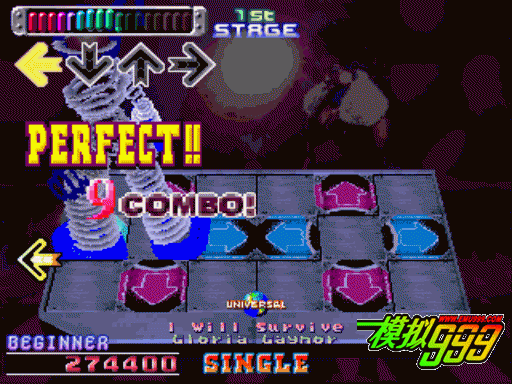
In Euromix, the oldest version I am in possession of a copy of, the songs seem to be of average quality although that's pretty subjective. The inclusion of a Christmas song however, (incidentally named Silent Hill, very festive) is rather a strange one. The visuals behind stages are decent but a reminder that you're playing an original Playstation game, there are a lot of good routines which go well with their songs and are fun to play, and not too many that are impossible or don't fit.

Overall the difficulty is fairly standard, the expert stages are challenging most of the time, and the standard and beginner stages are fairly simple, although for faster songs they do become a little bit of a challenge. The only complaint difficulty wise would be the names of difficulties change from song to song, with titles like "Superior" and "Genuine" which I assume had been roughly translated over from Japanese. My only other complaint of this version is the announcer who cuts into songs a lot to tell you useless, sometimes even incorrect information. Music games benefit from not having someone speaking over the top of them all the time.


Pop Song Selection: 5.5/10
Konami Song Selection: 6.2/10
Visuals: 7/10
Gameplay: 8.6/10
Difficulty: 7.3/10

Rating: 67/100
Grade: C


Game: Dancing Stage Party Mix
Console: Sony Playstation
Developer: Konami
Release Date: 15th November 2002

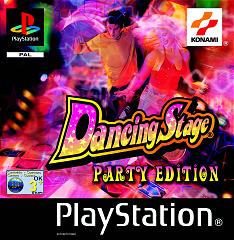
A couple of games after Euromix came the Party Edition, with 51 songs in total, it boasted a much bigger library of music, although it had a smaller variety of pop songs, and more Konami originals. The pop selection that is on the game, however is of a high quality and enjoyable. The songs are arranged oddly ingame, and the player has to choose from a collection of songs instead of all songs, for their turn. The difficulty of steps in game is also odd, the standard steps and all steps on the pop songs are fairly easy, but the harder steps on the konami originals, which sometimes border on too hard.

Nice additions to the game are a 6 panel mode, where you can use a 6 panel dancemat, or the R1/L1 buttons on your controller. This adds some more challenge to the game, although for players used to playing with 4 arrows on a controller, it is almost too confusing to grasp at first. The announcer seems to butt into songs less than in the previous installment, so it seems that Konami took that into account when making this follow-up.


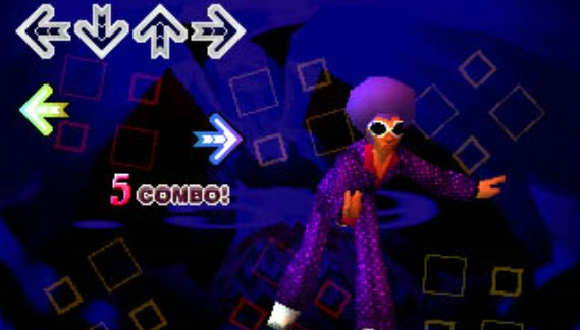
The grading on the game is also rather odd, where previously a good performance would get you an A, or an AA if it was almost flawless, most performances seem to attain a B, very rarely wavering eitherway into better or worse grades. This is somewhat disheartening as a player as there's no feeling that you're doing well or improving at the game. The visuals are decent although with the dancers behind, it feels like there was less effort made on the actual backgrounds compared to the first installment. 

A lot of the songs on this version have to be unlocked, this is done by passing 5 stages, on any difficulty. A total of 90 stages passed will unlock every song in the game. Although this is good compared to EuroMix's 1 unlockable song, 18 unlockables seems a little over the top. On the whole, this game has a fair few good ideas, for the series as a whole. The music is generally decent, but the routines and grading let it down in my view.


Pop Song Selection: 7/10
Konami Song Selection: 6/10
Visuals: 6.4/10
Gameplay: 7.1/10
Difficulty: 5.8/10

Rating: 64/100
Grade: C


Game: Dancing Stage MegaMix
Console: Sony Playstation 2
Developer: Konami
Release Date: 30th May 2003

Dancing Stage MegaMix was the first of the series to be on the PS2, something which seemed to help it immensely in its quality. The visuals behind the songs are good, detailed and more varied than ever before, the gameplay is smoother and the steps seem to fit the routines better than any previous installment. The song selection on the game is also very good featuring a number of decent pop songs as well as a lot of remixes of Konami songs from other games, most of which seem to be their best versions.

Megamix only has one unlockable song, but with 32 others to choose from, its not short of music and there's a lot of different types of song also. The difficulty of the routines seems fair, a beginner mode added in this installment for really basic steps, all the way up to expert which most of the time lives up to its name. "AAA" rankings are achieved for absolutely perfect scores with every step perfect (I have 2), and AA and A rankings are common for good performances. Overall this is a very good installment, improving on a lot of things from the original Playstation games.


Pop Song Selection: 8.5/10
Konami Song Selection: 8/10
Visuals: 7.2/10
Gameplay: 8/10
Difficulty: 8.7/10

Rating: 74/100
Grade: B


Game: Dancing Stage Fever
Console: Sony Playstation 2
Developer: Konami
Release Date: 24th October 2003

Very similar in visual and menu style to Dancing Stage MegaMix, Fever was released just 5 months after it. The selection of pop songs on it is arguably better than its predecessor, but it suffers from a poor selection of Konami originals and some routines which feel more lazily programmed than Megamix. One redeeming feature however is that the unlockable max bpm stage has almost playable moves compared to Max300 from Megamix.

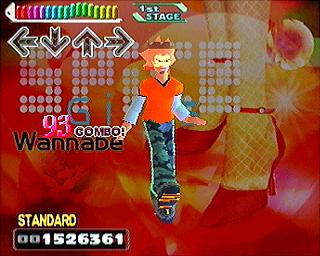
Some of the visuals have been recycled from MegaMix, although a nice new feature of Fever is that some of the pop songs have their music videos behind the dance moves. Not only does this provide a better backdrop for the moves, but its something that couldn't have been done on the original Playstation version.


Pop Song Selection: 9/10
Konami Song Selection: 5/10
Visuals: 6.9/10
Gameplay: 7/10
Difficulty: 6/10

Rating: 69/100
Grade: C


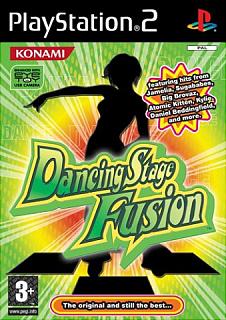
Game: Dancing Stage Fusion
Console: Sony Playstation 2
Developer: Konami
Release Date: 5th November 2004

And so to the final installment of this series that I own. Dancing Stage Fusion has a markedly different visual style, menu-wise to MegaMix and Fever, a lot of things are in different places, and there are a lot more songs than any of the previous installments. That's not all for changes; this game also includes minigames, a revised scoring system, heaps of unlocks and the choice to have a dancer behind your arrows in game, or not.

On the face of it these changes seem for the best, however, a new rather unbalanced difficulty is created from the new scoring system, in Expert mode, you only have to miss 3 or 4 of the horribly complex moves in a sequence to be thrown out of your game. It seems like the game doesn't appreciate how much harder the Expert moves are in this game, compared to other installments. Standard and Difficult modes however seem easier than before and more forgiving, miss-wise, rending a massive difficulty gap between the 3 main choices.

The unlocks are also a double edged sword, there's nothing to tell you how to, or why you have unlocked a particular song, and so trying to do so is reduced to guesswork, and this is frustrating in a game with so many unlockable songs. A lot of the backgrounds for pop songs again have the music videos for the song, which is a nice touch, however on the whole this game seems disappointment for what it could have been.


Pop Song Selection: 8.2/10
Konami Song Selection: 6.6/10
Visuals: 8.2/10
Gameplay: 6/10
Difficulty: 4/10

Rating: 60/100
Grade: D

In summary, the Konami Dancing Stage series is hard to rate overall as a set of videogames, some may not even class them as "proper" video games, but I'd lump them into the arcade games section, if anything. At least in this category, they're with other games where high scoring is the aim. Perhaps also these games are better played with company than without, due to their competitive nature. As a series the only real differences are musical (save for the odd bad routine/grading mechanic), and so which is installment is best is more subjective than most games. Still Konami manages to bring the series together in its own style, and it can be enjoyable at times, especially with the right movesets and level of challenge.

Wednesday, 8 May 2013

Indie Game Review: Yume Nikki


Game: Yume Nikki
Platform: PC
Producer: Kikiyama
Release Date: 2004


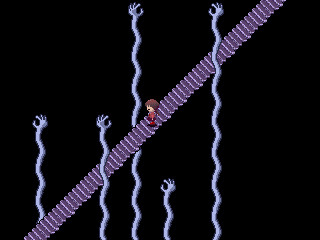
Yume Nikki (literally translated as Dream Diary) is an independently produced game made with RPGmaker. The aim of the game is to collect all of the effects around the map in order to view the ending, although perhaps that's an oversimplification. While that is essentially the overarching goal, the experience and atmosphere the game delivers is far richer and deeper than the goal would suggest. The player begins as a hikikomori (a shut-in) girl called Madotsuki, who refuses to leave her room. All she is able to do is go onto her balcony, play a minigame on her SNES or sleep. 

As the title would suggest, the main portion of the game is accessed via sleep, and dreams. Once the Madotsuki climbs into bed and falls asleep, the player is transported to what looks like her room, once again. However on closer inspection the television has only a test card on it, and the room is not quite the same. Attempting to leave the room this time will take the player to the hub world, the centre of the game universe. 


In the hub world there are 12 doors, each leading to a different area. These areas are varied in design, and things that can be found in them. The backgrounds in many of the levels are strange almost tribal patterns which move independently to Madotsuki, some of them being huge pictures depicting creatures and faces. The levels are large and continuous, going off one side of the level will find Madotsuki at the opposite side, which makes navigation intentionally more haphazard with the need to use waypoints in the scenery to make sure the player doesn't get lost. 

In this game however, getting lost isn't necessarily a bad thing. Madotsuki can always pinch herself to wake up from the dream, and exploration is key to finding effects. Some are in obvious places, there's a lamp effect which can be found extremely easily, however other effects take somewhat more strategy and sometimes even other effects to find. Once an effect is gained, Madotsuki can use it to merge with that effect, such as her head becoming a lamp or a frog's head. Using a guide with this game once you've explored to your heart's content seems like a good idea, if only to make sure that you don't miss out on any experiences. 


The music in game is gentle most of the time, a fittingly vague soundtrack to exploration of sometimes barren landscapes, in search of a pathway to the next effect. Just wandering around the world of Yume Nikki is relaxing, although the visuals might seem almost threatening there are a lot of worlds without anything to harm the player, even if it seems like it would make a good horror game. This isn't to say that there's no threat from NPC's, most will stay silent if they're not the effect giving type, but a certain type of NPC can send you to an inescapable world from which Madotsuki will have to pinch herself to escape. 

Graphically, although Madotsuki is very 8/16-bit looking as a sprite, the backgrounds and worlds as mentioned earlier are complex and interesting. Sometimes there's a lot of colour, sometimes almost none, there's a staggering difference in the feel and look of each world from the next. Musical changes too add a lot to the atmosphere and feel of the game. One of the most interesting places in the game is "Mars", found by sleeping in a spaceship, until an event occurs where it crashes upon the surface of the planet. 


A lot of the in game worlds are surreal environments, just like dreams there's no logic or real sense to them, its more of a feel, an experience. Perhaps this game is not for gamers who are looking for a challenge so much as those looking for something different, a surreal adventure through the mind of a shut-in japanese girl, who has a debatably been scarred by past events. A lot of the explorational charm in the game comes from little touches such as NPC reactions to different effects and their features. The stoplight effect can stop moving NPC's in their path, and the knife effect will scare most of the NPC's. 

With each inital world leading to one if not more other worlds, there's a large map to explore, and 24 effects to collect at whatever pace you see fit. Critics of the game may argue that it's empty and there's no incentive to find all of the effects, however I would argue that this is intentional. The journey of discovery feels genuine , and the sometimes sparse worlds give a real feel of lonliness to the player, putting them in Madotsuki's place. 


In summary, Yume Nikki is more of an experience than a game. An adventure to be had, that has inspired many fan games and spin-offs. There are arguments over what it all means on messageboards over the internet, but with meaning aside, its a game with almost unparalleled ambience, and although some would say that the ending isn't worth the time it takes to collect every effect, I would say that the adventure you'll have to collect every effect is. 

Rating: 77/100
Grade: B 

Tuesday, 7 May 2013

Head to Head Review: Wetrix vs Tetrisphere (N64 Tetris based games comparison)


Game: Wetrix
Console: Nintendo 64
Developer: Zed Two
Release Date: 16th June 1998

Listen to the game OST as you read

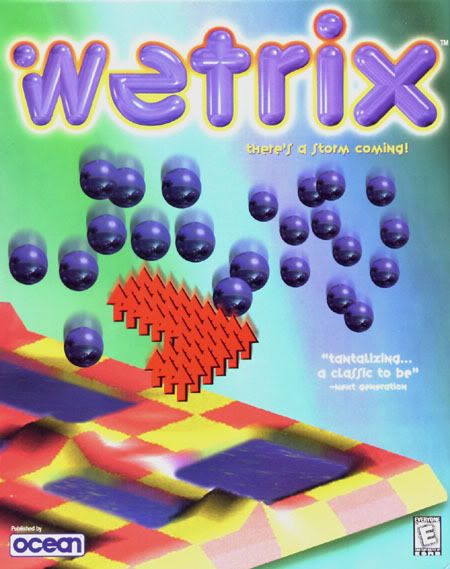
Wetrix is a puzzle game loosely based around the concepts of tetris, adding to them to include almost Populous or Simcity-esque landscape elements with the main theme of water and lakes. The player attempts to build onto a flat square, lakes with as much water as possible, to achieve the maximum number of points when you empty them. If this sounds like an odd concept, be assured that it is rather a surreal game. There's not a whole lot more gameplay beyond the building and emptying of lakes.

There's a tutorial mode with 8 stages, to show you how to play the game. This is a necessity due to the complex nature of the gameplay. There are "upper" blocks which raise terrain, in order to shape the lakes, in 4 different tetris-like shapes. "Downer" blocks can get rid of boundaries between lakes in order to make them bigger, water droplets have to be placed carefully to avoid leakage off screen, resulting in loss of the game. Bombs also appear after a while, flattening terrain around them. Not included in the tutorial is ice which falls after a while, turning lakes into frozen skating rinks for a while, and earthquakes which occur after too much placing of blocks (as far as I can tell anyway).


There are scoring multipliers in the form of ducks (which occur in deep lakes) and rainbows (which occur over large lakes), these are key to scoring big in the game. In the classic mode, scoring big is the main aim, there aren't too many other goals. There are multiplayer, challenge and handicap modes, but these are all variations on a theme and overall its much the same as the main mode, with the only difference being a set series of pieces or a time limit.

The game has fairly forgettable space sounding synth music, as it main theme. Its not a bad accompaniment to the game itself, but it doesn't stand out. Graphics-wise, it can be difficult to tell sometimes where blocks will fall due to the almost isometric 3D being used, the shadows below the pieces tend to be misaligned to the grid below, making planning more difficult. Overall gameplay can be a little difficult to understand, and feels lacking in overall aims. 


This isn't so much a bad puzzle game as one lacking in a feeling of achievement, that is more confusing than it should be. Perhaps the addition of a mode where the player has to help out the residents of this strange floating square, with bridges or puzzles would help break the monotony. It's very different from tetris and not really inspired all that much by it, but on its own can feel rather bland, even if the ideas are new.

Rating: 59/100
Grade: D


Game: Tetrisphere
Console: Nintendo 64
Developer: H20
Release Date: 11th August 1997

Listen to the game OST as you read

Tetrisphere is a puzzle game, for the N64 which uses the concept of tetris pieces built onto a 3D sphere, the aim of the game being to remove pieces by landing them on top of pieces of the same shape. Most game modes involve getting to the centre of the sphere to uncover a picture, or make a hole large enough for a creature to escape from.

Gameplay on the whole is fairly simple, you can slide blocks to make bigger combos, and dropping a piece onto a row of like pieces will remove all of them. There are a few different shapes of piece, and as the levels progress more are introduced, resulting in more difficulty. Your score can be increased through a variety of different techniques, including dropping blocks in particular ways and using morphing blocks.


In addition to Time Attack, where the goal is to get to the core of as many spheres as possible, gameplay modes include Multiplayer (where you make combos to drop more blocks onto your opponent's game), Puzzle (where preset combinations of blocks must be removed in a set number of turns), Rescue (where you have to let a spherical creature out of the middle of the play area), and Hide and Seek (where a picture on the centre of the sphere must be uncovered). Although the goals of these gameplay modes are fairly varied, a lot of them play very similarly.

Musically, the game has a wide soundtrack of techno music, which makes the whole affair sound very 1990s. Its pretty interesting on the whole, although obviously some tracks are better than others. Graphically, its easy to see what you're doing in game (compared to Wetrix placing your blocks is a breeze), even if there's not a whole lot of interesting animation or story included.


There's quite a few interesting features to this game, and although it could have included a block dropping mode more akin to the original tetris, I assume that would have cost more to license. There is some charm to Tetrisphere, and the multiple gameplay modes give a little replay value to it. On the whole it feels fairly easy, and sometimes there's a sense of frustration at being able to progress without doing a whole lot to a level, but  as a puzzle game, its mechanics work and are expanded on decently.

Rating: 61/100
Grade: D

So, now to compare the two titles. Both fairly different from Tetris itself, both relying heavily on one or two core gameplay mechanics in every mode. Tetrisphere has more puzzling value to it, with the puzzle mode, and the importance of the pieces and shapes, but Wetrix seems to be going for a different, more relaxed feel. Both could be improved with some more diverse uses of their ideas, and neither is going to knock Tetris off it's place at the top. For me Tetrisphere gets the marginal win, they're both worth a try, but perhaps little more than that.   


Friday, 3 May 2013

Game Review: Super Mario Bros


Game: Super Mario Bros.
Console: Nintendo Entertainment System
Developer: Nintendo
Release Date: 13th September 1985

Listen to the game OST as you read

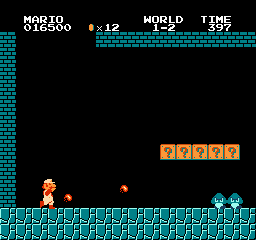
Perhaps the best known game ever, Super Mario Bros is widely considered a classic, if not the most classic video game in existence. For anyone who isn't aware, its a platformer where you play as an Italian plumber who powers up when he eats mushrooms and flowers, and stomps enemies into extinction. The plot of the game is fairly simple, rescue the princess, who is in a different castle to the one you just beat 87.5% of the time.

I think the best way to review such a classic game is to compare it to other games, to see its influence and what made it better than other games of the time. The plot is simple, but that's not so big of an issue in platform games, or even games from the 1980s, as unless you're playing an RPG, you can expect a minimal level of greater understanding of events outside the game. The fact you have a set aim is all that really needs to be taken from the plot.


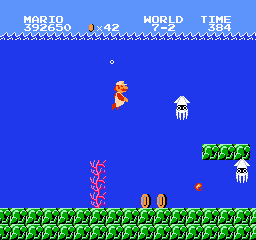
The powerups are a large part of the game, mushrooms, starmen and fireflowers giving the player a better chance of advancing to later stages. These powerups although few in number are effective and improve the variety in gameplay. The stages also give variety to the game, with underground, underwater, castle and overground levels to explore over the 8 worlds. At 32 stages in total, it beats a lot of platformers of the era, many Master System games having 5-8 stages total.

The enemies in game are varied, as are the ways you have to deal with them, and neutralizing all of the Goombas, Koopa Troopers and other opposition will take some memory and skill. The difficulty curve of the game is good also, its fairly easy overall, especially with repetition or the right powerups. The enemies also play well into the level design, with players facing parts which need good timing and planning to progress. 


New challenges are introduced at regular intervals in the game, and this helps to combat the levels feeling too similar to one another. The musical soundtrack is limited by cartridge specifications to a few themes for overground, underground, underwater and castle levels in addition to the sound effects. The music is a good accompaniment and never really feels out of place, and although there could be more level themes, there's never really a feeling that the game is short on music. 

Graphically the game keeps it simple, partly due to being on the NES of course, but there are other platform games with much more cluttered background and foregrounds. The simple dynamic works well though as the player can clearly see where Mario needs to go, and how to get there. The levels feature some different backgrounds, sometimes as simple as a black sky instead of blue, however overall it gets the job done, and the screen is never too crowded with objects to make a path through to the end.


One of the best platformers in its day, the game still has appeal in the current generation, if only for the fun of seeing how different things were graphically. Pointers any game can take from Super Mario Bros would include gameplay that is easy to pick up, with simple controls and objectives, good level design so that players can find their own way of beating levels and lots of hidden secrets to keep experienced gamers coming back for more playthroughs.

On the whole, although Super Mario Bros now has a lot of competition for the title of best platforming game, it was (one of) the first to have a lot of the elements that make the genre fun. The beginning of an amazingly popular series of games, it doesn't fail to live up to its name, 28 years after release and that has to stand for something. 

Rating: 83/100
Grade: B


Thursday, 2 May 2013

Multigame Review: The Worst of Master System Part 3


Game: Global Defense
Console: Sega Master System
Developer: Sega
Year: 1987

Global Defense is a space shooter for the Master System, the player begins the "Offensive half" of the round by shooting down missiles and other stray items in space, travelling across the screen. The controls are somewhat odd, the control pad moves the aiming reticule and holding down a button and using the control pad moves the ship, essentially meaning that you can't adjust your aim and move the ship at the same time. This makes shooting everything you wish to and avoiding stray spacecraft difficult.

Assuming you make it through the offensive half, a defensive half then occurs in which you must protect the planet from the missiles and spacecraft which made it through in the offensive half. The gameplay is much the same, although now from top to bottom rather than left to right. It's difficult clear 100% of the missiles in the offensive half, but if you do, you can skip the defensive half, and get a score bonus.


Really this game suffers from two fatal flaws, the repetition of the two stages, offensive and defensive stages are not different enough, perhaps some sort of mission control board for defense might have given more excitement, and the controls. In the arcades this game had a joystick to move the ship and a trackball to aim with. Granted that's impossible with the master system but if the best you can come up with is "You can't move and aim at the same time", then there's something wrong. 

The music and graphics in the game aren't bad however, the scrolling space background and rock soundtrack earn it some playability, its the sort of thing that you wouldn't want to complete, but is worth a go. Even with the hardware limitations, there's better Master System space shooters, so why waste your time?

Rating: 36/100
Grade: E


Game: Double Dragon
Console: Sega Master System
Developer: Techmos/Sega
Year: 1988

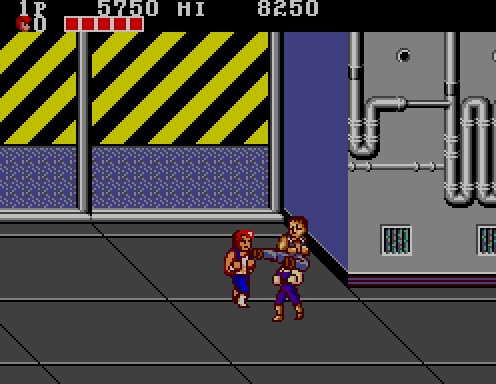
Double Dragon begins with a musclebound fiend punching your girlfriend in the stomach and carrying her away. Fairly simple for the plot of a Beat Em Up, and one that's been on so many different consoles. Note that this is just a review for the Master System version, as the rest seem to be somewhat better. In the game, you have unlimited continues up until the final level begins, so in a way difficulty is not much of a problem. What is satisfying in Beat Em Up's though is the player's sense on control over his character. This is a shame as the hit detection and moves in this game do not give that sense.

The problem seems to be that there is a very specific area of proximity in which the player can hit a target. Being too close to an enemy can result in not being able to strike them with a number of your attacks, for unknown reasons. Another issue the game has is that the character sprites when moving tend to flicker, resulting in a confusing mess of limbs rather than a discernable fight. This is not, however due to hardware limitations as Streets Of Rage, for the Master System has no such problem and is a much better Beat Em Up Conversion.


Graphically, the flicker aside, the game is alright, the backgrounds look better than the sprites however. The music is fairly catchy and gives the player some hope to fight on. With unlimited continues, it's difficult to lose completely, but you'll find your health bar being drained often. The NES version of this game doesn't seem to suffer from half the problems of the Master System version and is often considered a classic. Its a shame that this conversion couldn't compete as the Master System obviously had the specs to do better.

On the whole then, you're probably better off playing the game on one of the many other consoles it has appeared on, or playing Streets of Rage for Master System, there's little fun to be had with this, even two player is somewhat a drag.

Rating: 30/100
Grade: E

Wednesday, 1 May 2013

Multigame Review: The Worst of Master System Part 2


Game: Strider II
Console: Sega Master System
Developer: Tiertex
Release Date: 1991

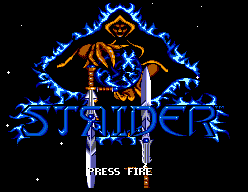
Strider II is an action game, the sequel to the arcade game Strider (also released on home consoles), a Capcom game originally. The player begins in "The Forbidden Forest", fighting strange robotic creatures... and birds, which explode when hit. The first thing a player will notice is the controls, the game feels very slidey for a platformer, and the main character jumps an awfully long way, compared to a lot of other games. When hit by enemy fire (or birds) the player does tend to slide back rather a long way, making progress difficult sometimes, especially when high up on ledges.

Another problem with the game is the lack of obvious direction. At one point you're required to jump from a ledge off the screen to the next part of the game. Without knowing where you're going, you could be stuck on this part for a while (believe me, I was.) The main character can climb walls and ledges, which makes avoiding the various enemies somewhat easier. Although we're given his name, Strider, there's not much indication of what he's doing, save for "The Master"'s taunts between levels of how he will fail.


The bosses in Strider II are taken down via unconventional methods for this type of game (getting as close as you can and shooting at them as fast as possible replaces the traditional strategy of dodge and counter attack). Its not all bad however, the levels seem fairly varied with nice enough graphics and a decent, if a little forgettable 8 bit soundtrack. 

With 5 levels in all, its a short game, but it does provide some fun whilst it's being played, and the action theme is done well, even if the controls are somewhat frustrating. Overall, its not an essential for your Master System Collection by any means, but its not terrible either.

Rating: 58/100
Grade: D


Game: E-SWAT: City Under Siege
Console: Sega Master System
Developer: Sanritsu/Sega
Year: 1990

E-SWAT is an action/shooting game for the Master System, inspired by Shinobi, a Ninja themed platformer originally for arcades, with a home version on Master System. There is also a Mega Drive version of E-SWAT, which is far, far better than its Master System counterpart. The player begins on a street, almost immediately being accosted by three knife toting enemies. Shooting these enemies with your gun will cause another to appear almost instantly, making killing them almost useless. 

Moving to the right of the screen to progress in the level is difficult with the constantly respawning enemies, crawling on the floor seems to be the most effective tactic for conserving your life in-game, although the player moves more slowly. With limited ammo, it gets difficult to fend off the infinite numbers of enemies that will appear. 


Not only does the player start with just 2 out of the 6 slots in his health bar filled, the robotic suit that the game is based around is not even available until level two, which is almost impossible to reach. If you do make it as far as the first miniboss (the game resets to the very beginning every time you die), he takes a ridiculous amount of shots to kill whilst doing a large amount of damage to the player.

The music is alright in game, although hardly noticeable over all the shouting you will be doing at the respawning enemies. Graphically the game is okay, I was only able to play half of the first level due to its near unplayability, so later levels may or may not be more interesting. Overall this game is very hard to like, very hard to play and there's almost no reward for doing so. On the other hand, you could be playing the Mega Drive version which is much, much better, or Shinobi which is also a classic. 

Rating: 14/100
Grade: F