Thursday, 12 September 2013

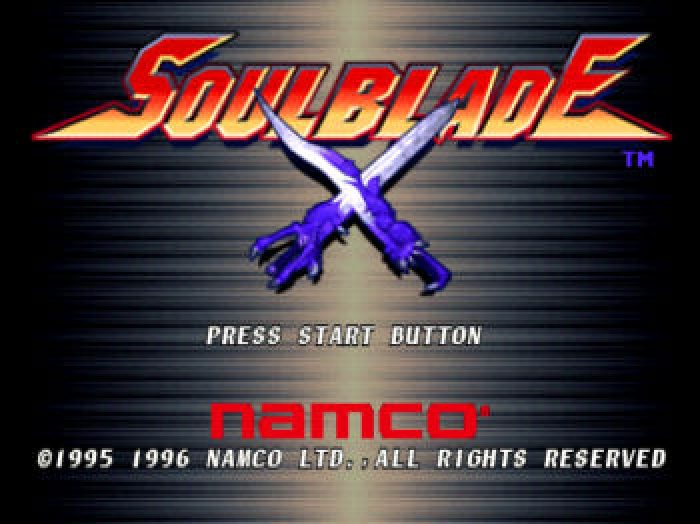
Game Review: Soul Blade


Game: Soul Blade
Console: Sony Playstation
Developer: Namco
Release Date: May 1997

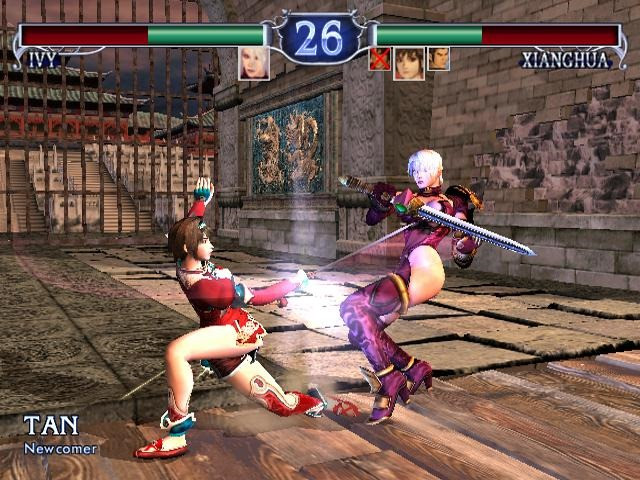
Having reviewed Soul Calibur II only the other day, you might wonder why I saved the first game in the series for a seperate review. Unfortunately I was under the impression that that game was called 'Soul Edge', and it was in Japan, however Namco decided to rename the European and American versions. So upon reading the manual before testing Soul Blade out for review, I noticed it featured a control system similar to Soul Calibur II, and some of the same characters and figured out what I'd missed.

There are a few main differences between this and Soul Calibur II; there's a weapon meter which depletes as you block attacks, eventually resulting in the loss of your weapon if you block too many times. The 8-way run is not featured in this version, instead you can only move into the background or foreground with a double tap of the down/up buttons respectively. Other than these two changes, there's not a lot of difference between the general control and feel of the game.


Many of the characters from Soul Blade made their way into later installments, with 14 playable characters in the game overall. Although this isn't a large choice, there's a good amount of  variation in movesets and a lot of different weapons to collect. Just like its sequels it features an Arcade Mode, Survival Mode, Team Battle mode and Edge Master Mode, where the player travels around a map, fulfilling victory conditions in different battles to unlock extra weapons.

Although a little more simple than Soul Calibur II's Weapon Master mode as there's only one fight per location, I think it makes a nice change from Arcade Mode and is a reasonable alternative unlike Weapon Master Mode which is far too long to be an alternative, rather it's its own experience. One small criticism of Edge Master Mode is that some of the victory conditions can get a little difficult to pull off, in later stages, and sometimes you're expected to win a lot of fights in a row, but experienced players will enjoy this sort of challenge.


Graphically the game is similar to, but perhaps a little better than the original Tekken. The movements and attacks are also smoother and there's an arguably better control system. As impressive as Soul Calibur II is for the Xbox, for the time Soul Blade looks great on PS1. There's an extensive soundtrack to the game also, which gives it character and sets it apart from other fighting games of the era.

Controlwise the game is pretty smooth, on a par with Tekken if not a little better. Unlike Tekken all of the attacks in the game can be useful at different times in combat and do fair amounts of damage, so that fighting doesn't become a kick-fest. The block system works well and I like the sword meter, even if it was taken out of later installments of the series. Overall this is a solid fighting game even today, and it must have been very impressive back when it was released.

Rating: 82/100
Grade: B

Wednesday, 11 September 2013

Game Review: X-Men Mutant Academy


Game: X-Men Mutant Academy
Console: Sony Playstation
Developer: Activision
Release Date: 11th July 2000

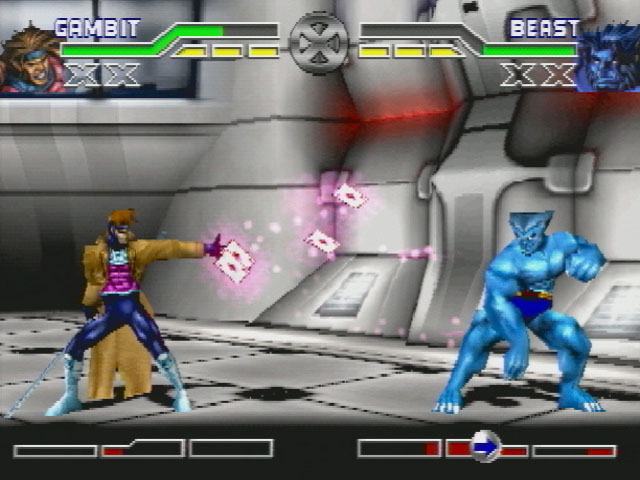
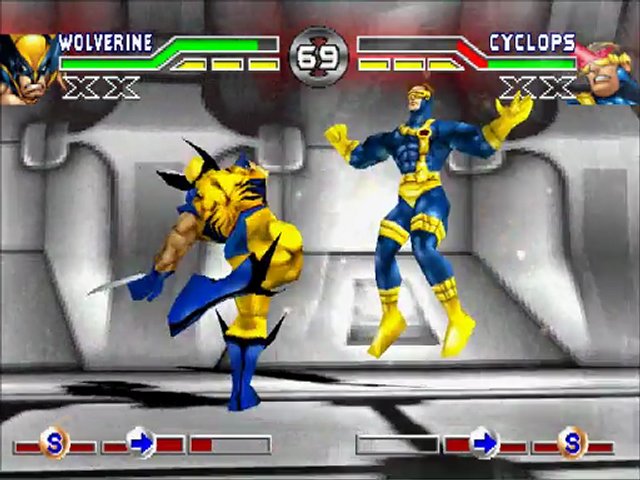
As I've decided it's tournament fighters month here at my game review blog, here's another weird one that I picked up in my travels. A 3D fighting game on a 2D plane, featuring 10 playable characters from the X-Men franchise and released to promote the film released in 2000, initially it seems like it might be "one of those" movie tie ins which play horribly. Luckily this isn't the case, and there's some fun to be had from it. The game has 3 competitive modes, a sort of museum mode and a training mode.

Arcade Mode is your usual tournament fighter mode featuring a fight against each character, including a mirror match, with increasing difficulty. Completing a run through this mode will unlock a new character also, as 4 of them are locked at the beginning of the game. Versus Mode allows you to compete with a friend and is probably the game's strongest mode. Survival Mode sees players fighting until they're finally defeated, only getting a health refill if they manage to defeat the opponent within a time limit. Cerebro Mode is the training mode of the game with instructional training and a free mode.


Arcade Mode is interesting for a number of reasons, the first of which is just how much health the fighters have. Not counting special moves it takes a good 8-10 "strong" kicks/punches to defeat an opponent if not more. The special moves would be a good way to deplete your opponents health if they weren't so limited (there's bars for each special), and if they weren't so difficult to pull off. The game is pretty sensitive with recognising the combos and a lot of the "extreme" ones require 4 buttons to be pressed at once after a combination of directions.

The difficulty increases as you progress through Arcade Mode as you might expect, but once you get to the sixth fight (on Medium difficulty) the game seems to get a lot harder. I found it almost impossible to get past the 7th fight on this difficulty and had to change to easy to complete the game. Not only does the computer get better at fighting on Medium mode, but the characters you fight in later stages have more powerful attacks which make them hard to beat.


The final boss fight in Arcade mode is strangely easy after all you'll have been through, making for somewhat of an anticlimax. There's not really a difficulty level which feels right for Arcade Mode, the latter stages in Easy mode are probably closest to what would make for a decent average difficulty. Versus mode makes for a good experience if you have a friend of the same skill level since you can circumvent the AI issues and probably have more fun attempting to pull off the combo moves.

Survival Mode features the same gameplay as Arcade Mode with a reduced timer, and one round per character rather than a best of 3. If you're able to defeat the opponent fully within time your health bar is refilled, otherwise you carry what you have through to the next round. Play continues until your character is out of health. While this mode is fun for a while, it can get repetitive fairly quickly.


The damage system in the game is not uncommon in tournament fighting games; there's permanent damage and temporary damage which must be cemented by landing further blows on the opponent. If temporary damage is left long enough without a followup attack, it will slowly heal. The temporary damage to a player is shown in red on the health bar. There's also a block system where players have the opportunity to counter 3 of the opponent's moves (these are in yellow below the health bars).

Movewise players have a choice of 3 punches and 3 kicks for a total of 6 basic attacks, not including throwing moves. At the bottom of the screen are gauges for special and extreme attacks which are only useable once the gauge is full. These controls work pretty nicely in general although you'll mostly want to be using the strongest kicks and punches in addition to any combos you can actually pull off.


The character selection is good and although there could have been more it's important to keep in mind that this is a movie tie-in so the main characters are featured, I'd assume. The balance between character's movesets in the game isn't great, some are fairly overpowered whilst others seem to have ineffective attacks. I think that in trying to make the latter stages of arcade mode challenging, the developers made the characters from those stages a little too powerful.

Graphically I think the game may have looked stylistically better on a 16 bit console in 2D, like the avatars depicted on the character select screen. The polygonal Playstation 3D isn't bad though even if it does seem a tad unnecessary for a game on a 2D fighting plane. Soundwise the game's not particularly memorable musically or for it's voice acting, so thankfully its not noticeably bad either.

Overall this really isn't a bad concept or try at an X-Men tournament fighter, and while it does have problems with difficulty and balance, the controls are good and it did receive 2 sequels which I can only assume built upon what they already had. With a decent cast, graphics and selection of modes and things to do, this isn't one of the best fighters I've played but its nowhere near as bad as it could have been.

Rating: 70/100
Grade: C

Tuesday, 10 September 2013

PC Double Header: McPixel and Game Dev Tycoon


Game: McPixel
Console: PC
Developer: Sos
Release Date: 25th June 2012

McPixel features a collection of 20 second minigames (sequences) in which you have to help the titular character save the day, usually with a couple of well placed clicks. There are 4 chapters in the game, each featuring 4 levels (one is unlockable through getting gold on each sequence of the chapter), and 6 sequences per level for a total of 96 sequences throughout the game. There's a variety of items and characters in each sequence, which need to be selected in the right order for McPixel to prevent an explosion.

The game repeats through the 6 sequences of a level until all are complete, skipping ones that have been cleared. Sometimes it's a little hard to see what action needs to be taken in a sequence on the first couple of plays, and if you have the fortune to complete one on the first try, it's best not to try and work out what you just did. A lot of the solutions to the various problems in game are solved in nonsensical, seemingly random ways anyway.


As the title would suggest, the game is in a pixel style with very basic shapes for both characters and objects that can just about be recognised as what they are. Most of the time, the style doesn't get in the way of gameplay and although it's hardly impressive, it's a defining feature of the game. Soundwise the game is also pretty basic with an 8 bit style musical accompaniment throughout the sequences. The humour of the game is sometimes a little childish but that's not to say it stands out from the overall concept or makes the game any less playable. 

Overall there's one or two hours of fun to be had, completing the various sequences and finding the secret endings to unlock bonus stages. The random nature of some of the solutions for sequences adds to the humour of the game alongside its basic audiovisual style. All of this added to its low price of £2.99 make it an enjoyable distraction from not being able to save the world by kicking people. 

Rating: 59/100
Grade: D


Game: Game Dev Tycoon
Console: PC
Developer: Greenheart Games
Release Date: 10th December 2012

Taking players from being amateur developers in the 80s all the way through to running a huge gaming corporation, Game Dev Tycoon is an interesting simulation game to say the least. It's been in the news recently for its stance on piracy, with the creators releasing a version online for unsuspecting pirates which plagues their efforts with piracy and forces them into bankruptcy as a lesson for attempting to pirate the game. That said, I'll be playing the version without that problem. 

At the beginning of the game, there's a few options as to what kind of game you'd like to create, but you're pretty much guided through the process of how to make games. There's also options to increase your own personal skill level and to research different features that you can put into future games and gaming engines to improve your chances of selling many games. Essentially the goal of the game is to have massive hits, scoring 10/10 on reviews, so that they will sell in large numbers. 


Once you've made over a million from a game, you get the chance to move into a new office space, from your garage and hire staff. It's sometimes hard to predict how well a game will do, as the algorithm for game scores isn't entirely obvious but this adds to the fun of the game. Real world console titles are parodied throughout the game with names such as the "mBox, Playsystem, and Wuu". The consoles that are featured follow real world sales patterns and specs to a degree and are a nice inclusion. 

In the end you'll get the chance to make your own consoles, as you move to an even larger office after a smash hit which generates in excess of one hundred million. As the game continues it gets more complex also with up to 6 staff members, R+D departments and the chance to make AAA titles and potentially a lot of money. The development of games also becomes more complex, assigning staff to different parts of the games and juggling how much time is spent on various aspects of it.


Graphically Game Dev Tycoon is kept fairly simple, with clearly laid out menus featuring a plethora of features. The game's soundtrack is also pleasant, although it can become a little tiresome after a long play session. I found myself rather glued to the game whilst playing, so it's definitely an interesting concept. Anyone with a little knowledge of videogames should enjoy this simulator, and those with a more detailed knowledge stand to enjoy it even more. 

Overall this is a really fun simulator, my only criticisms would be that once story mode ends, it does rather feel like there's not much else to do, and that it could explain how the rating work a little better so that players might have a better idea of how to improve. Looking at the game as a whole though, there's a lot to enjoy and even if you only play through it once, it's something I'd reccomend. 

Rating: 74/100
Grade: B

Sunday, 8 September 2013

Game Review: Soul Calibur II


Game: Soul Calibur II
Console: Xbox
Developer: Namco
Release Date: 27th August 2003

Appearing on 3 of the 4 sixth generation games consoles, Soul Calibur II had an exclusive character for each version. Spawn (a comic book character) appeared in the Xbox version, Link (Legend of Zelda) appeared in the Gamecube version, and Heihachi Mishima (from Tekken) appeared in the PS2 version. Featuring a total of 23 characters, there's a good amount of choice and variation between characters. As a fighting game, Soul Calibur II is a little different from other titles, with more focus on weapon combat and blocks than physical attacks.

There are two main modes, as well as a large amount of supplementary modes which are unlockable through Weapon Master Mode. In this mode, you take control of a character of your choice and journey through different lands in order to get the Soul Edge, a legendary sword. With 10 chapters, 4 subchapters, and 2 extra chapters, this mode is pretty long (each chapter contains 4-6 stages where you must fight). Arcade Mode is as you might expect, the regular mode in a tournament fighting game, working your way through 8 opponents toward an ending.


The gameplay is smooth and balanced, with 8 way movement in three dimensions, a nice block and counter system. The main attack options are vertical strikes, horizontal strikes and kicks all of which have different ranges and are useful in different situations and you're also able to throw with a combination of two buttons. The player is able to block using the a button, but to get into a favourable position after an enemy attack it's best to use guard impact, which is pressing A and the d-pad towards the enemy at the correct time to counter the enemy and throw them off balance.

This simple, but effective set of controls serves to give the game movesets which can be used by both beginners and seasoned players to be competitive. Alongside the basic controls, there are combos and special moves which can be learned as a player advances with a certain character but the most effective weapon in the game tends to be timing.


I mentioned Weapon Master Mode in a little detail earlier in the review, but I think it's only fair to explain it a little more. You begin chapter one in Regulus at a training centre and after learning the basic moves, progress to the first couple of fights which are easy to clear. As the chapters wear on, there are different objectives for some fights, such as invisible enemies, timed fights and having to use guard impact to damage opponents. This mode is very helpful for players who wish to become better at the game, since there's a lot of different tactics which need to be used in order to progress.

Although it can get a little too long after a while, it's an interesting main mode for a fighting game as there's a lot of variation and even more story than games like Tekken or Rival Schools. The only real downside is that I felt less inclined to complete arcade mode with each character after playing Weapon Master Mode. Most, if not all of the unlockable characters, weapons and stages are accessed via this mode also.


The other modes are reminiscent of Tekken, with Team Battle, Time Attack and Survival modes available, both with the characters default weapons, and ones earned in Weapon Master Mode. Additionally there's Gallery and Theatre modes where players can look through artwork for the game and watch cutscenes that have been unlocked.

The character designs overall are fairly varied, although at times it can be difficult to differentiate between moody sword wielding fighters. The stages in the game can also get a little samey, with dungeon stages in Weapon Master Mode being basically the same all the way though. There's also a lot of stages that fighters can fall from, resulting in a win for the other player. This makes for a nice balance in a way, but can also get easily abused in game.


Graphically, the game looks great on Xbox with a large amount of detail put into both the characters and their clothes, as well as the environments and areas where the fighting takes place. With the ability to play in HD (720p), its the best looking version from the 6th generation. Musically the game can be a little bland and disappointing in places, with a lot of the soundtrack hardly even registering whilst the game is being played.

Overall Soul Calibur has all the elements of a good fighting game; Simple controls which can be used to a skilled players advantage, an impressive guarding system, challenging gameplay with lots of modes, characters and stages to choose from. Weapon Master mode makes a nice addition also with extra playability and features to unlock for the player that make the game more appealing than some of its counterparts. While it does suffer from some repetitivity in stages and concept later on in Weapons Master mode, the gameplay and general concept of weapon based fighting is impressively pulled off.

I'd reccomend this as a place to start, even if you don't enjoy fighting games because its easy to pick up and play, has a lot of replay value and there's a lot more to it than "just tournament fighting". I'm hoping that soon I'll pick up both of the other versions of this game for Gamecube and PS2, as well as the original for Dreamcast.

Rating: 87/100
Grade: B

Wednesday, 4 September 2013

Series Review: Tekken


Game: Tekken
Console: Sony Playstation
Developer: Namco
Release Date: 8th November 1995

Running at a "TV scorching 50 frames per second", Tekken plays smoothly for a fighting game of its time, and although its graphics look somewhat dated now, they distance themselves from the 2D fighters of old such as Street Fighter II and Mortal Kombat with 3D characters and more vibrant scenery in the background, even if they are still on a 2D plane. In Arcade Mode, players progress through 9 stages, fighting all 7 initial fighter choices as well as a sub-boss and the game's boss.

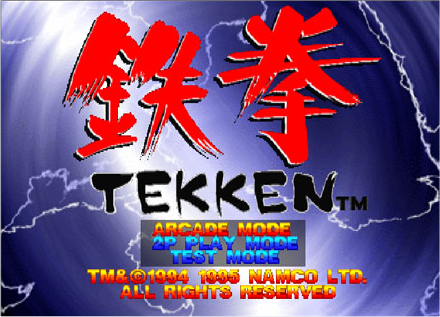
All sub-bosses of the game, as well as the main boss are unlockable as playable characters, taking the total roster to 17 fighters, which makes for a decent amount of choice.  2P Play Mode is self explanatory; two players can compete with any of the unlocked characters in the game. Test Mode hosts the game's options, with selectable difficulty, music and round time.


Each character has 2 punches and 2 kicks, and is able to crouch and jump whilst attacking as well as having their own set of special moves. While all character's basic moves are fairly similar, the special attacks are well implemented if you're able to pull them off. There's some interesting ones like Paul's Death Punch, and Yoshimitsu's sword spin. Sometimes it's difficult to judge how far you need to be away from an enemy to hit them but its less of a game fault and more something you get used to.

The AI as you progress through Arcade Mode becomes tougher, to the point that it's using cheap shots and undodgeable combos. I found even Medium difficulty level to be rather challenging, so much so that I was replaying the final fight 15 or so times to beat it. While it's good for fighting games to be challenging, I don't think Namco adjusted the AI much from the arcade version which was designed to eat your hard earned coins.


Overall, the Tekken series got off to a good start on home console; there's a great selection of characters, exciting special moves, locations and decent graphics with a smooth and consistent framerate. Two Player Mode is a lot of fun and works somewhat better than the Arcade Mode due to the tough AI and the fact that you only receive 20 seconds of story for playing through to the end anyway. Tekken isn't a bad game at all, and provides an interesting challenge to Virtua Fighter's offerings as a 3D fighter.

Rating: 73/100
Grade: C


Game: Tekken 2
Console: Sony Playstation
Developer: Namco
Release Date: 25th August 1996

Tekken 2 is a strange sequel; it shares a lot of qualities with the first Tekken game, most of the same characters feature in it, it has the same issues with AI difficulty, and it looks fairly similar also. There's a lot of new game modes however, and the characters are far more unbalanced than they were before. It remains on a 2D plane and although the fighters appear to rotate around a little at times, the player cannot control this.

As before, gameplay uses the four buttons for different punches and kicks in addition to special moves for each character, however there are some incredibly strong special moves featured in the game as well as some rather overpowered combos. It seems that some characters have been given "slow, but strong " movesets, while others have "fast, but ineffective" movesets which makes fighting unbalanced as the strength assets far outweigh any benefit of being quick.


Graphically the game looks a little better although the camera is further away from the fighters, their body parts still look as if they're not quite the right shape, however. The soundtrack on the game is more noticeable than the first installment but isn't really anything special. Overall its similar to the first game with new modes and moves, so a slight improvement, but nothing spectacular. 

Rating: 75/100
Grade: C


Game: Tekken 3
Console: Sony Playstation
Developer: Namco
Release Date: 12th September 1998

Tekken 3 plays noticably differently from its predecessors from the outset. For a start the movement and fighting moves look and feel smoother, and hitting an opponent feels less based on chance and more on timing and skill. The AI has been fixed also with the difficulty in one player modes evening out somewhat, so that Easy mode really is as it says, and harder modes are more challenging (although the computer still begins to use cheap tricks in order to win on harder difficulties). 

10 starting characters are featured, with the possibility of unlocking 11 more for a grand total of 21. This is a good roster size, although there's a slight imbalance in how well each of them play. Some of the unlockable characters (Gon, Mokujin and Dr. B most of all) seem to have very gimmicky movesets and although weaker characters seem to be able to move a little faster it's far easier to play with someone slow and strong. The variety between characters is good, although the females in game could benefit from more differentiation.


Storywise, each character gets their own ending after beating arcade mode and while some are more interesting than others, it's still nice to see what the characters are supposedly up to after winning. Both forms of the final boss are unlockable as playable characters, which is a nice touch, and with 10 stages making up Arcade Mode, playthroughs have a good length. 

Graphically the game is a huge improvement from the first game, although there's still some blockyness in some characters, they all look markedly better. Also the backgrounds have improved and the lifebar graphic is nicer. In terms of sound, there's still a rather forgettable backing playlist but its of good quality overall. The fighting sound effects have been improved also, with a lot of annoying character noises having been taken out from the previous 2 games. 


There are some interesting new game modes in Tekken 3; Tekken Force mode plays like a beat 'em up, essentially although generally the opponents can be beaten in one kick. At the end of each stage is a boss until you've completed its four stages. Tekken Ball mode features a fighting version of volleyball, without a net as players attempt to hit eachother with the ball to damage the opponent or loft it over the other players head. Both of these modes are welcome additions and change up the gameplay nicely but it feels like they're just ideas that haven't had much development. 

Other game modes include Team Battle, Survival, Time Attack and Practice as well as a Theater mode to watch the endings of characters you have beaten the game with. It's nice to see an improvement on the first game's 2 choices of mode and although you'll mostly be playing Arcade mode, these are all enjoyable options also. 


Overall Tekken 3 feels like a much smoother, improved edition of the game with some interesting character additions and new modes. Gameplay is the best part and although the controls have remained much the same, the experience has been refined to a much higher standard. With graphical improvements and better AI difficulty, the only real complaints I have of the game are the cheapness of the more difficult AI and rushed feel of Tekken Force mode. 

Rating: 83/100
Grade: B


Game: Tekken 4
Console: Sony Playstation 2
Developer: Namco
Release Date: 13th September 2002

Tekken 4 was the first installment of the franchise for the PS2, and it looks all the better for it. Characters are finally rid of their blockyness from previous installments and the backgrounds are much more nicely defined than before also. The gameplay is also incredibly smooth and it's easier to use combinations of punches and kicks than in previous games. 

The game features the same modes as Tekken 3, save for Tekken Ball Mode which has been removed. Tekken Force Mode has been changed to a 3D beat-em up featuring improvements on the last game, such as targetable enemies, and more life power-ups, however the overpowered kick still remains as a gamewide feature.


Overall the game's AI difficulty has been reduced, and it's much easier to button-mash your way to victory against the computer. Medium difficulty mode holds almost no challenge to beat and I'd reccomend playing the game on at least hard. While this opens the game up to newcomers, I'd say it also promotes lazy strategy on their part, as stringing combos of well timed moves together has been made easier in the game, but also unnecessary by the difficulty of the AI.

Tekken 4's visuals are generally good and although some of the crowd in backgrounds are more blockily designed than actual fighters, the characters themselves are well designed and have varied looks and outfits. Boasting 23 characters in it's roster, there's still a good amount of choice from the beginning, and once all of them have been unlocked. As for character balance, there don't seem to be many over or underpowered characters. 


One flaw of the Tekken series that becomes more apparent with this installment is the massive power of most character's kicking moves. Punches usually do around half the damage of kicks unless they're a special move, and unless your opponent is particularly skilled, a decent technique for beating the game is to time your kicks well and use the most powerful one 4 or 5 times until the fight is won. 

Without any new modes (unless you count Story Mode which serves as what Arcade Mode was in other installments), but some gameplay and visual upgrades, Tekken 4 suffers from low AI difficulty and an easier way in for button-mashing style gameplay. Timing and attack choice is still important in this installment however, and there's a good selection of characters and stages to fight in, even if all you really need are a couple of strong kicks. Overall Tekken 4 is a mixed bag which works better in 2 player mode than Arcade mode but features some improvements on Tekken 3's visuals and smoothness. 

Rating: 77/100
Grade: B

There was going to be a review of Tekken Tag Tournament also, but my Playstation 2 may well be out of commission for a while, so I'll leave you with just those four. In a smooth, well presented fighter series, with a decent roster of characters and overly powerful kicks, it's apparent that Tekken has its own endearing playstyle which in later versions is easy to pick up and hard to put down.

Saturday, 31 August 2013

Console Review: Atari 2600


Console: 2600
By: Atari
Release Date: 11th September 1977 (US)

The most popular home console of the second generation, the Atari 2600 (originally called the Atari VCS) stood apart somewhat from its competitors. For a start there were far more games released for the system than other consoles of the time by far. Both Atari and third-party titles featured interesting concepts and conversions of popular arcade games of the time. Games such as 1977's Combat (which was initally the pack-in game for the system) distanced video games from the pong style consoles of the past 5 years.

The console itself has an interesting wooden look to it, with switches to change between black and white, difficulty levels and to reset the console/game. The game cartridges are rather large by today's standards, almost like the larger non-Sega Mega Drive cartridges. At the back on the console, there's the controller inputs and power input. Due to this, it's easier to play the Atari 2600 facing away from you, as the switches are still accessible.

(Combat; The original pack-in game for the Atari 2600)
Graphically the system keeps things fairly basic with pixel based sprites and objects, as well as simple sounds in games if there are any at all. The library of games on the 2600 is a little hit and miss however, comprising of fun to play, original ideas such as Combat, and Tennis which hold fun for gamers of today even, and titles that it's incredibly difficult to enjoy such as Casino, and Outlaw which have more flaws than can be overlooked.

When games acknowledge the limitations of the system, and use clever ways to get around them, such as combat's innovative missile control system/ tank-pong mode it's easy to forget about the graphical shortcomings and get lost in the gameplay. Even mediocre arcade conversions like Space Invaders and Asteroids benefit from the many game modes featured on the cartridges, such as two player and harder challenge modes.

(Asteroids for the Atari 2600)
On Atari game boxes it's common to see "66 games" or "27 games" and think that you've hit the jackpot with a multicart, but really what these mean is that there's a number of different playable modes. Taking Space Invaders as an example, there's faster invaders, invisible invaders, 2 player modes and more which give more replay value to the cartridge and make for an interesting journey of discovery as to what each game mode entails.

The worst type of games on the Atari 2600 are things that can easily be done outside of a console. Tic-Tac-Toe, Checkers and Reversi are the worst offenders since they're best played as board games anyway. The computer takes a long while to think about its moves and flickers on and off to reveal what it is actually going to do. Even the choice of games modes amongst these is poor since there's only a certain number of ways of playing each.

(Checkers for the Atari 2600)
Reviving interest in the gaming market after a slew of Pong consoles and becoming an almost universal word for any videogame at the time, the Atari sat atop its throne for around 5 years until the infamous port of Pac-man and E.T. the Extra Terrestrial were released to massive disappointment from Atari owners everywhere. Having massively overcalculated how many copies of the game would sell, legend has it that Atari buried 5 million E.T. carts in the New Mexico desert.

As the Atari 2600 was the best selling console of the generation, selling 10 times the amount of units as the Intellivision which was 2nd, these two games massively damaged consumer confidence in the industry as a whole. Not only were they rushed and of terrible quality but they are widely regarded as some of the worst games of all time. In 1983 the video game crash seriously impacted sales of games and consoles in America and Europe until the release of the NES.

(ET for Atari 2600)
Overall the Atari 2600 is a fun console if you're able to get hold of some of the best games for it. There's a lot of innovation, particularly distancing videogaming from being just several types of Pong. Unfortunately corporate greed put a stop to its popularity and that of videogames in general for a while, but having almost singlehandedly popularised the new breed of videogames in the beginning, you can't take off too many points from its tally. Lasting until 1992 when the last official game was released for it, the 2600 had a spectacular 14 year lifespan which rivals that of the Playstation, NES and Playstation 2.

Friday, 30 August 2013

Atari 2600 Games Review Lot #1


Game: Battlezone
Console: Atari 2600
Developer: Atari
Release Date: 1983

Battlezone appeared recently in my Atari Collection review, albeit in a Vector-like version. The Atari 2600 graphics are more colourful and although basic, you can see what you're doing a whole lot better in the game. The difficulty in the game is decent on the first difficulty level, although higher levels get almost impossibly difficult. Due to this, games tend to be quite short, despite the 5 lives you're given and I've only experienced 3 enemies in the whole of my time playing.

The radar works more nicely than the on featured in the Atari Collection for PS1, and the explosion effects are pretty nice for 1983 also. While it can be fun to play, the game's short and repetitive nature doesn't lend itself to much replaying or challenges on the highscore. Overall it's five minutes of fun if that.

Rating: 16/100
Grade: F


Game: Space Invaders
Console: Atari 2600
Developer: Atari
Release Date: 1978

Although its not the version that looks anywhere near the arcades, Space Invaders on Atari 2600 provides a fair amount of fun, with adjustable difficulty (your ship gets bigger or smaller, or you can make the invaders fast, or even invisible). It plays well although you're not allowed to shoot all that often, and the best part of the game is that you can play with a friend, competing for scores but wiping out invaders alongside eachother instead of taking turns.

The visuals may let it down a little, as the invaders look more like aztec paintings than the aliens in the more well known artwork. Also strange is the fact that the invaders shots down at you move almost as if there's a wind blowing across the screen, which adds an extra factor of difficulty. The player's defense turrets also move across the screen in the same sort of fashion. Overall its a decent version of the classic that doesn't play exactly like the best known version, but provides fun nonetheless.

Rating: 45/100
Grade: D


Game: Asteroids
Console: Atari 2600
Developer: Atari
Release Date: 1981

A pixellated take on the vector classic, Asteroids isn't quite as smooth or fun as in the arcades, and the sound definitely isn't as good, but the main ideas are all there and it plays decently enough, especially for the time of release. The colours are bright and vibrant; sometimes a little too much so since they're shooting around the screen at speed. Shooting the Asteroids breaks them apart in a fairly smooth animation.

Two player turn-taking gameplay is allowed and other modes include harder variations of the game. It's disappointing not to see a two player mode where you can compete at the same time, but programming limitations may have put a stop to that sort of idea. Overall there's a fair amount of gameplay and it's nearly as good as playing the arcade version of Asteroids.

Rating: 33/100
Grade: E

Atari 2600 Games Review Lot #2


Game: Combat
Console: Atari 2600
Developer: Atari
Release Date: 1978

A two player extravaganza of fighting, Combat features both tank and air based combat modes, with 27 different combinations of gameplay modes. Featuring different types of projectile and gameplay fields, there's added replayability and although some combinations are better than others, Tank, Tank-Pong and Invisible Tank-Pong and its variations have some of the most appeal. The air battles are fairly fun also, but they don't share the same type of mechanic as the land based modes.

Graphically, the game is kept extremely simple, as is expected from the Atari 2600, but it has enough detail for players to see what they're doing in game. The best feature of the tank based games is the ability to control your shot, once it has left your tank. Using this adds a whole new dimension to the battle, and once the novelty has worn off, there's also a mode where the shot bounces, as if in Pong. Overall this has a lot of 2 player fun, appeal and replayability.

Rating: 58/100
Grade: D


Game: Outlaw
Console: Atari 2600
Developer: Atari
Release Date: 1978

Outlaw is almost like a Cowboy version of Combat, just with one player capabilities also. The problem here, however is that the gameplay just isn't as fun. With 2 cowboys on screen, the players can shoot straight, and diagonally up or down. There's a cactus in the centre of the screen which impedes the bullet's path into the opponent, so shots must be skillfully aimed. When one player is in a good position to shoot the other, the other player is in exactly the same position, so double hits occur often.

One player mode is a little less enjoyable than two player mode. The aim is to hit a moving target in each of the stages, ten times before 99 seconds are through. If you fail to do so, the game ends and if you sucessfully hit the targets, the game ends. Such unrewarding gameplay isn't a great feature, even on Atari 2600. The whole reason Combat makes for so much of a better game than this is the competitive nature of its two player mode which is well balanced, with good mechanics. Overall, Outlaw just doesn't have these.

Rating: 7/100
Grade: F


Game: Superman
Console: Atari 2600
Developer: Atari
Release Date: 1978

In what is an incredibly short game even by Atari standards, Superman manages to deliver a small dose of action and storyline. How to beat the game is described explicitly within the manual, and it doesn't take a whole lot of intelligence to work it out, even without the manual. You witness a bridge collapsing and suddenly it's your mission to save the world from Lex Luthor's gang.

You fly around levels which are seemingly random mazes of backgrounds. Superman is able to preview which screen is coming next on any side by pressing the button and the direction of the next screen, but even so its confusing. The player must collect all of Lex Luthor's gang and then Lex himself and throw them in jail before fixing the bridge.

As Superman, you lose your power of flight upon touching kryptonite, and must touch Lois Lane to recover your powers. There's no lives however, so you're free to take as long as you wish to do so, and can get hit as many times as you wish. Overall it's playable but a short and rather boring adventure, which I'd reccommend playing maybe once in your life.

Rating: 25/100
Grade:  F

Atari 2600: 32 in 1 special


I'm not going to score this cartridge as a whole, since its technically many games in one, but I couldn't do a feature on the Atari 2600 without mentioning it, since some of the best gameplay I've had on the console has been from this cartridge. The game itself was packaged with many European 2600 systems and featured 32 previously released cartridges in 1. Its amazing to think that cartridges with just one of the games featured on here were even sold after playing this.

With other Atari cartridges of the time boasting "66 games" or "27 games" on one cartridge, but really meaning that they had a certain number of interchangeable features, you would be forgiven for thinking that this was one of those type of cartridges. I thought so too at first, booting up the first game - UFO. 16 modes featured in it, and I thought to myself that with a 2 player option maybe they'd decided that made 32 in all. Upon finishing I rebooted the Atari to check something and before me was a completely different game.


While there are some games that don't really impress such as Blackjack and 3D Tic-Tac-Toe, they're easily overlooked for the sheer amount of content on this cart. I'll run through some of the best just to give you a taste for what the 2600 had to offer outside of what I've reviewed. The first game to really impress me on the cartridge was Boxing. With a top down view, its not the most fancy or practical representation of the sport, but it plays smoothly and works well.


Surround is another simple game that plays well, it works just like Tron; you control a snake and attempt to cut your opponent off before you hit a wall or where he's been. There's a lot of fun variations of this featured which is good. Tennis plays incredibly well, with decent hit detection, easy controls and gameplay that far exceeds early tennis titles such as Super Tennis for Sega Master System. 


It's nice that a cartridge like this would even be boxed with the Atari 2600 since its almost a greatest hits featuring a lot of good games. I doubt companies today would be happy with giving away so many good games in this fashion. Overall it makes for a great collection of Atari 2600 which showcases both its talents and its flaws. In the interests of some better Atari 2600 games making it into my top games list, I'm going to score the 3 best games featured on this cartridge below;

Boxing: (1980, Activision) - 

Rating: 35/100
Grade: E

Surround: (1978, Atari)

Rating: 45/100
Grade: D

Tennis: (1981, Activision)

Rating: 51/100
Grade: D

Saturday, 24 August 2013

SNES vs Genesis: Mortal Kombat


Game: Mortal Kombat
Console: Super Nintendo Entertainment System/Sega Mega Drive
Developer: Midway (SNES)/Probe Entertainment (MD)
Release Date: 13th September 1993

Mortal Kombat is quite a well known name in the fighting game genre and its often referenced as a classic, but how good is it compared to other fighting games, and does it live up to the hype? In a word, no. It may well be a good laugh when you have friends around, and want to play some older fighting games (although I'd reccomend Street Fighter II for that), but as a fighting game both versions I'm about to review have some key flaws.

We'll start with the basics; Mortal Kombat features 7 fighters (the joint least of any fighting game I can think of alongside Primal Rage) and in single player you progress through fighting every character (including a mirror match) before fighting teams of 2 opponents one after another in a sort of double battle mode. Finally after these, you fight the game's 2 bosses before getting an ending for your character. There's also a two player mode although it acts as the first rung of the tournament ladder, once the other player gives up.


In both versions of the game, there are executable combos and fatalities for each player, although beyond this their basic fighting moves are all extremely similar. Not only this, the character designs seem to be somewhat uninspired across the board with recolours having become a trademark of the series (although you'd have thought it wouldn't be something to be proud of), and fairly forgettable characters in this first installment. Due to their similarities, however the fighters in Mortal Kombat are fairly balanced for use in two player mode, as everyone has a ranged attack, and some special moves.

The one player mode difficulty in both games is pretty much the same with an adjustable level of difficulty on the options screen. Playing in normal mode on both games presents a steep difficulty curve once the player is about 5 fights in, however due to the AI on both versions being somewhat susceptible to certain combinations of moves it can be still easy to progress. The SNES version suffers a little more from this as I found the best way to win fights was to constantly hit the Y button until the opponent was dead. On the Mega Drive you'll need a combination of the uppercut, jump kick and mashing the punch button.

(Mortal Kombat - SNES Version)
Both versions of the game feature motion capture style fighters on an animated background which only has about 4 frames. Sometimes the hit detection seems a little iffy; other players can hit you when you're too far away to hit them, and if you both hit eachother at the same time it's anyone's guess what'll happen. One good dynamic is that blocking doesn't completely save you from damage, but blocks most of the damage from the attack. This means that unlike some other fighting games, players cannot rely on blocking as much as they might.

In the one player mode, I managed to get to the battle before the final boss by mashing the high punch button until the opponent was dead on medium difficulty. In truth, there's a lot of ways you can beat the AI easily and this makes two player mode the only really viable option for this version, since trying to fight fairly on harder battles and difficulty levels will usually result in a loss.

(Mortal Kombat - SNES Version)

In both versions between levels there are strength test minigames which involve rapidly pressing buttons until the meter is above a certain point. These are nice for breaking up the flow of gameplay and work well on both versions. The levels are also fairly interesting with a variety of backdrops and animations going on behind fights. 

The boss design in the game is good; Goro is a four armed creature who has by far the most interesting design of anyone featured in the game, and Shang Tsung can morph into any of the cast in order to attack the player, as well as using his own attacks. With such interesting boss designs you wonder why they weren't able to be unlockable characters, as it'd have increased the fighter count to 9 and added variety to the roster. 

(Mortal Kombat - Mega Drive version)
For the Mega Drive version, visually there's a few changes to note; the backgrounds of levels are changed a little, the fighters are smaller than those on the SNES, and have more detailed shadows, the health bars are thinner and character names are displayed outside of them, the colours look more vivid in most parts, and without the blood cheat there's no sweat/hit effect.These don't make a whole lot of difference to the gameplay (save for the last change, which makes moves feel less satisfying) but they give both versions a distinctively different look.

As the games were released simultaneously by different developers, I assume the changes are to do with the capabilities of each console or something like that. Soundwise, the Mega Drive version features a more synth based version of the title screen music, which I prefer to the SNES's admittedly more realistic sounding music. The vocal effects on both games are fairly similar but hit sounds on the Mega Drive are another contributor to moves feeling less satisfying, since they sound more like hitting a wall than a person.

(Mortal Kombat - Mega Drive version)

There's a lot of talk about the Mega Drive version's inclusion of blood and how much people prefer it because of that, but for a start it has to be activated by a cheat code otherwise there's literally no sweat/spit effect at all upon damage inflicting moves and although somewhat fun even if blood is turned on, the gameplay still suffers from the same problems with AI and sound. Of course having blood and using fatalities was a somewhat new thing at the time; Nintendo hadn't featured any material that wasn't up to their exacting censor standards in games, and Sega had just set up their own ratings board just so that they could feature this sort of action in a game.

Overall though there's not a lot between both games; the graphics and music are debatable as to which version is better, the SNES version features more satisfying gameplay and larger character sprites and well as the classic look of the game for most people. The Mega Drive version features the option to have blood, better AI in one player mode and a few more fatalities that weren't featured on the SNES.


Mortal Kombat as a game itself is disappointing and the arcade version wasn't exactly amazing (although it beat both of the versions shown here for gameplay, graphics and sound). With fatalities being the focus of gameplay, the fighters similar attacks and lack of roster choice really let the game down. There's also a lack of replay value with no unlockable characters and only endings to reward you for completing tournament mode. For me, the SNES version plays slightly better than the Mega Drive version but they're both about as fun as eachother.

SNES version                                                                                                   Mega Drive version
Rating: 56/100                                                                                                  Rating: 50/100
Grade: D                                                                                                          Grade: D