Showing posts with label Sonic. Show all posts

Tuesday, 14 June 2016

Collection Review: Sonic Gems Collection


Game: Sonic Gems Collection
Console: Sony Playstation 2
Developer: Sega
Release Date: 30th September 2005

Sonic Gems Collection has many of the assorted games which are difficult to get hold of or play normally from the Sonic Franchise. As such it's perfect for crossing some tricky titles off my list. There are also some titles which I'll be playing on easier formats or have already reviewed. For these I'll still consider them towards the collection's overall score, but won't be reviewing them in this roundup, for the sake of time and convenience.

The games featured in Sonic Gems Collections are Sonic The Fighters, Sonic CD, Sonic R, Sonic The Hedgehog 2 (Game Gear), Sonic Spinball (Game Gear), Sonic The Hedgehog Triple Trouble, Tails Sky Patrol, Tails Adventure, and Sonic Drift Racing. This is a good selection of unconventional Sonic games, especially the Game Gear releases, of which I've only played one, on the Master System. There are also bonus Mega Drive games which can be unlocked by playing ridiculous amounts of the game (12 hours or more usually), but I won't count these as regular content, since Streets of Rage and Vectorman are hardly regular Sonic titles.

Sonic: The Fighters


Game: Sonic: The Fighters
Console: Arcade
Developer: Sega
Release Date: 1996

A Sonic The Hedgehog fighting game is a strange concept when you think about it. Although the characters have got into their fair share of fights over the years, most of these were after the release of this arcade only game. Sonic: The Fighters features 8 playable characters who form the opponents of the first 8 stages of the game, with Metal Sonic acting as the final boss. Once players have beaten a stage, they gain a Chaos Emerald, and move on to the next stage. Once all 8 Chaos Emeralds have been collected, the Death Egg can be accessed as the final level.

The controls are simple and consist of punch, kick, throw and block commands. Movement for all characters is slow and clunky, and gameplay is very much of the button mashing variety. Usually a single attack is enough to defeat most enemies when spammed enough. There's a little difficulty with beating Metal Sonic, but it's nothing that perseverance won't overcome. In terms of character differences, each has a different throwing move, but otherwise punches and kicks are mostly the same, and there's little difference in feel between mascots.


Graphically the game is incredibly blocky, and reminiscent of the original Tekken in its movements and look. While there are many different arenas for fights to take place in, the backgrounds are always more interesting than the ring itself, with no destructible environments or useful location based attacks. The soundtrack is somewhat below par for a Sonic game with only a few enjoyable tracks to fight to.

Overall, as an arcade fighting game, Sonic: The Fighters falls short of what's expected. At many points it's far to easy just to mash the buttons and win, with strategic fighting sometimes even coming off worse. The block system is interesting, but is never allowed to expand with fights being far too short at their default length. There's a small amount of enjoyment to be taken from the game for Sonic fans, but that's about it.

Rating: 51/100
Grade: D

Sonic R


Game: Sonic R
Console: Sega Saturn
Developer: Traveller's Tales
Release Date: 18th November 1997

Sonic R is not a good game. There are people who have learned and mastered its slippery controls in order to speedrun the game, and some seem to enjoy the challenge of the game's obtuseness, but anyone looking for a quality Sonic racing title will be sorely disappointed. We've been treated in recent years to the Sonic and All Stars Racing Transformed series which blows this game out of the water, and comparing the two, there's very little to like about Sonic R.

The first thing to note about the game is its controls, players control their character's acceleration almost like a car, turning controlled on the same pad. There's a special move for each character, and many can jump over obstacles. The turning circle of all characters is huge and getting through a race without scraping along the sides of the track is near impossible. Hitting anything will make the character stop dead in their tracks, and constant inertia will prevent players from being able to steer in the direction they want to.


Graphically the game is very blocky and features low res textures for all of the track detail. The actual design and look of the levels is fairly varied and perhaps one of the best aspects of the game. The tracks themselves can be extremely confusing in terms of where to go, though usually there's multiple paths and confusion can often lead to a shortcut. The soundtrack, whilst not exactly fitting is enjoyable and well produced, but the sound effects of each character running, or particularly Tails flying are grating after a while.

Overall Sonic R is difficult to enjoy unless players have enough time with it to overcome the extremely dodgy physics and controls, find all of the hidden chaos emeralds and unlock the characters within the game. I wouldn't personally recommend doing so, but each to their own. At the time of release Sonic R was likely a comparatively average racing game, especially with all of the characters on foot, and 3D only just taking off. Thesedays we can look back and wonder just what went wrong with the benefit of hindsight.

Rating: 48/100
Grade: D


Game: Sonic Spinball
Console: Sega Game Gear
Developer: Sega
Release Date: 1994

I've already reviewed Sonic Spinball for the Mega Drive, which I found to be a fun break from the platforming Sonic The Hedgehog games, with some fun concepts and good progression for players who had the patience to make their way through all of its stages. As expected, Sonic Spinball on Game Gear has been simplified a little, and is a little less straightforward in terms of being able to see how to progress.

Just like the Mega Drive version, players control both Sonic and the flippers of the pinball machine, giving a twist on the regular pinball formula. Unfortunately most of the game is trial and error, with emeralds being collected with enough perseverance. It'd take a lot of exploring to make it to the next level; much more than in the Mega Drive version, and that means there's less interesting stuff to do in each level,


Graphically the game is far more basic than it's Mega Drive counterpart, as is to be expected for an 8-bit version of a 16-bit game. Sega seemed to have an obsession with putting their Mega Drive games onto the Master System and Game Gear back in the day, with many of their titles reaching both. The music is alright but nothing compared to the Mega Drive version, once again.

Overall Sonic Spinball for the Game Gear is a little disappointing for anyone who's played the Mega Drive version and seems as if it'd only appeal to someone who hadn't yet upgraded to the system, back in the day. As a slightly different version of the game it's interesting but somewhat inferior, and so perhaps a little unnecessary.

Rating; 60/100
Grade: D

Sonic The Hedgehog: Triple Trouble


Game: Sonic The Hedgehog: Triple Trouble
Console: Sega Game Gear
Developer: Aspect
Release Date: 31st October 1994

Sonic Chaos was a late game for the Game Gear, featuring easier gameplay than many of the main series instalments in the Sonic series. Sonic The Hedgehog: Triple Trouble is effectively the sequel, and features 6 more zones, each with 2 main acts, and a third boss battle act. There are fairly varied, though there's nothing that we haven't seen before in the Sonic series in terms of bosses or gameplay. There's a few interesting sections including a minecart section and a snowboarding section, but overall the main draw of the game is the multiple paths to be explored in each act.

Interestingly players will only lose some of their rings when hit by an enemy in this game; 30 for most enemies, and 50 for spikes. This gives some extra chances to the player, if they've collected more than 30 rings, and isn't really a bad idea, despite only being implemented in a few other games afterwards. The level design is interesting, and focuses on many different paths and levels of height; this makes the game somewhat too easy, as there's always another chance to finish the level. Another plus is the ability to play as either Sonic or Tails through the game.


Graphically the game is basic, especially for 1994; as the world was heading towards 32 and 64 bit systems, 8 bit graphics and sound just weren't as cutting edge. There's even sections of the game where the HUD disappears behind the level effects. Musically there's not a lot to like, as many tracks sound hastily put together and almost dissonant. Sound effects are pretty standard for the sonic series, if somewhat distorted.

Overall Sonic The Hedgehog: Triple Trouble can easily be enjoyed as a Game Gear exclusive, and 8-bit Sonic 2D platformer. While its visuals and music are basic, and the gameplay is fairly easy, everything comes together, just like in Sonic Chaos to provide a playable and interesting Sonic experience. It's definitely worth at least a single playthrough for Sonic fans.

Rating: 65/100
Grade: C


Game: Sonic Drift 2
Console: Sega Game Gear
Developer: Sega
Release Date: 1995

Sonic Drift 2 is a racing game featuring 6 characters from the Sonic the Hedgehog series, racing eachother in an Outrun-esque style, with big inspiration also coming from the Mario Kart series. While the original Sonic Drift isn't included in this collection, its sequel doesn't make a great case for itself or the series as a whole. The first issue is the Outrun style presentation of the game; the course comes towards the players rather than the cars actually seeming like they're racing on the track. This can make corners hard to anticipate and leads to a lot of going off track, even when braking and attempting to use the minimap which takes up half the screen for guidance.

Secondly there are items which can be used on opponents; Robotnik is constantly throwing mines from the back of his car, and movement tends to be very stop-start thanks to the sheer amount of obstacles created on some tracks. Winning a race is fairly random; I suspect strong AI rubberbanding, as a terrible performance is just as likely to yield a first place finish as a good one.


Graphically the game is basic in its 8-bit style, once again Sega seemed to have supported the Game Gear well past when its technology was cutting edge. Super Mario Kart's Mode 7 graphics helped it to become the classic that we know and love. The visual design also seems to be rather poor with the minimap and HUD taking up around 40% of the screen. The music for the game is fairly average with hardly any stand-out tracks.

Overall it's a pretty unenjoyable racing game; I was reminded of Woody Woodpecker racing on the Game Boy Colour and other such lacklustre titles. Even Sonic fans will find that the good track and character variety isn't enough to save the poor racing action. This one is to be avoided at all costs.

Rating: 30/100
Grade: E


Game: Tails: Sky Patrol
Console: Sega Game Gear
Developer: Sonic Team
Release Date: 28th April 1995

A Japan only release for the Game Gear with Tails as the main character, Tails: Sky Patrol couldn't have had less reach if it tried. Luckily, with it's inclusion on the Sonic Gems Collection, anyone can experience the obtuse difficulty of its gameplay. Tails must make it through five levels, starting with a training area, in order to defeat whatever evil is threatening the world this time. He is able to fly and carries with him a ring which can be used to defeat enemies and latch onto level effects.

Tails loses a life if he collides with the floor, runs out of energy or otherwise hits something and can't recover. Energy can be replenished by collecting sweets which are dotted around the levels. It's hard to explain why the game is so difficult, but I almost gave up inside of the training stage thanks to the level design going against most gaming logic. Mine carts which usually transport players to the next section lead to death, there's dead ends everywhere; meaning players have to learn the levels by heart to progress, and whether you're playing through at speed, or taking your time there's no less difficulty.


Graphically the game doesn't look too bad at all, especially for the Game Gear. The screen can be a bit cluttered at times with all the obstacles, collectables and level effects but the colours and backgrounds look nice. A contributory factor to the difficulty is also that not a lot can be displayed on the Game Gear screen while it scrolls, so players can only see a little way ahead at any one time. The music is whimsical but not particularly memorable or good, which seems to be a theme in many Sonic Game Gear releases.

Overall Tails: Sky Patrol is hardly enjoyable at all with a completely new control system to learn, poor level design and a clutter of obstacles and enemies thanks to the Game Gear's screen size. When the training area seems almost unbeatable, you know it's time to lower the difficulty just a little. It's a shame that I wasn't able to experience more of the game's four main stages, but there was just no way to get through without serious hours being put into a game that just wouldn't reward the effort.

Rating: 29/100
Grade: F


Game: Tails Adventures
Console: Sega Game Gear
Developer: Aspect
Release Date: 1995

With Sonic Team's effort for a Tails game coming up short, it fell to Aspect to develop something a little better. Tails Adventure was the result, a platformer which feels unrelated to the Sonic series as a whole, introducing new gameplay mechanics and with a far more generic feel overall. There's a Mario style overworld map, and the gameplay itself is more item based, with duck enemies as the main focus. It's almost as if Tails could have been replaced with any character and things wouldn't have felt out of place.

The game itself is competently programmed and designed with long, but engaging and varied stages where Tails must use the items and abilities which he acquires to progress. There's some puzzling required in places, and the pace isn't as fast as regular Sonic games, but this doesn't hinder the enjoyment. The controls are generally good and allow players to switch between their items and move around with little fuss.


Graphically the game is technically better looking than many other Sonic Game Gear releases, however the colour palette and imagination of the areas lets the game down somewhat. Musically there's no classic Sonic-esque sounds, but the soundtrack isn't terrible by any means, so it's stuck inbetween in a sort of mediocre zone.

Overall Tails Adventure is a welcome break from Sonic style gameplay, adding more depth to its platforming, with slower gameplay. It might have been a little better to create a new IP for this game however, as Sonic fans will likely be disappointed at the lack of classic Sonic gameplay, and non-Sonic fans are unlikely to check it out. Still, those that do will find a competent and fun little adventure.

Rating: 62/100
Grade: C

Those are all the games I'll be looking at on this collection, though Sonic The Hedgehog 2 for Game Gear and Sonic CD are also included, but I'll be looking at those separately. Overall as a collection, Sonic Gems is handy for collecting some difficult to find games, like the Game Gear exclusives, and Sonic The Fighters, which only appeared in arcades. For non-Sonic fans though, it might appear as a collection of fairly outdated and substandard games. The average quality of games isn't particularly high, though there's some that are definitely worth playing.

The emulation on the collection is average, with some running a little strangely. The biggest criticism I have of the emulation is that playing Game Gear games on a TV caused a little motion sickness, due to the small size of the screen. The extras included in the collection are well worth checking out, but take some earning when compared to other collections.

Collection Rating: 69/100
Collection Grade: C

Tuesday, 7 June 2016

Game Review: Sonic The Hedgehog


Game: Sonic The Hedgehog
Console: Sega Mega Drive
Developer: Sega
Release Date: 23rd June 1991

I've been waiting a while to review Sonic The Hedgehog; partly because it's a much loved video game and I wanted to give it the proper care and attention, but also because it can be pretty frustrating to reach the end of, and the 3DS re-release by M2 has a stage select option to overcome any silly mistakes. Having played both the original Mega Drive and 3DS versions, there's really not a lot of changes in the updated version except for a 3D effect (which looks great, but doesn't add anything in terms of gameplay). There's some options to enhance the game, such as including the spin dash, and changing the region, but I kept these off for the purposes of this review. There is a level select option on the original cart also, but the portability of the 3DS really helped me stay motivated to review this classic.

The first thing that comes to mind when thinking about Sonic the Hedgehog is speed. 3D games in the franchise have relentlessly reminded us of Sonic's speed, and Green Hill Zone; the first stage in this game would have you think that the rest of the game will be a speed-fest, but later levels have some real puzzle platforming to them, and require players to slow down and think about what they're doing to progress. Some later stages even seem to require a little memorisation to complete, with traps and enemies becoming ever more devious.


There are 6 levels in total in the game, each with three acts. At the end of the third act, there's a boss battle with Dr. Robotnik which once beaten leads to the next level. There are some interesting themes for the levels in the game; it begins on a bright and sunny beach in Green Hill Zone, passing through lava filled underground acts in Marble Zone, a casino theme in Spring Yard Zone, the ruins of ancient civilizations and water in Labyrinth Zone before finishing up with some metallic and industrial levels in Star Light and Scrap Brain Zones. There's a good amount of variety, with new enemies and plaforming challenges introduced in every level.

Bosses too are well varied, with many different strategies required to beat Dr. Robotnik on each level. Every now and then there'll be a part of a level which has been specifically designed to catch players out, and these can be frustrating but the level design on the whole is great. The controls too are very responsive, and any deaths can only be attributed to player incompetence. If players manage to collect 50 rings on any given act, they can reach a bonus stage where a chaos emerald can be collected.


There's no real explanation of the game's plot, as simple as it is and so the chaos emeralds can easily be missed, and the true ending missed out on. With 7 chaos emeralds collected, the game can truly be completed and the final ending seen. The game's overall difficulty is somewhere in the middle for the era; it's not terribly hard at any stage, but certainly won't be completed in a single sitting without some serious study of the later levels. This provides some old school replayability and can be fun for a challenge, but will mean that players end up knowing Green Hill Zone like the back of their hand.

The items dotted about levels in the game are useful and include invincibility, speed shoes, extra rings, and a shield. While this isn't a huge amount of items, there's something to be said for keeping it simple. Items are sometimes well hidden, and in this way exploration within the game is rewarded, with some hidden passages containing goodies. For a game where the only real controls are moving and jumping, there's a lot of nuance to the gameplay.


Graphically the game has many different colour palettes and themes across its stages, but always manages to look impressive and intriguing. The mechanical stages reminded me of  Donkey Kong Country a little, and I wouldn't be surprised if Nintendo's franchise was even slightly influenced by them. The soundtrack is great and almost every zone has a memorable and enjoyable theme which adds to the ambience and tension of the level.

Overall Sonic The Hedgehog is a brilliant platform classic which launched Sega's incredibly competitive period with Nintendo. With its 6 zones it takes players on a journey, chasing the ever elusive boss, Dr. Robotnik, with platforming puzzles that require different ways of thinking and speeds to solve. While it can be frustrating to get through in places, and was clearly designed to be that way, there's an undeniable charm to the first game in the Sonic franchise. As much as I'd like to give the game an A grade, it lacks any story elements and would benefit from a slightly greater collection of levels.

Rating: 87/100
Grade: B

Saturday, 4 June 2016

Game Review: Sonic Adventure 2


Game: Sonic Adventure 2
Console: Sega Dreamcast
Developer: Sonic Team
Release Date: 18th June 2001

Sonic Adventure 2 had a big act to follow as the sequel to Sonic Adventure, the first true 3D outing of Sonic the Hedgehog, and in my opinion one of the better games in the Sonic series as a whole. While the original had a few issues such as having to trudge through stages as Big the Cat and E101 to unlock Super Sonic, stages based on those of Sonic, Knuckles and E101 (loosely) appeared in Sonic Adventure 2 as part of Light and Dark stories, which contained stages for the three characters in each team in rotation.

Sonic and Shadow's stages contain the core gameplay you'd expect to find in a 3D Sonic game, with platforming, ring collecting and jump attack boss battles. Tails and Dr. Robotnik's stages are similar to those of E101 in Sonic Adventure, controlling a mechsuit around the levels and using lasers to bring down enemies in order to continue. Finally Knuckles and Rouge play almost identically to Knuckles stages in Sonic Adventure, with 3 of a certain thing to collect and a radar indicating the proximity.


There are some stages within both the light and dark stories which are really fun to play such as City Escape, Aquatic Mine and Green Forest. Unfortunately there are also some irritating stages which don't play so well such as Eternal Engine, Crazy Gadget and Meteor Herd. For these stages it's really up to the player as to how much patience they have in order to get through and play the better stages waiting beyond. Sonic Adventure's problem was whole characters with annoying stages, but Sonic Adventure 2 has good overall stages with some that need to be tolerated.

Depending on how players like to complete the games, this can be a good or a bad thing. With Sonic Adventure, nearly all of Sonic's stages were good, but anyone wanting fun gameplay from Big the Cat or E101 would have been disappointed. Here the character roster has thankfully been thinned down to three gameplay styles, two of which play consistently well. The level design overall is fairly good with plenty to do and see. I've never really bothered too much with the chao garden but it's clearly superior to the one featured in the first game.


Graphically the game looks good; while there's moments where the camera will zoom in on a particularly low resolution part of the level, when playing normally all of the stages give a good sense of size and scale, but feel less connected to the overall events of the plot than the stages of Sonic Adventure. Soundwise the voice acting is predictably bad, as it always is, and there's often interruptions while other characters are speaking and badly mixed sound levels.

Overall Sonic Adventure 2 can be fun to play; if it was a part of your childhood or you just have particularly fond memories of the game then you're likely to get some enjoyment out of running through the dark and light stories. If however you've never played the game before, or don't like 3D Sonic games, then there's not much to impress or change your opinion. Between Sonic Adventure and it's sequel there's really not a whole lot in terms of quality.

Rating: 79/100
Grade: B

Monday, 18 May 2015

250th Game Review Special: Sonic The Hedgehog (2006)


Game: Sonic The Hedgehog
Console: Microsoft Xbox 360
Developer: Sega
Release Date: 14th November 2006

For my 250th game review, I wanted to do something special; something universally known and understood as a video game. Released in 2006, Sonic the Hedgehog is universally known and understood as a bad video game, originally intended to revitalise the entire series and make a good start for HD consoles. With various problems plaguing the game's development from the outset (including the fact that Sonic Team were forced to split in two in order to produce this and Sonic and The Secret Rings for Wii), Sonic The Hedgehog is believed to have had very little in the way of quality checking before its rushed release.

Players choose from 3 storylines; Sonic, Silver and Shadow, and are able to control a total of 9 characters throughout the course of the game, before the "Final Story" which attempts to resolve the plot. Though each story focuses on one of the three main characters, there's still a large amount of switching between characters, which can disrupt the flow of stages somewhat. Each of the characters has a different control scheme, meaning that it can also be difficult to get used to those used for only a short period of time.


I'll begin with Sonic's story as it's the main focus of most people's attention, and the only thing available to play at the beginning of the game. The first thing players will notice when starting Sonic's story is that the graphical quality of the opening cutscene is very high, especially for 2006. After that high note, the quality of the visuals noticeably decreases as gameplay begins. The very start of Sonic's campaign features a tutorial of sorts, and some very easy free-roaming before any action stages which may well annoy fans of games like Sonic Adventure 2 where players are dropped straight into the main game.

Once inside of the the action stages, the controls and overall gameplay take a turn for the worse (although it's probable that players will have already noticed whilst freeroaming that things aren't quite right). Sonic often gets stuck on the smallest of obstacles, walls and other surfaces, has some trouble locking onto the things you want him to, and makes even the "classic" style 3D Sonic stages difficult to play.


Another type of gameplay that frequently features in Sonic's stages is the snowboarding sections, which prove fairly difficult to control as Sonic gets stuck on patches of ground for no reason, jumps inconsistently and requires precision jumping between rails. The final type of gameplay are the "Super Speed" sections which are probably the worst; Sonic runs automatically and players must dodge anything and everything in their way whilst trying to get an idea of exactly where the game wants them to go. Both of these additional types of gameplay are far less enjoyable than the classic 3D platforming, broken as it is in many parts of this game.

Another issue whilst playing levels is the loading screens between sections, inside of the level. Not just a couple of seconds, but a full 30 second loading screen after 1 or 2 minutes of play to load the next section. Considering that there's 3-5 sections in each level, that's a lot of loading screens to sit through, not to mention those endured after dying from glitches or poor level design. In fact, there's one point in Sonic's story which features a difficult trial, from a set of 3, in which players accept the challenge, wait for the game to load, hear a single sentence from an NPC, wait for the game to load again, inevitably fail the challenge, wait for the game to load a third time, and then repeat the process.


As well as Sonic's gameplay, his levels feature Tails and Knuckles (and Silver, oddly) completing certain sections. Tails can fly, and send out a blast of fake rings as his attack, and Knuckles glides and punches objects as well as being able to climb. While these sections have their own issues, related to those mentioned about Sonic's control and level design, they can be a nice break from the main gameplay and are definitely preferable to giving the support characters their own storylines as in Sonic Adventure.

Bosses that feature in Sonic's story are of varying quality, ranging from the frustrating and frankly unfair fight with Silver the Hedgehog to the Egg Genesis and Wyvern fights which (if players can stand to get that far) are reminiscent of Sonic Adventure bosses. With only 5 boss fights in total, the main emphasis is on the action stages and completing the option town missions. In terms of things to do in Sonic's story, the game has good variety even if it's choosing between two substandard experiences.


The game's plot seems to take a lot of criticism for featuring a love story between Sonic and a human princess, but besides this it's pretty standard for a game in the Sonic series. Dr. Robotnik's trying to take over the world, there's some stuff with chaos emeralds and Sonic and buddies have to save the day. There's various plot holes and horrendous voice acting (as always), but if players expected any different from a Sonic game by now, I'd be surprised.

Other than the issues I've mentioned above there's also various camera problems which can lead to players plummeting to their deaths, framerate issues that see the game shudder into slow motion if anything exciting is happening onscreen, and my least favourite part of the controls; the fact that Sonic can't be moved forwards after jumping/being launched into the air. Unless players perform a homing attack, he'll land exactly where he took off from, which makes several sections of the game needlessly difficult.


Although I didn't play through Silver and Shadow's stories as comprehensively as Sonic's (which I managed to 100%), I got a good idea of what they were like. Shadow's levels are most similar to Sonic's in playstyle, but with the addition of a combo attack used by pressing A several times after the homing attack. This makes it harder to attack with precision, but easier to do massive damage to stronger opponents. Many of Shadow's stages also feature vehicles which can be driven or flown to access new parts of levels.

Silver's controls revolve around his mind control powers and being able to levitate. His levels are far more puzzle based than the other two, and as a result are somewhat slower to play, unless you know what you're doing. Both Silver and Shadow's levels feature segments with other characters, for example Rouge appears in Shadow's first and second level, searching for keys in a Sonic Adventure 2-esque style, though there's no proximity indicator which doesn't help things. Another issue with Shadow and Silver's levels and bosses is that they're essentially in the same locations, and fighting the same characters as in Sonic's story, meaning more repetition than replayability.


Though it's often a frustrating and broken game, Sonic The Hedgehog isn't devoid of positives. There are often multiple paths through levels, giving players a choice of where they want to go (though I mostly discovered these thanks to the game not doing what I wanted it to). There are also a few references to moments in earlier games, especially Sonic Adventure, and as previously mentioned some of the bosses give off a classic 3D Sonic vibe.

Overall the difficulty comes mostly from poor controls and level design choices; super speed running sections and other slightly obtuse level sections make gameplay harder than it needs to be at points, and often trial and error plays a large part as players press on through the game. At various points, players are given hints for somewhat easy parts of the game and it feels like there's a poor balance between not getting help when it's needed, and being given hints when it's blatantly obvious how to progress.


Graphically the game features a mix between fairly impressive visuals in its pre-rendered cutscenes and the lower detail gameplay with its frame rate issues. It's also worth considering that Sonic tends to disappear completely at times, get stuck on kerbs whilst vibrating violently and Shadow's feet actually go through the floor in most levels. I'm not quite sure how to sum the visual side of the game up; perhaps it's best to say that 'It's good, when it isn't being bad'.

Musically the game is good, though not as good as other Sonic games in some places. There are some odd choices for music in some levels; a techno piece in the snow level, and more orchestral pieces than I'd have liked mean that the classic Sonic style hard rock that Crush 40 made a trademark of the series is difficult to find. The voice acting is particularly poor, and many of the cutscenes were unintentionally humourous.


Overall I'm on the fence as to whether Sonic '06 deserves to be quite as hated as it is. Once players are past Sonic's first stage and somewhat used to the brokenness of the game as a whole, there are glimpses of fun every now and then, between the frustration and swearing at the game. Although much of the stage design is generic and uninspired, and the locations are reused throughout the game, The three stories, and final uniting story seem like a mix of the Sonic Adventure games way of doing things, with appearances from many of the supporting cast, but also defined and character specific plots. While the overarching plot is fairly weak, it's not surprising for the Sonic series, and gives players enough incentive to continue, even if the gameplay doesn't particularly.

Obviously this isn't the best game in the Sonic series, in fact it may well be the worst (though there's plenty of candidates for that title). Had Sega taken the time to fix all of the glitches and bugs in the game, it might have been acceptable but the overall control and camera issues in the game are unforgivable. The glimpses of fun are just too few and far between to be significant and the game adds very little to the Sonic series as a whole, besides more doubt in Sonic Team's ability to produce good games.

Rating: 40/100
Grade: E

Monday, 2 February 2015

Mobile Gaming Month: Sonic Dash

Having recently picked up a smartphone after many years of resisting change, I've had an opportunity to delve into the mobile gaming market and experience everything that games based on swiping, tapping and tilting phones have to offer. While I refuse to play game that are based solely on a pay-to-win model, anything with legitimate gameplay is up for review and I'll be judging on each game's fun factor, features and replayability.


Game: Sonic Dash
Platform: Android
Developer: Hardlight Studio
Release Date: 26th November 2013

Featuring similar gameplay elements to some other mobile games, it'd be easy to say that Sonic Dash is at the very least derivative but in a market where there's limited control options and gameplay types (at least to a degree), it's necessary to judge games on their individual merits and only take points away from games which are complete clones.

The objective of Sonic Dash is for players to control a character from the Sonic franchise, running as far as they can whilst collecting rings, avoiding obstacles and beating bosses. Essentially it's like one endless stage from a 3D Sonic game, which sounds like a more interesting prospect than it actually is for much of the gameplay.


Each time players hit jump pads at the end of sections, their rings are banked. Once Sonic hits an obstacle, the turn is over and players receive the number of rings they've banked to be added onto their total. With these rings, upgrades and items to help turns last longer can be purchased as well as new characters to play as, and Sonic wallpapers for the player's mobile phone. Rings can also be purchased for real money, but it's never completely necessary and is only advertised to the player if they're seeking more rings.

In order to increase player's scores each turn, there are also multipliers which increase as challenges are completed. Currently there are 20 levels of challenges, for a maximum score multiplier of x20. A daily challenge which consists of running far enough to collect 4 puzzle pieces also helps players to collect score-increase items, alongside a daily spin minigame.


Moves available to players in game include swiping to change lanes, jumping by swiping upwards, rolling by swiping downwards, and tapping to perform a homing attack when it's available. As players collect rings, their Dash meter increases until it's full at which point players can perform a dash for a limited distance, which can be increased through upgrades.

Boss battles are a nice change up in gameplay; players must first dodge projectiles from behind, then avoid obstacles placed in front of them, before taking to the air and defeating the boss by performing homing attacks. Two bosses are featured in the game; Zazz from Sonic Lost World and Dr. Robotnik from many of the Sonic games.


Graphically the game looks very impressive, with detailed stylistic graphics which fit well with previous iterations of the Sonic series. There's sometimes issues with the game freezing after Sonic hits an obstacle, but they're infrequent and don't generally affect gameplay sessions. Musically, the pieces featured are bearable, with Zazz's boss battle theme being a particular highlight.

Overall Sonic Dash is good fun for playing every now and then, with a good difficulty curve as the distance travelled increases. The upgrades and items aren't integral to the game and so the paid element doesn't encroach too far, though if you're looking to unlock everything the game has to offer, it might take quite a while of playing, if you're not intending to spend any money. For the casual player and Sonic fan, it's a worthy distraction though.

Rating: 70/100
Grade: C

Monday, 22 September 2014

Game Review: Sonic Chaos


Game: Sonic Chaos
Console: Sega Master System
Developer: Sega
Release Date: 25th October 1993

Released for the Master System only in Europe, South America and South Africa, Sonic Chaos was a Game Gear title for the rest of the world, much like the previous Master System instalments in the series; Sonic The Hedgehog and its sequel. Sonic Chaos differed from these by adding many elements from the 16 bit version of Sonic The Hedgehog 2 such as Tails as a playable character, Sonic's Spin Dash, and many of the level themes.

There are six zones featured in the game, each with three acts, the third of which is always a boss battle after a short section of platforming. Chaos Emeralds can be gained by collecting 100 rings in either of the first two stages of a zone, and then completing a bonus stage. Once all six Chaos Emeralds have been collected, the good ending can be viewed, although this only refers to a credits screen instead of "Try Again" flashing up on screen.


The movement controls for the game are a little slippery overall, and precision platforming is a little hard to achieve, especially in bonus stages. There is however a good variety of moves available to players as both Sonic and Tails. Both characters can perform the spin dash by pressing down and then the jump button, Sonic can perform the Super Peel Out, (making its debut in this game) by pressing up and then the jump button, and Tails can fly for a short while with the same combination of buttons.

There are also a couple of interesting items which appear in boxes through many different stages. The rocket boots are a Sonic-only item which allow him to glide quickly through the air still under the player's control, which is helpful to pick up long rows of rings, or to reach high places quickly. The spring item allows both characters to bounce along the level until they hit a wall, and reach places that are inaccessible with a regular jump.


Each act of the game is fairly short compared to the 16 bit games, and even previous Master System Sonic games. Most can be completed in under a minute if players are rushing through them without bothering to collect 100 rings to access the bonus stages. There's also a slight lack of enemies or real platforming challenges in most levels which makes the game a lot easier than many other Sonic titles.

The bosses of each act have fairly predictable patterns and aren't too difficult to beat, though they're not pushovers either. In a lot of ways the overall difficulty of this game reminds me of the early Kirby games in that the stages aren't particularly difficult to get to the end of and there are different ways to do so, including flying, defeating all of the enemies as you go, or just using sheer speed.


Graphically the game looks pretty good for being an 8 bit title. There's definitely some more detail than in the first two Master System Sonic titles. I had no trouble discerning enemies, rings or powerups from backgrounds and levels, and boss designs were interesting and varied. The soundtrack of the game feels a bit lacklustre for a Sonic title, especially considering the music from 16 bit games, but it's not bad or unlistenable at all.

Overall Sonic Chaos is a very different type of Sonic game to most; it doesn't particularly matter if you don't pick up all of the Chaos Emeralds on your way through the game (there's even the option to ignore them completely by playing as tails), levels are short and fairly easy meaning the the game can be completed in under an hour. This gives it a relaxed replayability for me as it's something I can run through without much difficulty, and that I know won't take hours or too much frustration to beat.

Rating: 73/100
Grade: C

Wednesday, 26 February 2014

Game Review: Sonic Unleashed


Game: Sonic Unleashed
Console: Sony Playstation 3
Developer: Sonic Team
Release Date: 19th December 2008

As the successor to Sonic 06, Sonic Unleashed had a lot of work to do amongst critics and gamers in general to repair Sonic The Hedgehog's image as a game series. Gameplay was split into two main modes; Day and Night, with Day stages featuring classic Sonic platforming with both 2D and 3D levels and Night stages playing more like a Brawler or Beat 'em up, with Sonic in Werehog form smashing his way through groups of enemies as well as solving basic puzzles to get to the next area.

Other gameplay features include some Tornado flying levels, varied boss fights as both night and day Sonic, missions from villagers in the 9 locations that you visit in the game, and challenges to be completed upon replaying levels. Scattered throughout levels and hub worlds are sun and moon medals, which will need to be collected to gain access to later levels, as well as art book and soundtrack unlockables which can be looked at/heard in the Laboratory.


The basic plot of the game involves Sonic being turned into a "Werehog" by Dr. Robotnik, draining the power of the 7 Chaos Emeralds. The nefarious scheme your tasked with stopping this time is the awakening of Dark Gaia, a creature deep within the Earth which threatens to cause havok and destruction by literally splitting the Earth apart. Sonic must collect Gaia keys to defeat the guardians of 7 temples which can restore power to the Chaos Emeralds and put the pieces of the Earth back together.

While the plot is fairly well explained at the beginning of the game, a lot of the time you're left on your own as to where you need to go (save for a hint on the world map), however some stages require a certain number of Sun or Moon medals to be collected before they're unlocked, or for you to have talked to Professor Pickle. It can be frustrating to get stuck, only to realise that you needed to go and see the Professor to unlock a stage.


In Day stages players use the analog stick to control Sonic's direction, L1 and R1 to switch "lanes" in 3D sections, X to jump, followed by the square button for a homing attack, the ring dash can be learned and used with the triangle button where needed, and square on its own will do a speed boost. The camera is controlled with the right analog stick in 3D sections and there are plenty of Quick Time Events which require the use of whichever button is highlighted on-screen.

The 3D sections of gameplay feel incredibly fast when compared to other games in the Sonic series and sometimes seem to be too fast, with Sonic stopping suddenly because of obstacles, falling down pits, and running along the edge of walls. This isn't to say that some sections aren't fun; riding along rails and Indiana Jones style getaway chases add something to the action, but a lot of the time it feels like given an extra run or two, you'd do much better at memorising the positions of obstacles.

2D sections can go one of two ways; either they're basically automated and all you'll need to do is push forwards and watch Sonic go, or there's a lot of things to react to and most of them want to kill you. Oddly these sections can be more enjoyable than the 3D ones, when done right but it's not something Sonic Team really mastered until Sonic Colours.


Night stages predominantly feature battles with groups of Dark Gaia Creatures and Eggman's Robots which lock you into a battle arena and require you to perform combos which are achieved via pressing the Square and Triangle buttons in a set order. I found myself alternating randomly between the two buttons to attack with whatever combo I'd managed to punch in, which worked just fine for the entirety of the game. This didn't make for particularly enjoyable combat, and I'm not sure intentionally using the combos provided would have been any better. There's an option to "unleash" which briefly powers up Sonic's attacks and makes him immune to some types of damage also.

There are a few types of enemies to encounter in these stages, and they're mostly well designed including Magician Dark Gaia creatures which heal others and should be taken out first, Gaia Insects and Robots with the ability to shoot. Battles can however get a little long, with new enemies often spawning mid battle to elongate proceedings.

Other Night stage challenges include puzzle type sections with switches, keys and platforms, which must be used to progress through the stage. While these were fairly well executed, it does end up making the Night stages drag on rather, in comparison to the day stages. Where the longest day stage is around 7 minutes, the longest night stages can take 30 or more. Also included in a lot of the night stages are balance sections which can be incredibly frustrating and slow the game play down significantly. One wrong move or slight inaccuracy can mean the loss of a life.


The bosses in the game are varied with Guardians to fight at night, and Eggman's various robotic craft to fight during the day. There are some good ideas implemented with most of the bosses featured, especially a few of Eggman's battles, the ideas of which were reused in Sonic Colours. One of the guardian bosses did strike me as rather badly designed though; it involved pushing three blocks toward an altar whilst fighting off the attacks of gaia creatures as well as the boss itself. There were also obstacles which the blocks had to be pushed around to get to the altar. While completing the battle was fairly easy, every time you'd try to fight off the Gaia creatures, the boss would move the block you'd been transporting back to the other end of the area.

The final boss of the game is by far the least enjoyable; instead of feeling like an epic battle, it's almost a drag. The player controls an amalgamation of the temples that they've visited and travels towards Dark Gaia, dodging attacks for quite a while before performing a few QTE's to get to a very short Sonic stage which is timed. Once this has been completed 3 times (the last Sonic part is almost impossible), there's a second stage of the battle which culminates in a final QTE.


Once levels have been completed in Sonic Unleashed, you're given an RPG style experience/level up screen, where you may choose how to spend your points. Although Werehog Sonic has plenty of options, like getting more health, a longer unleash phase and learning new combos, normal Sonic can only choose to level up his Speed or Ring Energy, neither of which really seem to do much.

I had a fair amount of issues with "moves" that Sonic is supposedly able to pull off in the game: Running on water proved a problem several times, as you need to be precise whilst boosting to stand any chance of survival, and several parts have places where players can easily lose lives. The wall jump is equally difficult to pull off, as initiating one can take several attempts, with the game failing to tell the difference between a standard jump and one that needs to continue.

Another issue I faced was with the in-game camera in many stages; a lot of the time you're able to rotate the camera 360 degrees around you, which is great, but in certain places it will only budge slightly to the left or right. As I would have been trying to move the camera around in these instances, it was annoying to not have full control over what I wanted to see at the time.


As you may have gathered from earlier parts of this review; QTE's are a huge part of gameplay, both in night time sections and day time jumps/boss battles. I found them to work better in the daytime, where a correctly pressed sequence could mean that the player gained a life or ran across a higher ledge than in the night time where a mistake means that the enemy regains most of its health and gets a free hit on you. This was why I mostly used the combos for fighting in the night stages.

Another problem I faced with controls came in the Werehog stages with grabbing onto ledges; around 5% of the time, the game just didn't seem to recognise my button press and let Sonic fall to his death instead of grabbing onto a ledge. This would have been fine once or twice, but the amount of times that it happened in the game did cause it to be an issue.


The level design in Sonic Unleashed is varied with some enjoyable Day stages, and others which seem to be merely concepts (one clocks in at 30-40 seconds worth of gameplay). The night time levels are rarely exciting in terms of level design, tending to be more of a slog through an almost endless corridor until you reach the goal. Some of the levels in the game are able to kill you mere moments after you start, requiring quick reactions from the player to avoid certain death.

This leads me to think that whether intentionally or not, Sonic Unleashed's day stages play much like NES era games, with faulty controls and a harsh difficulty curve which rewards players for memorising the levels. This is further supported by the fact the challenges are offered to players by the hotdog seller outside each world hub which require rerunning levels to achieve an extra goal. There's also a sizeable speedrunning community for the day stages, with world record times and shortcuts posted to websites.


Graphically, Sonic Unleashed is stunning with beautiful representations of its real world locations and HD levels and enemies. The day levels feature an excellent sunshine feel which contrasts with the glow of the night levels. Sonic also looks very nice, although his running animations for both times of the day look a little jerky in hub worlds. The music of the game is also very impressive and is possibly my favourite feature; the only complaint being that there is a single battle theme for the night time, leading me to despise the music which announces a new battle as it plays every 45 seconds or so each night level. The PS3 version of the game seems to experience fairly long load times when switching from night to day and some slowdown issues with the framerate when anything exciting is going on.

Overall Sonic Unleashed suffers from some poor controls and ideas throughout the game and seems to reward players for memorising its levels rather than being a "pick up and play" experience as previous 3D Sonic games seem to have been. While I've complained about most aspects of the game, I wouldn't say it's unplayable. For me, there's definitely better Sonic titles in terms of plot, levels and overall feel. I'm not sure what Sonic Team were going for with this game, but it feels like they tried to include a bit of everything with the day and night levels, RPG level up feature, missions, challenges and collectables. Some of these aspects work and some don't, but they definitely don't form a seamless experience.

Rating: 61/100
Grade: D

Friday, 2 August 2013

Game Review: Sonic Colours


Game: Sonic Colours
Console: Nintendo Wii
Developer: Sonic Team/Sega
Release Date: 16th November 2010

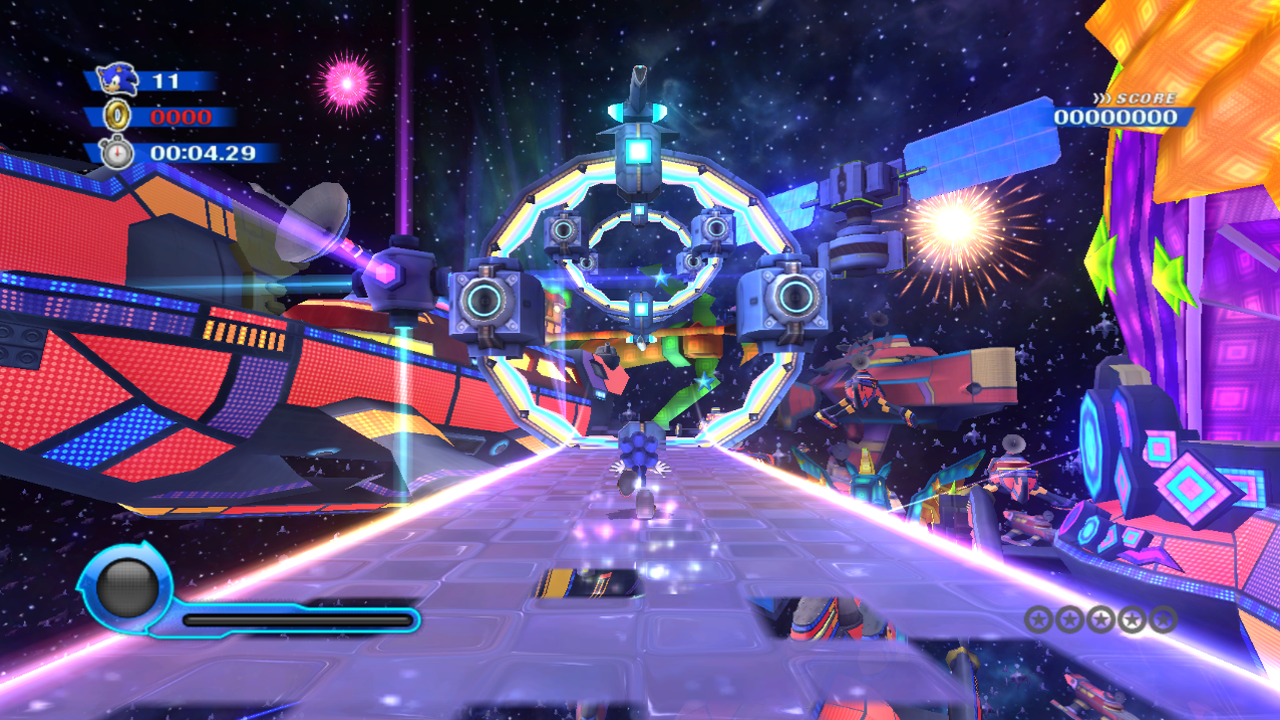
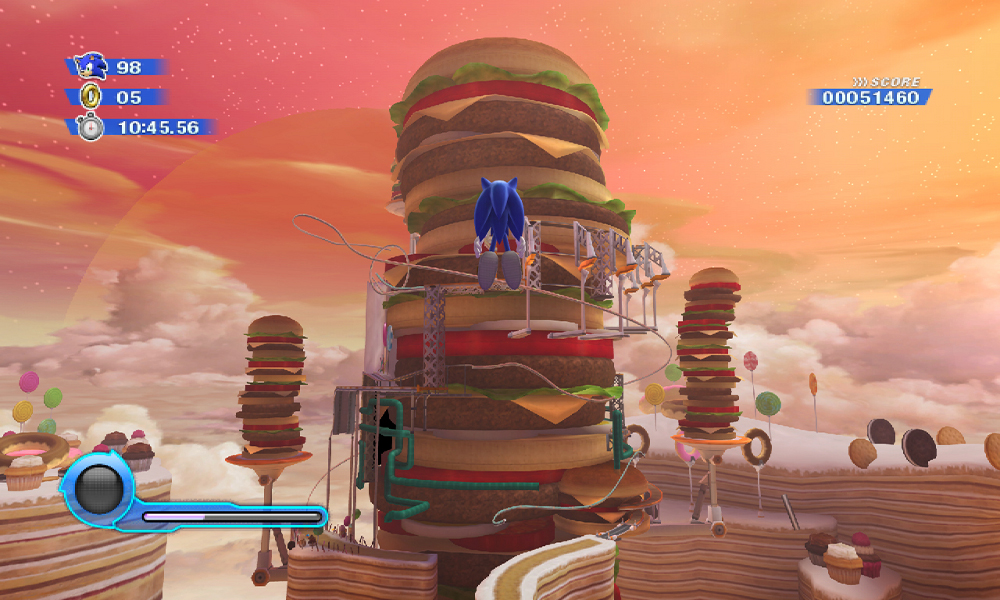
Sonic Colours had a lot to prove, coming into the market after Sonic Unleashed and Sonic '06 both of which had been the subject of mixed to negative reviews, and a cause for concern about the Sonic the Hedgehog franchise in general. With Sega delisting poor to average Sonic games from their sales catalogue before the game's release, there was a general feeling that this would be a new start for the franchise.

The story of the game focuses around an intergalactic theme park opened by Sonic's nemesis, Dr. Robotnik. Being up to no good of course, its a front for Eggman's attempts to harvest energy from strange aliens and use it for his own gain. Sonic shows up and through a variety of third person and side scrolling stages attempts to foil Eggman's plans. Powerups are a big feature of gameplay and using the features of different aliens, Sonic is able to do things never before possible in the series.


With 7 main zones, each with 6 acts and a boss stage it seems like there's a lot to do at first glance but zones don't take long to clear with some acts fairly unbalanced in length. There's some very short acts in places and others which seem to drag on for a long time. The variation between zone settings and even inside of zones is good, with interesting themes and level design that's impressive on the whole. Sonic's main moves from previous installments are kept the same, although the ring dash features less prominently.

Powerups within the levels are varied and used sparingly but at important times across the whole of the game. Some parts of levels become almost like puzzles with their inclusion which changes up the gameplay nicely. Both third person and side scrolling sections work well and it's pretty much 50/50 between the two, which should be a plus for both 2D and 3D sonic fans.


The plot of the game is fairly solid especially considering past installments; the cutscenes feature fairly well written and spoken dialogue with an assortment of jokes, some of which are even funny. The game focuses entirely on Sonic and apart from cutscenes, Tails doesn't really feature too much at all. Personally I think this is a good move, especially considering the sheer number of characters in titles such as Sonic Heroes. A new start requires simplicity and it works well just to have the hero as a playable character.

Controlwise there's 3 main options for playing the game; The Wiimote, Wiimote and Nunchuck or the Gamecube controller. I opted for the Gamecube controller since it felt more natural although I did test out the other 2 modes of control to make sure I had chosen correctly. The game is entirely playable with the Wiimote and Nunchuck, and Gamecube controller (not so much with just the Wiimote) and its nice to see the motion control kept to a minimum when using the Wiimote and Nunchuck.


Graphically the game looks great, stages are bright and vibrant with a large amount of detail and colour included in the game. It's almost a surprise for me, to see Sonic looking this good, with Sonic Heroes being my last real glimpse of the series. Musically the game is just as impressive with a large muscial score to accompany the action; there's classic funky riffs building up to a sprawling orchestral climax for the final stages.

Complaints I have about this game are fairly minor, but to avoid giving an almost entirely positive review; there's some fairly frustrating moments in the game where either its not entirely obvious how to progress, or you can see how to but doing so is tricky. As mentioned the acts are also somewhat unbalanced length wise and shorter ones feel like unfinished ideas somewhat. Also parts of some of the levels play more like cutscenes than playable

The game is short by modern standards (I completed it in 6.5 hours) but I think it fleshed out the concept of the powerups as much as possible without being too repetitive. The last thing I'd want would be for the game to feature the sort of filler seen in Sonic Adventure (Big the Cat levels, anyone?). One last complaint would be the re-use of bosses. 3 boss concepts appear twice in slightly altered forms and it feels somewhat lazy to not have drawn up an individual concept for each zone.


Overall I found Sonic Colours to be a short but colourful and varied experience with great scenery and level design in both the third person and side scrolling sections, even including the odd pseudo-puzzling section. For me it's a step in the right direction after Sega's efforts following Sonic Adventure 2; the game controls well and plays like a Sonic game should. With interesting concepts and finally some decent cutscenes and voice acting, I'm excited to see what the upcoming Sonic: Lost World will be like, but until then, Colours is a lot of fun.

Rating: 82/100
Grade: B