Thursday, 18 July 2013

Football Games Masterpost

Having received 8 football games today, I decided that now might be a good time to do a review which I've been planning for a while. In total I'll be looking at 14 football games, with a short review on each, since anything too long would be boring and take up a lot of space. To help conpensate for this, I've got a little introduction below on what I'd like to see in each game, and how I'll be rating them.

What do I look for when playing a football game? Usually its controls that are easy to pick up with the option to do more advanced moves if I so wish. Realism is a plus; official licenses are good, but free flowing, good looking football that plays well is the ultimate goal. Different modes and competitions are a plus, also with things like Master League mode in PES providing more fun to gameplay. Commentary and other such features also weigh into the game, as well as sound effects and overall it's the combination of these factors that determines whether a game is good, or not.

When rating a game, I'll give it a score in these categories before giving it an overall score; Controls, Graphics, Gameplay, Sound, AI, Teams Featured.


Game: World Cup Italia '90
Console: Sega Mega Drive
Developer: Sega/Mastertronic
Release Date: 1990

Included on the first Mega Games compilation for Mega Drive, World Cup Italia '90 is played from an overhead perspective, and features all the teams from the 1990 World Football Cup, playing in the group matches they would have done in the real event. Graphically there's not much to say, as it's fairly poor, with very basic blobs for players and a generic picture displayed when a goal is scored. Controlwise, its very simple with the D-pad and just 2 other buttons, but it doesn't play particularly well and is very hard to win against the computer when you first play. There's no difficulty options, and Exhibition matches or a full world cup are the only options for gameplay modes. Time counts up very slowly in the game, adding to the tedium of it overall, and the sound effects are something like moving a waterbed every time the ball is kicked. Music plays throughout the match which does somewhat distract from the sound effects, but isn't very realistic in terms of simulating football.


Controls: 6.3/10
Graphics: 3.5/10
Gameplay: 2.1/10
Sound: 1.2/10
AI: 4.5/10
Teams Featured: 6.6/10

Overall, this isn't a great football game, and although it must have been hard to program a football game given the time and hardware, it could have been more responsive and sounded better, with better AI and gameplay. There's a decent amount of international teams featured but only due to pasting the world cup schedule into the game.

Rating: 32/100
Grade: E


Game: Sega World Wide Soccer 2000
Console: Sega Dreamcast
Developer: Silicon Dreams
Release Date: 1st December 1999

The Sega World Wide Soccer franchise began on the Saturn, with only 2 titles coming to Dreamcast. The first of these was this game, featuring national and club teams from all over the world, able to compete in leagues and tournaments with various adjustable options. The controls are pretty good, with skill moves included alongside decent pass and tackle controls, although slide tackling seems to work better than any other type in the game. Due to the this the game often plays quite physically, with a lot of tackling in matches as opposed to passing, and goalscoring is fairly easy but not too easy.

Sometimes the game can be a little glitchy, on a short run with it I managed to encounter a disappearing goalkeeper glitch as well as a complete game crash. Soundwise, the game has nice crowd and commentary sounds even if some of the comments can be a little redundant at times. The one and only soundclip used for slide tackles isn't great and by the end of a few games you'll probably never want to hear it again. Graphically the game isn't great, its somewhat blocky and characters aren't well defined.


Controls: 7.6/10
Graphics: 6.5/10
Gameplay: 7.7/10
Sound: 5.8/10
AI: 7.2/10
Teams Featured: 8.8/10

Overall it's an entirely playable effort at a football game that gets easy once you realise techniques to keep the ball from being touched by the opponent, and to score from most opportunities. This makes its replay value plummet somewhat but with a good choice of teams and decent gameplay it wasn't the worst thing to come out for the Dreamcast.

Rating: 54/100
Grade: D


Game: UEFA Striker
Console: Sega Dreamcast
Developer: Infogrammes
Release Date: 31st May 2000

UEFA Striker has a slight graphical improvements on 1999's SWWS game, but the gamplay suffers somewhat from a slightly broken ball possession system. Overall it feels loose and as if the player isn't quite in control. Also when the computer controls your teammates, it's hard to successfully locate a pass forward without having the opposing team steal the ball. There is a training mode where you can attempt to better your play, but there's only a certain degree of polishing you're able to do before the control system gets in the way.

There a decent choice of modes and teams, although there's no international teams or ones outside of Europe. Scoring in the game is another thing that doesn't feel quite right, unless you get very close to the goal, the only way to find the back of the net is to cross a pass in, and have a player shoot it into the goal. The goalkeepers seem to have immense skill to save any other type of shot to come at the them, and so this makes it somewhat less realistic.


Controls: 4.5/10
Graphics: 6.9/10
Gameplay: 6.4/10
Sound: 3.3/10
AI: 6.5/10
Teams Featured: 6.8/10

With fairly boring commentary and only graphical improvements to praise, this game doesn't rate too highly on my list of Dreamcast soccer games, let alone ones on any system. The detail on player's faces and kits is still pretty low and generic, and the AI only plays well because it doesn't have to master the control system. Sega Worldwide Soccer plays better than this, if only because you can make players do what you want them to, and not have a difficult time scoring a goal.

Rating: 48/100
Grade: D


Game: European Super League
Console: Sega Dreamcast
Developer: Virgin Interactive
Release Date: 3rd March 2001

European Super League features 16 of the best European teams (at the time anyway), which isn't many for a football game. There's also no commentary whatsoever, and only a few game modes (although that's to be expected with that many teams). The football itself doesn't play too badly, with decent controls and moves although its a little too easy to spin past opposing players with skill moves and scoring doesn't take too much effort. Graphically the game could be more impressive and the fans definitely just look like a blur in the stands instead of even people from a distance.


The action becomes somewhat boring without commentary or much AI challenge and without a great deal of teams or competitions to choose from, there's little replay value. One of the worst Dreamcast soccer games in my opinion, it doesn't have much new to offer and the Super League gimmick feels uninspired.

Controls: 6.7/10
Graphics: 5.6/10
Gameplay: 6.5/10
Sound: 2.0/10
AI: 5.4/10
Teams Featured: 3.5/10

Rating: 42/100
Grade: E


Game: 90 Minutes: Sega Championship Football
Console: Sega Dreamcast
Developer: Smilebit/Sega
Release Date: 25th October 2001

The latest Dreamcast football game I own comes from Smilebit, the division of Sega that brought us Jet Set Radio, but the quality isn't even comparable. The main reason the game fails is due to the speed settings in the game; the default game speed is slightly too slow and increasing it makes the game animations look worse and sometimes results in jerky motion and game slowdown. The controls themselves are pretty good, and goalscoring works well, but finding a speed that works is difficult. Some things in game are difficult to do, compared to other games; passing and turning around on the spot don't work well at any speed.

Graphically the game isn't great and sometimes its hard to tell what's going on, especially with the aforementioned speed complaints. The AI is pretty decent also and has adjustable difficulty levels, within its fairly varied game modes which feature licensed national and club teams. 90 Minutes features a single commentator, whose voice clips weren't arranged very well. A lot of the time he'll say "is passing" without mentioning a specific player and vocal redundancies such as "In the first half remaining, there are five minutes of the first half remaining". This does bring the game down somewhat when combined with the aforementioned complaints.


Controls: 7.2/10
Graphics: 5.6/10
Gameplay: 5.8/10
Sound: 4.4/10
AI: 7.5/10
Teams Featured: 8.2/10

With below par graphics, passing, commentary and speed issues, 90 Minutes is hard to enjoy. It seems like it could have played well with a bit of fixing but in the end it was rushed into production at the end of the Dreamcast's commercial lifespan. What is a shame is that such a decently capable console never received a football game that made full use of its capabilities. I could pick up Virtua Striker 2 for Dreamcast but by all reports, that's not much better.

Rating: 44/100
Grade: E

Taking a slight shift from chonological order, I'm now going to look at the PES franchise and FIFA franchise seperately, with the games I have for them.


Game: Pro Evolution Soccer 2
Console: Sony Playstation
Developer: Konami
Release Date: 25th October 2002

The bridge between old and modern football games came about as the PES franchise transferred onto Playstation 2 (as did the FIFA franchise) although the games were still being released on Playstation also at the time. The result of this is a game that looks much less visually pleasing than both its counterpart on Playstation 2, and most of the games released for Dreamcast, which was a next generation console at the time.

The gameplay however surpasses that of the Dreamcast titles in many ways and although it's not quite up to par with later PES titles, its on it way towards being the kind of gameplay we see in PES 4 and 6. There's not a whole lot of teams featured in this game, mainly national sides with a few unliscensed clubs to play against in Master League mode which is a great addition to give it another one over the Dreamcast titles.


Controls: 7.8/10
Graphics: 4.5/10
Gameplay: 7.0/10
Sound: 6.0/10
AI: 8.0/10
Teams Featured: 6.4/10

With slightly unbalanced AI and sparse commentary, PES 2 wasn't the finished article yet but it seems to me that its the nearest thing to modern football games that was around at the time. It's not exactly a joy to play but Master League mode adds a new dimension and makes way for improvements along the way in the next series titles.

Rating: 52/100
Grade: D


Game: Pro Evolution Soccer 4
Console: Sony Playstation 2
Developer: Konami/KCET
Release Date: 1st February 2005

The first game in this review to truly feel as if you're in control of a side playing football, rather than trying to play a flawed football game comes in the form of PES 4 by Konami. That's not to say its perfect, but in the 4 year gap between games I'm reviewing, a lot seems to have changed. For a start, the ball possession mechanic is good, with players usually being able to maneuver the ball around as you ask them to but are still able to lose the ball to good tackles or more skilled players challenges.

There's a good range of teams featured (although PES lost out on most of the licenses to FIFA), and Master League mode is a great addition, allowing you to play through as many seasons as you wish with the same club, or an original club of your choice. The commentary is fairly accurate and good, if a little repetitive and graphically, the game is fairly impressive.


Controls: 8.5/10
Graphics: 7.4/10
Gameplay: 8.8/10
Sound: 7.0/10
AI: 7.9/10
Teams Featured: 8.0/10

In harder difficulty modes, the game will defend much more tightly and at times it feels like it may almost cheat you out of goals, but there's a good amount of unlockables and customisability to this installment of PES, and when added to the good gameplay and graphics, I think it's a very good attempt at a football game.

Rating: 66/100
Grade: C


Game: Pro Evolution Soccer 6
Console: Sony Playstation 2
Developer: Konami
Release Date: 6th February 2007

This game plays a lot like an update of PES4, with slightly better AI and the obvious teamsheet changes from season to season. It also seems that Konami agreed the sharing of some major club licenses. Other than this however, the games play much the same and so I won't be going into too much detail with this one.


Controls: 8.5/10
Graphics: 7.6/10
Gameplay: 8.9/10
Sound: 7.2/10
AI: 8.3/10
Teams Featured: 8.0/10

Rating: 68/100
Grade: C


Game: Pro Evolution Soccer 2008
Console: Sony Playstation 2
Developer: Konami
Release Date: 26th October 2007

Released just 8 months after PES 6, this game feels again like an update of its predecessor. In this installment however, I felt less in control of my players than in the previous two games. A good addition to the series is the World Challenge Mode where you have to complete various challenges against national teams. The other game modes remain basically the same, and obviously there's the updates team rosters.

Graphically there's not much change from PES 6, but the commentary seems to have received a few new phrases which is nice if you play a lot of these games, since you'll have heard basically everything the commentators have to say.


Controls: 8.2/10
Graphics: 7.8/10
Gameplay: 8.5/10
Sound: 7.5/10
AI: 8.2/10
Teams Featured: 7.9/10

Rating: 68/100
Grade: C


Game: Pro Evolution Soccer 2009
Console: Sony Playstation 2
Developer: Konami
Release Date: 17th October 2008

Although apparently there have been updates to the gameplay system, they seem very minor upon playing the game. Most modes have remained the same, with only the addition of "Become a Legend" mode which is the equivalent of FIFA's Be A Pro. Challenge Mode hasn't even changes its victory conditions so you're basically playing last year's mode with this year's teams. Although I didn't expect the game to be massively different and its a bit of a cliche to say that football games are the same year after year, that's basically what PES 2009 offers.


Controls: 8.2/10
Graphics: 7.8/10
Gameplay: 8.5/10
Sound: 7.5/10
AI: 8.2/10
Teams Featured: 7.9/10

Rating: 68/100
Grade: C

Now I'll move onto the FIFA Franchise. I did have a FIFA Street game, and the 2006 World Cup game to review but it turned out that the discs were too scratched to do so.


Game: FIFA 07
Console: Sony Playstation 2
Developer: EA
Release Date: 25th September 2006

EA's game features sharper graphics and better sound than its PES counterpart of the time, but the control system isn't quite as good in my view. While it feels as if you're in complete control with PES, there's a lot of times when I feel FIFA 07 could be better. Modes wise there's a nice manager mode included which puts it a little ahead of the PES series (and saves you buying a football manager game). The choice of modes is a little spartan with a lot of the game revolving around online play.
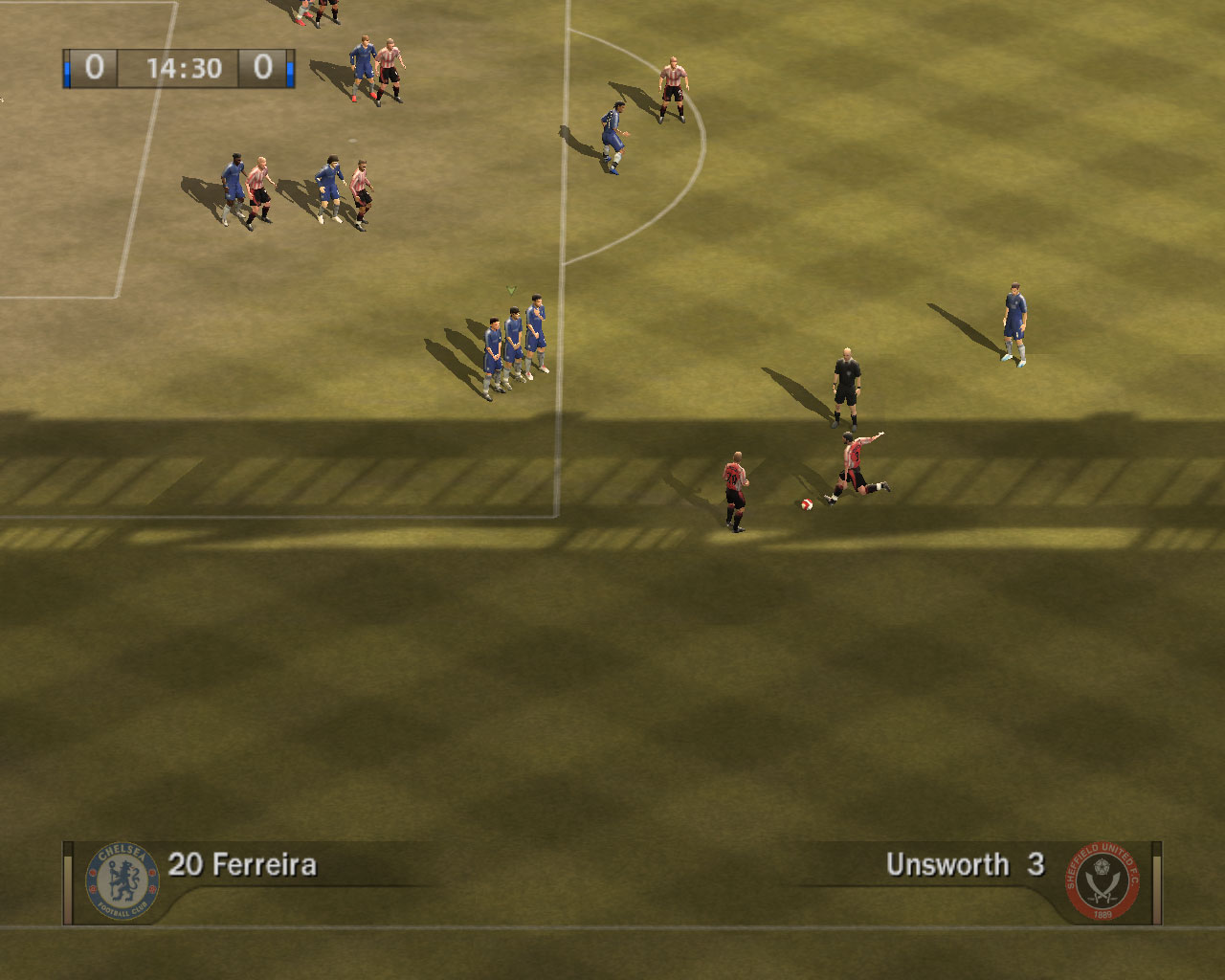

Overall if you want to feel the football experience, both graphically and soundwise with a large number of licensed teams and leagues to choose from this is a good bet. The gameplay engine does work but when compared to that of Pro Evolution Soccer, I feel there's definite room for improvement.

Controls: 7.5/10
Graphics: 8.9/10
Gameplay: 7.9/10
Sound: 8.0/10
AI: 6.7/10
Teams Featured: 9.2/10

Rating: 63/100
Grade: C


Game: FIFA 08
Console: Sony Playstation 2
Developer: EA
Release Date: 28th September 2007

FIFA 08 has a few notable additions; first of all the new system to switch between players for throw ins and corner kicks works nicely, there's enough control to set up some quite advanced moves, secondly the option to control the goalkeeper in tight spots is another worthwhile addition, and lastly pinpoint passing helps with the feeling of control.

I still don't like the play engine quite as much as that of PES, but this is an improvement that brings the game closer to my opinion of that game. The commentary and graphics remain good, and the selection of teams once again expands for the best realism in a football game.


Controls: 7.9/10
Graphics: 9.0/10
Gameplay: 8.1/10
Sound: 8.2/10
AI: 7.0/10
Teams Featured: 9.3/10

Rating: 64/100
Grade: C


Game: FIFA 09
Console: Sony Playstation 2
Developer: EA
Release Date: 3rd October 2008

FIFA 09 is the first game in this series that for me works better than PES in the controls department, whilst bringing its huge list of licensed teams and leagues to the table. Between FIFA 09 and PES 2009 there's really not much and the two franchises seem to be growing toward eachother in terms of features and gameplay. Keeping it's great crowd and commentary sounds from earlier series games, the AI feels that much smarter and the graphics slightly nicer to gain the lead.


Controls: 8.2/10
Graphics: 9.0/10
Gameplay: 8.6/10
Sound: 8.4/10
AI: 8.1/10
Teams Featured: 9.6/10

With improvements to the gameplay coming every year it was almost inevitable that the FIFA series would overtake PES with it's superior list of licensed teams and competitions. With just one installment of FIFA left to review I'll have to see whether this is the peak of the series or whether their yearly improvements are working toward the perfect simulation of soccer.

Rating: 72/100
Grade: C


Game: FIFA 10
Console: Sony Playstation 2
Developer: EA
Release Date: 2nd October 2009

The final game in this marathon review, and its the best due to its controls, realism, atmosphere and team selection. Basically you can play any type of football you want, with added season mode there's the opportunity to live life as one club for an entire season, without worrying about finances and managerial issues. This, alongside other slight changes tweaks FIFA 10 to make it the best football game I own.


Controls: 8.3/10
Graphics: 9.1/10
Gameplay: 8.8/10
Sound: 8.5/10
AI: 8.5/10
Teams Featured: 9.6/10

Rating: 75/100
Grade: B

So to conclude, although I don't play a great amount of football games, I can see that their yearly releases seem to be heading toward the perfect football experience. My question for EA and Konami is how will they know when they are there? This dynamic seems to be set to continue almost indefinitely and that suggests infinite improvement which is not possible. As for me, I'll stick with FIFA 10, and in a way I can disregard all other football titles as they're worse permutations of this experience.

Sunday, 14 July 2013

Game Review: Jet Set Radio


Game: Jet Set Radio
Console: Sega Dreamcast
Developer: Sega
Release Date: 30th October 2000

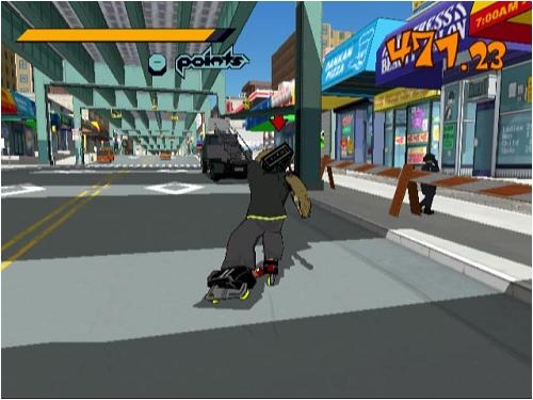
Jet Set Radio (Known as Jet Grind Radio in the US) lets you play as a rebellious teen in Japan, fighting back against the man and other rival gangs through painting the streets with graffiti on your rocket powered skates. As you progress you'll uncover the plan by a large organisation to keep graffiti gangs off the streets of Tokyo-to and get the opportunity to take down the corporation for good.

Missions in the game are based around tagging a certain amount of targets with graffiti, sometimes they're in hard to reach places and other times they're the moving targets of other gang member's backs. As the player hits the targets, police and other agencies will attempt to stop them with tear gas, bombs and even fire in later stages of the game. Around the mission locations are "Graffiti Soul" icons which give the player new bits of artwork to paint onto the streets.


The player must first prove their worth, to join the "GG's", the gang the game is based around before making all of Tokyo-to theirs. To move easily through the city on your rocket skates, you have the ability to grind along railings and collect paintcans which are necessary to leaving your mark on the town. The characters also perform their own tricks between jumps, depending on their style rating. To begin with there are only 3 characters to choose from but with new applicants to your gang after certain missions, your roster grows to 10 or more.

The characters themselves are well designed and are fairly varied, both in their style and their individual stats. The story of the game is interspersed with the missions, in the form of comic strip panels and radio broadcasts by "Professor K", from the underground station Jet Set Radio. The story itself fits nicely with the cel-shaded style of the game, and doesn't seem too contrived when compared to other such plots.


Graphically the game is cel-shaded, as mentioned before and the world appears somewhat cartoony with stylised locations, which vary nicely. With a busy shopping district, a night-time shopping area and a waterside appearing early on in the game, there's a lot to explore. Later on the action moves to Grind Square, an inner city area run by the bad guys of the game, where again everything's set up nicely for exploration and tricks.

The soundtrack to the game is primarily a mix of songs by Hideki Naganuma and other Japanese Artists including Guitar Vader. There are some other artists on the soundtrack, however and overall it fits well with the feel of the game, and tracks are mixed into eachother well to fit the long mission times (some are upwards of 15 minutes). Although it's not an original game soundtrack, I'd argue that for this type of game (especially one featuring a supposedly pirate radio station) it works better.


Overall the game plays very well and there's a fun mix of roaming around on rocket powered rollerskates, defacing government property and giving the middle finger to the man before tagging your gang's symbol on his back. The missions advance the story nicely and fit nicely with the style of the game, leading up to the final missions where you have to use all your knowledge of the areas in previous missions to win. There's not a lot of games out there like Jet Set Radio, and I'd say its one of the Dreamcast's best.

Rating: 91/100
Grade: A

Saturday, 13 July 2013

Game Review: Power Stone


Game: Power Stone
Console: Sega Dreamcast
Developer: Capcom
Release Date: 14th October 1999

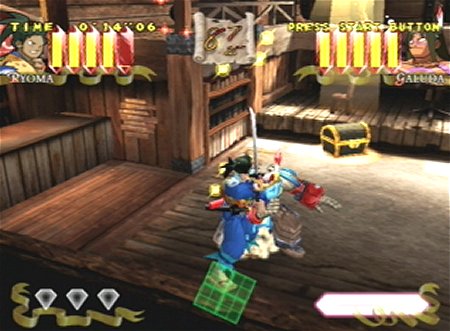
Power Stone is a fighting game, set in 3D environments featuring weapons, physical attacks and gems which trigger a magical girl-esque transformation and powerful final attacks. With 8 fighters (3 more unlockable through completing arcade mode), all bringing their stories of why they're chasing the legendary power stone to the game, all with their own home fighting stage, there's a lot of variation and charm between them. Also released as an anime series, Power Stone gained a sequel in 2000 featuring new characters as well as some returning ones.

The players start with 5 bars of health, and are allowed to move but not attack during the opening countdown. There are lots of furniture items in each stage scattered about, such as boxes, chairs and tables which can be thrown at opponents, in addition to item boxes containing weapons such as hammers, flamethrowers and guns. Each player starts with one gem which is lost when the player sustains enough damage from one attack, and becomes available for either player to collect, in the battlefield. A third gem spawns after a while, and collecting all 3 results in a transformation to a more powerful state.


Once in this transformed state the player is able to do special attacks and a finishing move, to do more damage to the opponent. There are 7 normal stages in which the player competes with the final battle divided into two parts, as the boss uses the power stone to transform into an even more powerful creature. The fighting style is fast paced and fun, with plenty of weapons and attacks to choose from. The added strategy of the gems also makes for a different feel than many other fighting games.

The levels themselves are nicely detailed a varied with plenty of items to throw at opponents and vantage points to find. Knowing a level well can sometimes be the difference between winning and losing a battle. The default difficulty can get a little easy once you've mastered the basics of the game, but it's available to change in the options and so isn't much of an issue. The AI is generally good with few exploitable moments.


Graphically the game looks nice (unfortunately the screenshots here don't do it justice, so you'll have to believe me), with detailed character sprites, locations, backgrounds and transformations. The characters themselves are well designed, and have decent backstories which don't feel too contrived compared to other fighting games. Musically the game has simple battle themed music behind most fights and its not particularly memorable.

In terms of gameplay battles are fast paced races to collect the 3 gems, interspersed with dodging weapon and melee attacks. Although its not a conventional formula for a fighting game, the fresh approach works well and gives rise to strategic play, rather than just trying to beat the hell out of eachother from the get-go. Fighter game purists may miss combos and 2D combat when playing Power Stone, but I'd say there's enough games like that out there already.


Overall Power Stone is a fun and unconventional fighting game which works well both against the computer opponents and in two player mode, featuring a fair amount of unlockable content, detailed graphics and good character design and endings. There's not too many other games like it, in the fighter genre and it remains one of my favourites to this day.

Rating: 88/100
Grade: A

Thursday, 11 July 2013

Game Review: Sega Rally Championship 2


Game: Sega Rally Championship 2
Console: Sega Dreamcast
Developer: Sega (AM3)
Release Date: 31st October 1999

First seen in arcades, the follow up to Sega's hit rally game for the Saturn was released for the Dreamcast soon after. With arcade racing action, and added Time Trial, 2 Player and 10 Year Championship mode (a career mode, of sorts), the Dreamcast version brought a more of an experience into the home version. The game features 19 cars and 17 courses set across 6 locations, giving the player a good amount of choice.

Arcade mode features races through 5 different courses, in a bid to claim 1st place and complete the race before the time is over, replenishing the time left by passing checkpoints. You start in 16th place and work your way through the pack, race by race. There's adjustable difficulty options for arcade mode, giving players more or less time, depending on their skill level. No matter which level arcade mode is on when you come 1st, you'll unlock a car for doing so. In each race the cars have adjustable settings, as in most rally games.


10 Year Championship mode features 10 different sets of 4 courses, getting progressively more difficult as the player finishes them. Beating the set of races within the allotted time will unlock the next "year"s set of races and finishing first will unlock a new car. Challenge wise these are good, and almost like a variation of arcade mode, to give them game more replay value, it still feels like an arcade racer, and there's no attempt to simulate rally as a sport in a more "career mode setting". Personally I like this, and prefer the 10 Year Championship mode to a potential formula shake-up.

Time Attack and 2 Player mode both play pretty much as you'd expect them to, although in 2 player mode there's a nice option to balance out the cars if your opponent has picked something that'll give someone too much of an advantage eitherway. Another nice touch within the game is the option to read information and stats about each car featured.


Graphically the game looks a little dated nowadays, being almost 14 years old, but not in such a way as original Playstation games do. The graphics are good enough, and some of the backdrops in the stages are still nice to look at. There is a slight issue with a short draw distance in some races, but unless there's a massive straight up ahead it's not really too noticeable. Musically, the game is good and features background music that's not really intrusive but that you'll notice as being good, in quieter points during races.

Overall its a fast paced checkpoint racer, which is about as close to the arcades as you'll get on a home console. Both Arcade Mode and 10 Year Championship play nicely even if they are a little too similar, and there's a good 2 player mode for trying to re-create those multiplayer arcade battles. Graphically and musically good, its an enjoyable play, with great handling. The only real letdown is that there's no damage mechanic in the game.

Rating: 85/100
Grade: B

Wednesday, 10 July 2013

Commodore Plus/4 Games Review #2


Game: Paperboy
Console: Commodore 16 (Played on Plus/4)
Developer: Elite Systems
Release Date: 1986

Paperboy was originally an arcade game, developed by Atari, ported to no less than 19 home consoles and computers. With so many versions, there's a lot of graphical and gameplay differences between them but the aim of the game is to take the role of a paperboy, delivering to a number of houses on a street for 7 days, and attempting to avoid obstacles on his route and gain a bonus by breaking the windows of non-subscribers houses.

The Commodore 16 version plays a little shoddily, with no real indication of whether you're supposed to deliver to the houses highlighted in black, or the ones in white, from the map at the beginning of each level, and the sprites for the newspapers contained in a white square. The throwing mechanic for the newspapers sees them fly in an rather unexpected pattern from the paperboy's hand, and if I'm honest its hard to distinguish between having delivered a paper to a house, and not.


Graphically the game is basic, and looks comparably worse than the original Atari version. The backdrop and paperboy himself are incredibly blocky and it's sometimes hard to see approaching obstacles due to their colour (white on grey isn't the best combo). There's no music at all behind the game and the sound effects are a simple collision noise for the paper hitting doors/windows and the paperboy hitting obstacles. Although soundtracks aren't incredibly prevalent in Commodore games it'd be nice to see one in such a graphically simple title.

Rating: 9/100
Grade: F


Game: Spore
Console: Commodore 16/Plus/4
Developer: Mastertronic
Release Date: 1987

Spore is a maze type game released for both Commodore 64 and ZX spectrum, alongside the Commodore 16/Plus/4 version. The aim of the game is to collect a pesticide which will kill the attacking spores, which were a product of a failed experiment. The pesticide is stored in barrels around the levels and all of them must be collected to move onto the next level. The levels are infested, however with spores and generators making the players task more difficult.

The game plays very quickly, with the opening of new areas bringing a deluge of spores upon the player, and strategy being a large part of survival as encountering too many spores will accelerate the rate at which the players energy ticks down, leading to their loss. As such, it makes for a nice combination of maze and shooting gameplay.


Graphically the game is simple, with different squares to represent spores, generators and barrels, all of which are very colourful. Again, there's no musical backing to the game, just the sound effects from spores attacking and being hit with fire, in addition to the sounds for collecting barrels and powerups.

Overall this is actually a fairly rewarding game to play, working out strategy for it is pretty fun, and in gameplay terms its easy to pick up and has a fair amount of replay value when compared to other games. There's also a level editor included with the game, the only real downside being the repetitiveness of gameplay after a while.

Rating: 34/100
Grade: E


Game: Exorcist
Console: Commodore 16/Plus/4
Developer: Mr. Micro
Release Date: 1984

Exorcist is (as, on reflection the title may suggest) a Pac-man variant, where the players goal is to illuminate the walls underneath a ruined monastery, thus exorcising all the ghosts. The main characters name is Sparkie, who seems to be a representation of an electrical charge. Sparkie can collect lightning powerups which have to be used almost instantly to stun a ghost.

The gameplay area is fairly large, consisting of lots of maze sections. Once the player clears the section they are in, a gateway will open to the next section, and as they go further into the maze, the map in the corner of the screen will update with Sparkie's current progress. The game plays nicely with smooth movement and decent AI for the ghosts around the mazes.


The music used as a soundtrack is only a short clip and can quickly get tiresome, but I think it's better than having no music at all. There's not a whole lot of sound effects in the game, but those that are don't sound out of place at all. Graphically, it's very simple and although the ghosts do clip through eachother at times and there are some issues with flicker, it's generally pretty smooth.

With a little less repetition this game could have been a pretty solid title, the mazes end up seeming a little too infinitely big for being so similar. The gameplay mechanics work well, and its not such a close copy of Pac-man that you notice too much and the differences work in Exorcist's favour. This is one of my favourites for Commodore.

Rating: 47/100
Grade: D


Game: Harbour Attack
Console: Commodore 16/Plus/4
Developer: Mr. Micro
Release Date: 1984

Harbour Attack features 3 levels of sea based missions. The first sees the player navigating through the seas, trying to avoid moving buoys, by moving between safe spaces. Not only does the players submarine move incredibly slowly, but some of the buoys move pretty quickly, giving a very short time for the player to dodge between hiding spots. If the player is able to make it to the right hand edge of the screen, they move onto the second stage.

This stage involves a sort of combat, shooting at a boat in the water above, which has a fighter jet escort. Again the submarine controlled by the player moves at a snail's pace, which is not ideal when it's under siege from the enemy boat. If you are able to defeat the boat, you have to face about another 6 before moving to the third and final stage.


The final stage involves shooting upwards at a larger boat through a guard of smaller boats, with the hopes of sinking it. Once this has been done the game returns to the first level. All of the ideas for the levels are very simplistic and hardly any of them are executed well. the movement of the submarine is slow and this makes it very difficult to do anything.

Graphically the game is unbelievably basic, the submarine looks pretty poor, as do most of the enemies, adding to the frustration. Soundwise, the first level is the worst with constant explosion sound effects which serve no purpose. Overall, hardly any of this game is playable, let alone enjoyable.

Rating: 5/100
Grade: F

Friday, 5 July 2013

Game Review: House of the Dead 2 and 3 Return


Game: House of The Dead 2 and 3 Return
Console: Nintendo Wii
Developer: Sega
Release Date: 11th March 2008

The House of the Dead series has been around since 1996, and both games included in this set were previously released on home console; HoTD2 on Dreamcast in 1999 and HoTD3 on Xbox in 2002. The versions included on this are basically direct ports, with no upgrades to the visuals, sound or general gameplay save for the improved aiming provided by using the Wiimote over a lightgun.

For anyone unfamiliar with the series, it began in arcades as a zombie rail shooter, brought to the Sega Saturn and PC, and the games continued in that vein. At certain points depending on the players actions, alternative routes through the stages can be found, and life bonuses can be obtained through saving NPC's in sticky situations.


I'll start with House of the Dead 2, which features Arcade Mode, Original Mode (which features an assortment of upgrades you can choose 2 of to use in any given run), and Boss Mode. For progressing through arcade mode, you're given more continues and lives to use on subsequent runs. Arcade mode plays well, with the original arcade experience being the main draw to playing the game on Wii. Original mode gives good replay value to the game, and it can be fun to experiment with different upgrades.

The game itself plays well, although obviously its a direct port so it's essentially the same as the Dreamcast version from 1999. There's plenty of zombies and other creatures that need to be eliminated, and the level of challenge is good. Overall its a lot of fun, and there's the option to play with 2 controllers (either solo or with a friend). Bosses are fairly varied and break up the straightforward shooting parts nicely.and there's always new shortcuts and extras to find in levels.


The storyline of the game (advanced by intermittent cutscenes) isn't its strongest point; it references the original House of the Dead game quite a bit, and the voice acting is downright bad. This doesn't so much affect gameplay but players immersion into the game does suffer. The music and sound effects for the game are generally good, with faced paced organ music serving as the main part of the soundtrack, for a carnival funhouse type feel.

The dynamics of the game reward accurate shooting, with headshots and targeting weak points being far more effective than just blasting at any target put before the player. Overall it's the better of the two experiences in my view, and being able to play House Of The Dead 2 with the improved motion control of the Wii is enjoyable to say the least.


House of the Dead 3 features the same type of gameplay as its predecessor although somehow it looks a little less sharp, visually. Also an overall blast shooting technique seems to work better than specifically targeting the enemy heads, save for bosses which have weak spots. The story of this game reveals more about the origins of the series (the first game specifically), and the voice acting is marginally better in this installment.

Although the bosses and some of the other enemies are better designed than in the first game, and you're given the choice of which order to clear levels in, in this game, I think that House of the Dead 2 showed more character and needed more skill and memory to progress. Also the alternative routes required players to find extra targets instead of just being given a choice, making them more of an unlock.


Overall these are two fun rail shooters which still have a lot of gameplay value despite their age, especially when playing with friends. Although graphically they haven't aged particularly well, it doesn't hinder the gameplay and contributes more to the style of the game. The voice acting can be dire at times, but its not as if the story is a particularly massive part of the experience. What we do see of the story is kept short (which is a plus) and gives us motive enough to shoot up everything in our path.

Rating: 82/100
Grade: B


Tuesday, 2 July 2013

Game Review: Sonic Adventure


Game: Sonic Adventure
Console: Sega Dreamcast
Developer: Sega
Release Date: 9th September 1999

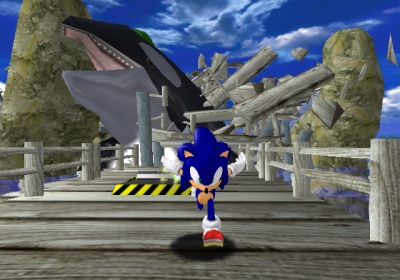
The first 3D game to be released in the Sonic series (with the exception of Sonic 3D which was isometric so it doesn't count), Sonic Adventure was a launch title for the Dreamcast which featured somewhat different gameplay from previous titles. The action is centred around action stages, which involve platforming and occasionally other elements to reach the goal at the end of the stage. These occur in between adventure stages in which Sonic and friends must travel between areas in the Mystic Ruins and Station Square to advance the plot through cutscenes.

Relying much more heavily on plot elements than previous installments of the series, there's a fair amount of cutscenes which aren't particularly well voice acted or animated. At best they give you a reason to continue along to the next Action Stage. There are 6 playable characters in the game (7 if you count Super Sonic) each with different objectives for completing their action stages, and slightly different perspectives on the main story, fitting together to set the scene for the final boss.


Graphically the game is mixed, the opening demo has parts which look great and really make the game seem exciting, but at other times during cutscenes and levels, there are little inconsistencies and graphical issues which let it down. The camera is also a problem in the game, sometimes taking a somewhat unconventional position behind Sonic, making it almost impossible to see what you're doing. While this doesn't happen enough to make it a bad game, its not exactly a rare occurrence either.

The level design is great on the whole, Sonic's stages flow very well; the high point for me being the stage "Lost World" which in addition to being nicely themed features good variation of platforming and puzzles along the way. Sonic's story mode is the best experience to be had in the game, followed by Knuckles levels in which you have to find pieces of the Master Emerald, guided by a proximity meter. Amy Rose and Tails stages tend to follow Sonic's a little too closely even if they have different ways of getting around them. E101 Gamma's stages are a welcome change from the gameplay of the other characters, using time based laser shooting to add to the platforming.


Only two characters have core gameplay which I take exception to; Big The Cat's fishing levels are not only monotonous but the fishing mechanic isn't great and personally I could hardly describe it as anywhere close to fun. His final level features a battle which ends with one hit, somewhat epitomizing the uselessness of his levels. Super Sonic's story on the other hand, whilst being a short introduction to the final boss battle involves a fair amount of walking to other locations to find things out and watching a variety of cutscenes before you can fight the final boss. While I understand that the game is heavily plot driven, it's annoying to be delayed in such a fashion, having unlocked the ability to play Super Sonic's part of the game.

You might think that this sounds like a largely negative review, but its true that this game has its fair share of problems. Stages other than those of Sonic and Knuckles can feel like padding for the game, just to make it longer, especially those of Big the Cat. Cutscenes are goofily voice acted and the camera can act up, making it difficult to progress every now and then, but even these things don't stop the game from being a good addition to the Sonic franchise.


The music in the game is one of it's strongest points, there's a lot of good themes for levels and characters which fit well with the ambience of levels and Sonic's fast paced stages. While the plot isn't the game's strongest point, it's not executed badly and the 6 different points of view are an interesting feature, leading up to the final battle which gains a somewhat epic feel within the context of the previous cutscenes. There's also a lot of varied gameplay features; snowboarding, raising chao, racing carts on twinkle circuit, playing pinball in the casino in addition to the action stages.

Sonic's action stages in particular are well designed, fast paced and varied with good themeing throughout and a good balance of challenge and innovative play. Knuckles stages also are designed well, with clever places for the Master Emerald shards, and its almost a shame that some of the supporting cast don't get their own levels or at least more stages compared to Sonic.


Overall this is a pretty nostalgic game for me, one of the first to come with my Dreamcast, it got a lot of play before I had a large collection of games. As I grew older, it was more obvious that it is in no shape or form a perfect game, there's some pretty large flaws which I overlooked upon first playing the game. Going on the logic that the added characters don't take anything away from Sonic and Knuckles stages in the game, even though they need to be completed to truly finish the game, I'd have to say that it makes a pretty solid start to Sonic's 3D adventures.

There are some that prefer Sonic's 2D games and I can understand why, the voice acting here isn't great, and there's no retro charm as you'd find with the genesis games, however there's a lot of fun to be had in Sonic Adventure, its an action packed, fast paced journey with a rocking soundtrack and shiny new 3D graphics (for the time), with a lot of good ideas and levels. Forgiving the game a little for it's flaws can leads to an enjoyable experience comparable at least to its sequel.

Rating: 80/100
Grade: B

Monday, 1 July 2013

Game Review: X-treme Express (1000 pageview special)


Game: X-treme Express
Console: Sony Playstation 2
Developer: Midas Interactive
Release Date: 18th March 2003

I picked up this game, thinking that train racing could potentially be pretty fun and that if it wasn't I could always give it a scathing review alongside some other PS2 baddies. What I got was pretty much middle of the road, for both of those predictions. The game is based around racing trains from one terminal to another, across 6 different locations, and features up to 80 different unlockable trains from different countries and areas (although some trains, like the British one featured on the game cover are literally just a generic train with flag livery).

The game features World Tour, Grand Prix, Free Run and Versus modes, which play fairly similarly save for the Grand Prix mode. This features challenges which must be completed inside of races, such as ramming other trains off the track and winning races without derailing. Although the game is focused on racing this seems to be the best gameplay mode, besides Versus mode since the obvious fun of the game comes from being able to ram others or use the trains to race in creative ways, rather than just following the tracks.


Graphically, the game is fairly basic and blocky; the game's landscapes and locations are simple backdrops and the trains themselves aren't particularly detailed. The control system allows players to switch tracks at points in the rail, and control the throttle and brake. It is possible to ram opponents off the track and derail from going too fast. When this occurs the player will travel between tracks until they cross a set of points at which point they will be guided back onto the tracks.

Perhaps a better derailing system would have been a 5 second penalty for players, as it can be quite a while before encountering another set of points. The player travels at a slower speed whilst derailed so it is possible to get too far behind opponents. Another slight complaint is the ease with which other racers can derail your train, since it's such a disadvantage. With races being moderate in length, its disappointing to lose after a somewhat unfair derailing and subsequent grind until the next set of points.


The game plays fairly well, although it can be a little boring at times; the most exciting moments are when trains are about to collide, naturally. If anything it'd be nice if the game were a little more balanced, the AI seems to do a little too well with the difficulty set to normal. At the end of the race the players must stop inside the boundary of a platform, having to reverse if they go too far. The AI doesn't seem to get the hang of this, so a good finish can boost your position.

The in game music is fairly poor, and contributes to the cheap overall feel of the game alongside the simple graphics and menus. There's not a whole lot of tracks and gameplay can get repetitive pretty quickly. The best fun seems to be competing against friends, as you can derail eachother without having to worry about AI opponents. The scenarios can also be good fun, depending on the objective, but the other modes are too similar to normal racing and are somewhat of a let down.


Overall what I thought was perhaps going to be a terrible cheap game proved that it had some fun to it, and it wasn't too badly programmed. To be fair to the developers it's a difficult concept to make exciting and they did their best. If all budget titles worked half as decently as this, there'd be a lot less regret upon first playing them.

Rating: 57/100
Grade: D

Sunday, 30 June 2013

Series Review: Crazy Taxi


Game: Crazy Taxi
Console: Sega Dreamcast/Sony Playstation 2
Developer: Hitmaker/Sega (AM3)
Release Date:  24th January 2000

Among the first 6 games I got for my Sega Dreamcast was Crazy Taxi, originally an arcade game brought to Dreamcast a year after its arcade release. After this it was ported to Playstation 2, Gamecube, PC, and later the PS3 and Xbox360. The gameplay revolves around being a taxi driver in a city somewhat similar to San Francisco. Retaining the arcade style gameplay, the player must seek out fares and deliver them to their destination against a time limit, receiving time bonuses and fare bonuses for fast and action packed driving.

Arcade mode features the original map used in the arcade version, which is fairly easy to navigate and learn, Original mode has a different map which is larger and features which are harder to memorize, and Crazy Box mode contains minigames based around driving techniques used in the main game. The first 2 modes can be played with either a time limit which can be replenished as in the arcade, or a fixed time limit which cannot be added to.


Sega were so impressed with the navigation system in Crazy Taxi they actually patented "An arrow in the sky to direct the player", and attempted to sue other companies using the concept. Having said that, gameplay is fast paced and fun, and the arrow does help (most of the time) to give a simple direction for the player to aim for, in their quest to reach the destination as fast as possible. The controls work well most of the time, a combination of the right trigger and B button being used to boost, alongside a couple of other button combinations for other techniques.

The physics of the game can be a little surprising at times, other cars and walls making your taxi shoot off quickly in different directions, but its something you get used to and can avoid with skilled play. In Original mode, the arrow is far less useful, and the destinations are in stranger places which are more difficult to find. It's a nice change-up once you've mastered Arcade mode's map, however I usually find myself pulled back to Arcade mode pretty quickly.


Crazy Box mode has a lot of good ideas for minigames and features some unlockable ones in a sort of tic-tac-toe style. It adds another dimension of play which wasn't available in arcades and shows some variation to the game. There are four cabbies to choose from, each featuring a different personality and style of taxi. Although they don't perform particularly differently to each other, its nice to have a selection and to change up the voice clips every now and then.

Graphically, the game looks fairly average with somewhat blocky cars and passengers, but nicer looking locations and destinations. For its soundtrack, the game features songs from The Offspring and Bad Religion, and though there's only 2 songs from each, they suit the fast paced play well even if they end up repeating after about 10 minutes of play.


Overall the Dreamcast version of Crazy Taxi works well, control and concept-wise, and although there's some physics irregularities and the Original map is weaker than the Arcade map, the Crazy Box concept works well and its a solid version of the arcade game with a kicking soundtrack and fun gameplay. Graphically it shows off some nice touches for the time, considering the PS2 and Gamecube were yet to come out, and it looks way ahead of the PS1 and N64.

Rating: 79/100  (Dreamcast version)
Grade: B

The Playstation 2 port of Crazy Taxi was pretty much direct with only a few changes in the voice acting and other minor features. What seems to suffer however is the controls, since the Crazy Dash combination (used to boost the car's speed for a short while) has been moved to the O and R1/2 button pressed together, which seems to be less responsive than the B/Right Trigger combination on the Dreamcast. As a result the game is harder to play well since the taxi is slower all the time you fail to hit the combination dead on.

Rating: 70/100 (PS2 Version)
Grade: C


Game: Crazy Taxi 2
Console: Sega Dreamcast
Developer: Hitmaker (Sega AM3)
Release: 6th July 2001

With a new jump feature, the ability to carry multiple passengers at one time, new cabbies and improved physics and graphics, Crazy Taxi 2 was more of an update than a sequel. There's more Offspring on the soundtrack, more minigames and more fun overall. The gameplay remains much the same as the first installment of the series, picking up passengers and getting them to their destinations in time, but this feels much more like a game for home console than its predecessor, which felt more like a converted arcade game.

Whilst its not perfect, the game seems to flow better than Crazy Taxi, it's more refined especially with the jump mechanic which is incredibly useful for avoiding the once inevitable collisions. The physics still aren't perfect, with unpredictable movements after crashes and against walls, however driving overall in this game feels more rewarding.


Graphically the game seems a little better, although there's no major improvement. There's more types of customer on the street, and different types of cars featured, from the first game. Musically, Crazy Taxi 2 features exclusively Offspring songs whilst playing, still a good accompaniment to the gameplay. Really this seems almost like it could have been an expansion pack to the first game, and in that way it's better but shares the same flaws and strong points. If you enjoyed the first game, however this is something to look out for.

Rating: 85/100
Grade: B


Game: Crazy Taxi 3: High Roller
System: Microsoft Xbox
Developer: Hitmaker (Sega AM3)
Release Date: 20th September 2002

With the sinking of the Dreamcast you'd have been forgiven for thinking that another Crazy Taxi game was out of the question, however just a little over a year after the sequel, a third game turned up on Xbox. Using maps from the previous 2 installments as well as a new area, Crazy Taxi 3: High Roller, seems almost like an expansion pack for Crazy Taxi 2. The game features drivers from both of the previous titles as well as 4 new ones, however all drivers are only playable on their own maps. 

Crazy Box/Pyramid mode has been changed to Crazy X to incorporate even more minigames, a mix of old and new ideas, all of them play well and there's a good amount of challenge there. Graphically also there have been improvements with night effects and motion blur when moving fast. As the Original Mode map from Crazy Taxi is featured, its almost as if you're able to play the first game, with the benefit of the jump mechanic and multiple passengers added in Crazy Taxi 2. 


Musically there's a band for each level and tracks added from previous games as well as new ones. The newest level is based on Las Vegas and the surrounding area and plays well, even if getting lost in the canyon can ruin a turn. The level of challenge in the game seems to have dipped a little, on default settings but a quick play with the options can fix that.

Overall this has the best of the first two games, with better handling and the jumping/multiple passenger mechanic, with some of the music and new features as well. It'd have been easy to try something completely new with the move to Xbox but the Crazy Taxi series feels like it constantly improves and wanted to bring the new features back to the old levels. I think it works well on Xbox and is a suitable successor to the other games in the franchise.

Rating: 89/100
Grade: A

Overall the Crazy Taxi series is one of my favourites, it translated well to home consoles from arcade gameplay, never took itself too seriously and was always looking for ways to improve. With the addition of the crazy box minigames, there was enough gaming to keep players satisfied for hours. Strangely the ports of the original game never seemed to fare as well as the version on the Dreamcast but with a stellar sequel on the Xbox, the series ended on a high note.